EasyManua.ls Logo

ICP PGF3 - User Manual

ICP PGF3
6 pages
Print Icon
To Next Page IconTo Next Page
Loading...
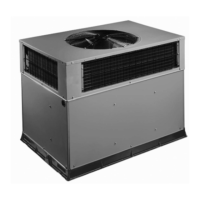
Packaged Gas/Electric Units
Owner's Guide to Operating and
Maintaining Your Gas/Electric Unit
ELECTRICAL SHOCK HAZARD.
Failure to follow this warning can result in
property damage, personal injury, and/or death.
Disconnect power at fuse box or service panel
before performing recommended maintenance.
FIRE OR EXPLOSION HAZARD
Failure to follow this warning can result in
property damage, personal injury, and/or death.
Information in this manual MUST be followed
exactly.
Do not store or use gasoline or other flammable
vapors and liquids in the vicinity of this or any
other appliance.
WHAT TO DO IF YOU SMELL GAS
Do not try to light any appliance.
Do touch any electrical switch; do not use any
phone in the building.
Immediately evacuate the building and call your
gas supplier from a phone outside the building.
Follow the gas supplier's instructions.
If you cannot reach your gas supplier, call the
fire department.
Installation and service must be performed by a
qualified installer, service agency or the gas
supplier.
This manual should be left with the owner.
Printed in U.S.A.
Code: PGF3 12/1/05 462 02 1001 00
Question and Answer IconNeed help?

Do you have a question about the ICP PGF3 and is the answer not in the manual?

Summary

To Light Unit

To Shut Unit Off

Sequence of Operation

Cooling Mode: On a call for cooling

Explains compressor, condenser fan, and evaporator blower motor energizing for cooling.

Cooling Mode: When the cooling setpoint has been satisfied

Explains de-energizing of components and blower delay off for cooling cycles.

Heating Start-Up Procedure

Routine Maintenance

Maintenance and Care for the Equipment Owner

Evaporator and Condenser Coils

Cleaning of coils should only be done by qualified service personnel.

Condensate Drain

Drain pan and condensate drain line should be checked and cleaned.

Compressor

Compressors are factory-shipped with a normal charge of refrigeration grade oil.

Condenser Fan

Fan must be kept free of all obstructions to ensure proper cooling.

Electrical Controls and Wiring

Electrical controls are difficult to check without proper instrumentation.

Refrigeration Circuit

Refrigerant circuit is difficult to check for leaks without proper equipment.

Combustion Area and Vent System

Area and vent system should be inspected visually before each heating season.

Unit Panels

Ensure all panels are fastened securely after service.

Regular Dealer Maintenance

Before You Call for Service

Summary

To Light Unit

To Shut Unit Off

Sequence of Operation

Cooling Mode: On a call for cooling

Explains compressor, condenser fan, and evaporator blower motor energizing for cooling.

Cooling Mode: When the cooling setpoint has been satisfied

Explains de-energizing of components and blower delay off for cooling cycles.

Heating Start-Up Procedure

Routine Maintenance

Maintenance and Care for the Equipment Owner

Evaporator and Condenser Coils

Cleaning of coils should only be done by qualified service personnel.

Condensate Drain

Drain pan and condensate drain line should be checked and cleaned.

Compressor

Compressors are factory-shipped with a normal charge of refrigeration grade oil.

Condenser Fan

Fan must be kept free of all obstructions to ensure proper cooling.

Electrical Controls and Wiring

Electrical controls are difficult to check without proper instrumentation.

Refrigeration Circuit

Refrigerant circuit is difficult to check for leaks without proper equipment.

Combustion Area and Vent System

Area and vent system should be inspected visually before each heating season.

Unit Panels

Ensure all panels are fastened securely after service.

Regular Dealer Maintenance

Before You Call for Service

Overview

This document is an Owner's Guide for Packaged Gas/Electric Units, providing essential information for operating and maintaining the appliance. It covers safety warnings, startup and shutdown procedures, sequence of operation, and routine maintenance tasks.

Function Description:

The device is a packaged gas/electric unit, designed for both heating and cooling applications in residential or commercial settings. It utilizes an automatic direct spark ignition and a power combustion blower for heating, and a compressor, condenser fan, and evaporator blower motor for cooling. The unit is designed to provide comfortable indoor temperatures by either heating or cooling the air as needed. Some models (PGF348-54) feature two stages of cooling, automatically selecting the appropriate stage based on the temperature difference between the actual room temperature and the thermostat's set point for optimal efficiency.

Important Technical Specifications:

  • Ignition System: Automatic direct spark ignition with a power combustion blower.
  • Cooling Stages: PGF324-42 models have 1 stage of cooling; PGF348-54 models have 2 stages of cooling.
  • Evaporator Blower Delay Off: PGF324-42 models have a 60-second delay off; PGF348-54 models have a 90-second delay off.
  • Gas Valve: Equipped with an internal selector switch (ON/OFF) and an external manual shutoff valve.
  • Air Filters: Various sizes depending on the model, with specific nominal and minimum area requirements for both disposable and washable filters. Filter face velocity should not exceed 600 ft/min.
  • Clearance: At least 30 inches of clearance required on all sides except the duct side to ensure proper combustion and ventilating air flow.

Usage Features:

  • Thermostat Control: The unit's operation is controlled via an indoor thermostat, allowing users to set desired temperatures and select operating modes (HEAT, COOL, AUTO, OFF) and fan settings (ON, AUTO).
  • Automatic Operation: In heating mode, the induced-draft combustion-air fan starts, purges the combustion chamber, and then the sparker ignites the gas. The main gas valve opens, and burners ignite within 25 seconds. If ignition fails, the control enters a Retry Mode. After 4 consecutive failed attempts, the unit locks out for 3 hours. In cooling mode, the compressor, condenser fan, and evaporator blower motor energize on a call for cooling.
  • Safety Features: Includes warnings for electrical shock and fire/explosion hazards. Users are instructed to disconnect power before maintenance and to never attempt manual ignition. The unit is equipped with a flame sensor to detect ignition.
  • Gas Leak Protocol: Specific instructions are provided for what to do if a gas smell is detected, including evacuating the building and contacting the gas supplier or fire department.

Maintenance Features:

  • Routine Maintenance: All routine maintenance should be performed by skilled, experienced personnel. The dealer can help establish a standard procedure.
  • Air Filter Maintenance: Air filters should be checked every 3-4 weeks and changed or cleaned when dirty. Dirty filters can stress the blower motor. The manual provides a table of correct filter sizes for various models. It is crucial to never operate the unit without filters.
  • Heat Exchanger: Should be checked by a qualified maintenance person before each heating season and cleaned if necessary. This involves removing the gas controls assembly and flue collector box cover.
  • Fans and Fan Motor: Periodically check the condition of fan wheels, housings, and motor shaft bearings. No lubrication is required for condenser or evaporator fan bearings or motors.
  • Evaporator and Condenser Coils: Cleaning should only be done by qualified service personnel, typically as part of annual maintenance.
  • Condensate Drain: The drain pan and line should be checked and cleaned when cooling coils are serviced.
  • Compressor: Factory-shipped with correct refrigeration grade oil; proper oil level must be maintained by service personnel.
  • Electrical Controls and Wiring: Should be checked by a dealer if discrepancies in operation occur.
  • Refrigeration Circuit: Should be checked by a dealer if inadequate cooling is suspected.
  • Combustion Area and Vent System: Visually inspected before each heating season for dirt, soot, rust, or scale accumulation.
  • Unit Panels: Must be securely fastened after any maintenance to prevent rain entry and maintain airflow.
  • Regular Dealer Maintenance: Recommended annual or biennial inspection by a trained service technician, including checks of flue product passages, combustion and ventilation-air passages, gas pipes, coils, drain pan, blower wheel, motor, supply/return-air ducts, unit base, casing, electrical wiring, refrigerant circuit, compressor oil level, and an operational check.
  • Troubleshooting Guide: Provides a "Before You Call For Service" section with common problems to check, such as disconnect switches, circuit breakers, airflow, and thermostat settings.

ICP PGF3 Specifications

General IconGeneral
BrandICP
ModelPGF3
CategoryAir Conditioner
LanguageEnglish

Related product manuals