© 2014 ICS, Blount International Inc. Specications are subject to change without notice. REV021414 F/N 566100
890 SERIES OPERATOR’S MANUAL
12
OPER ATION
CUTTING TIPS
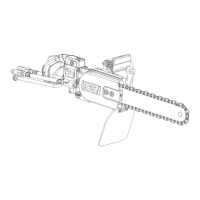
• To start a cut, hold trigger at full speed and slowly plunge the nose of the guidebar straight into
the wall. Use the fixed WallWalker
®
as a pivot point and pull up on the rear handle to rotate the
guidebar into the cut.
• Always operate the saw at full speed. Apply enough feed force so that the free running RPM
drops 20 to 30%. If too much force is applied, the saw will lug or stall. The chain will not have
enough speed to cut effectively. If too little feed force is applied, the diamonds will skid and glaze
over.
• For straighter cuts use the “Step Cut” method. First score the entire cut line with the nose of the
guidebar approximately 1/2 inch (12 mm) to 1 inch (25 mm) deep. Next, deepen the cut by about
2 inches (50 mm). This groove will help guide the guidebar for a straight cut. Then plunge all the
way through and complete the cut using the WallWalker
®
.
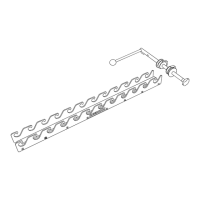
• Use the WallWalker
®
to help cut more efficiently and reduce operator fatigue. The WallWalker
®
is a fulcrum that converts inward force to downward force and will develop a 4-to-1 mechanical
advantage. To use correctly, plunge into the wall and simply engage the point of the WallWalker
®
into the cut and push straight in. The WallWalker
®
will force the saw to feed down.
• Apply upward force on the trigger handle to keep the WallWalker
®
engaged properly, otherwise
the WallWalker
®
pick will skid, which will reduce the effectiveness. As the saw begins to rotate up,
feed force is developed down the line of the intended cut. Once the saw is fully rotated upwards,
pull the saw out of the cut a few inches and re-engage the WallWalker
®
to the wall and repeat.
• When cutting rebar, slowly rock the saw so that you’re always cutting concrete as well as steel.
This will help keep the diamonds exposed. Also, expect less chain life when cutting rebar.
• Expect more chain stretch and guidebar wear when making “nose buried” cuts for extended
periods of time, as the chain does not have a chance to throw the slurry away from the nose of
the guidebar.
• If the saw begins to cut consistently crooked, turn the guidebar over and use the other side.
Dress worn rails with belt sander.
Note: The normal life of a guidebar is two to three diamond chains.
Rebar can shorten guidebar life.
• When using a new chain, you can increase the cutting speed by opening up the diamonds by
making a few cuts in an abrasive material such as a cinder block.


 To Next Page
 Loading...