Need help?
Do you have a question about the ICT PRT-WX-DIN and is the answer not in the manual?
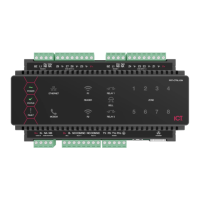
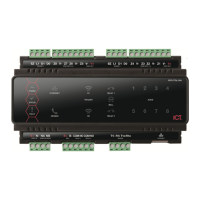
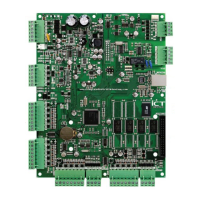
Describes the available Protege WX controller models and their specifications.
Steps for accessing the controller's web interface and initial login.
Procedure for setting the controller's IP address, subnet mask, and gateway.
Configuring dynamic DNS for remote access to the controller.
Securing web interface communication using HTTPS certificates.
Managing user accounts, PINs, and access levels within the system.
Defining time-based operational periods for functions and access.
Configuring door operation modes and input behavior.
Detecting and configuring expander modules connected to the system.
Setting up doors, readers, and unlock schedules.
Configuring system areas, inputs, and basic monitoring services.
Creating new users and defining their access to areas and doors.
Defining system partitions for monitoring and control with timings and outputs.
Configuring output timing for alarms, beeps, or flashes.
Defining special dates for schedule adjustments.
Setting up time-based rules for access and functions.
Accessing live and historic views of system events.
Providing real-time status displays for system components.
Generating and exporting customized reports on system events.
Generating CSV reports for monitoring station data.
Explains power, status, fault, and communication indicators for the controller.
Details indicators for 4 Amp and 2 Amp power supply units.
Interpreting error codes indicated by module status lights.
Assigning trouble inputs to system areas and defining their types.
Managing user profiles, general information, and access credentials.
Defining user permissions, access rights, and schedule validity.
Configuring different types of user identification data formats.
Provides a live view of all system events as they occur.
Displays a list of all doors and their current status.
Displays a list of all areas and their current status.
Configuring door types, slave doors, and area assignments.
Defining system partitions, timings, and arm/disarm schedules.
Configuring system inputs, their addresses, and operational parameters.
Configuring outputs for controlling devices like sirens or indicators.
Setting up reader expanders, ports, and access times for elevator control.
Assigning schedules and areas to elevator floors for access control.
Configuring controller network, hostnames, DDNS, and HTTPS.
Managing user accounts for system maintenance and monitoring.
Defining operator permissions and visibility of system pages.
Defining guidelines to enforce password security for users.
Procedures for changing operator passwords for security.
Creating and restoring controller configuration backups.
Procedures for updating system software and module firmware.
Configuring unique physical addresses for system modules.
Resolving issues where modules need a reset after programming changes.
Diagnosing and fixing communication loss with system modules.
Re-arming areas after programming changes affect input functionality.
Troubleshooting and resolving issues where the tamper area is disarmed.
Resolving inputs assigned to an area without a specified input type.
Troubleshooting database errors related to module input limits.
 General
| Enclosure | DIN Rail Mountable |
|---|---|
| Protection Class | IP20 |
| Weight | 200g |
| Communication Interface | RS-485 |
| Protocols | Modbus RTU |
| Inputs | 4 digital inputs |
| Dimensions | 90mm x 72mm x 60mm |


 To Next Page