This document outlines troubleshooting procedures for IDTECK devices, specifically addressing an "Unregistered ID" error that prevents door access after a card read. It covers various scenarios, from data corruption to incorrect ID registration, and provides detailed solutions including device initialization, noise protection, and re-registration.
Function Description:
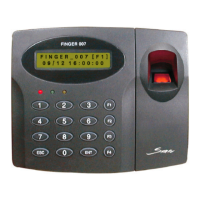
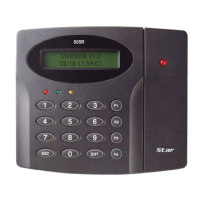
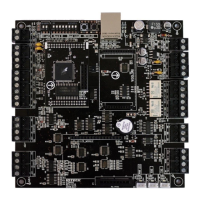
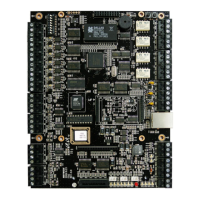
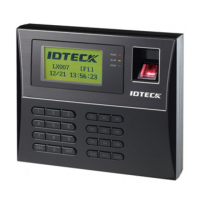
The IDTECK devices, including the FINGER007, 505, iTDC, and ICON series, are access control systems that utilize card readers and, in some models, fingerprint sensors to grant or deny access. When a card is presented, the device reads the ID and checks it against its internal database. If the ID is recognized and properly configured, access is granted. If an "Unregistered ID" error occurs, it indicates a problem with the ID data, registration, or device settings, leading to denied access. The troubleshooting guide provides a systematic approach to diagnose and resolve these issues.
Usage Features:
The devices are designed for user-friendly operation, with an LCD screen for displaying messages and a keypad for input.
- Master Mode/SETUP MENU: Accessing the SETUP MENU (also known as Master Mode) allows administrators to check and modify internal data and settings. This is typically done by entering an 8-digit Master ID and a Master Password.
- ID Registration: Users can be registered either by presenting a card to the reader or by manually entering the ID via the keypad. During registration, various parameters such as Password (PW), Time Schedule (TS), Reader assignment (RD), and Fingerprint Use (FP) can be configured.
- Initialization: In cases of data corruption or significant configuration issues, the device can be initialized. This process clears all internal data, including IDs and settings, returning the device to its factory default state. Initialization procedures vary slightly between models (iTDC/iCON series vs. FINGER006/007/505/FACE006/007 series) and depend on whether an LCD module is connected.
- ID List Confirmation: The SETUP MENU allows administrators to view a list of all registered IDs, along with their associated information, to verify proper registration.
Maintenance Features:
The guide emphasizes several maintenance and troubleshooting features to ensure reliable operation:
- Backup Battery Management: The devices utilize a backup battery to retain data in RAM memory during power failures. It is crucial to ensure the backup battery is charged and its switch is turned on. The battery jumper, which is disconnected during shipment to prevent discharge, must be connected during installation. Replacing a discharged backup battery is a key step in resolving data loss issues.
- Data Integrity Check: The "HOWTO1" procedure details how to check the internal data (Card Holder data, Time Schedule, Input/Output settings) for damage or unauthorized changes. This involves navigating the SETUP MENU and confirming that the configured values are correct.
- Noise Protection: For environments with significant electrical noise, the guide recommends using termination resistors and shield wires to protect the controller.
- Termination Resistors: These are used to match the impedance of the network to the transmission line, preventing signal reflections that can cause data corruption. The guide provides guidelines on when to use them (e.g., for maximum cable lengths) and specifies resistor values (e.g., 120Ω for RS485/RS422 systems).
- Shield Wires and Grounding: Proper grounding of communication cables using shield wires is crucial. The guide advises connecting only one end of the shield wire to a grounding system (Earth Ground, Chassis Ground, or Power Ground) to prevent current flow through the shield wire, which can introduce noise.
- Device Initialization: As a last resort for severe data issues, initializing the device clears all data and settings, allowing for a fresh configuration. This is a critical maintenance step after replacing a backup battery or when data corruption is suspected.
- Re-registration: If an ID is found to be unregistered or improperly configured, the "HOWTO3" procedure guides the user through the re-registration process, ensuring all necessary parameters are correctly entered.
Important Technical Specifications (implied from troubleshooting):
- Data Retention: The devices rely on RAM memory for storing internal data (IDs, passwords, fingerprint data, time schedules, I/O settings), which is maintained by a backup battery during power outages.
- Communication Protocols: The mention of RS485 and RS422 systems, along with termination resistors, indicates support for these serial communication protocols, commonly used in access control networks.
- Cable Length and Data Rate: The discussion on termination resistors highlights the importance of cable length (e.g., 1,200m) and data rate (e.g., 9,600 baud) in maintaining signal integrity.
- Input/Output Settings: The devices allow for configuration of Input/Output (IN/OUT Define) settings, suggesting integration with other security systems or peripherals.
- Master ID and Password: An 8-digit Master ID (default "00000000" or "0000000000" for some models) and a Master Password (default "3141") are used for administrative access.
- Fingerprint Sensor: Some models (e.g., FINGER007) incorporate fingerprint sensors, requiring specific registration procedures for biometric data.
- LCD Module: The presence or absence of an LCD module affects the initialization procedure, indicating different user interfaces or diagnostic capabilities across models.

 Need help?
 General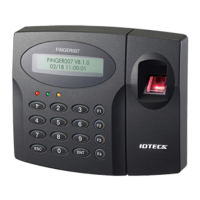

 To Next Page