Technologies
Topology
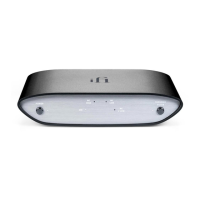
iFi audio ZEN CAN’s amplification circuit is the same as used in Pro iCAN. It features a balanced discrete Class A output buffer combined
with a J-FET Op-Amp (OV2637A). Its FET input doesn’t load volume control, which means exceptionally low distortion/noise, whereas
low impedance feedback enhances overall performance and avoids resistor noise. The ZEN CAN’s internal amp also fully protects itself
and headphones from overloads/shorts. Its four-step output gain factor is set at +6dB.
XBass and 3D
XBass adds back lost bass for headphones (especially open-backed), whereas 3D provides in-room speaker
alike listening sensation for them. Both these features are based on fully analogue circuits.
Power supply
The ZEN CAN’s power supply is based on Pro iCAN’s stealth mode voltage conversion circuit with heavy LC (resistor-inductor) filtering to
separate the audio path from internal PSU. 4,000uF capacitance acts as huge ‘power reservoir’ for short transient (i.e. music) signals.
Inputs
The Fi audio ZEN CAN features two inputs; single-ended RCA (1M Ohm) and balanced 4.4mm (24k Ohm). The ZEN CAN’s dedicated
input stage adjusts its input levels to match connected sources, but at the same time it avoids loading them and allows for constant
Class A operation and lowest distortion.
!!
!!
6



 To Next Page
 Loading...