8
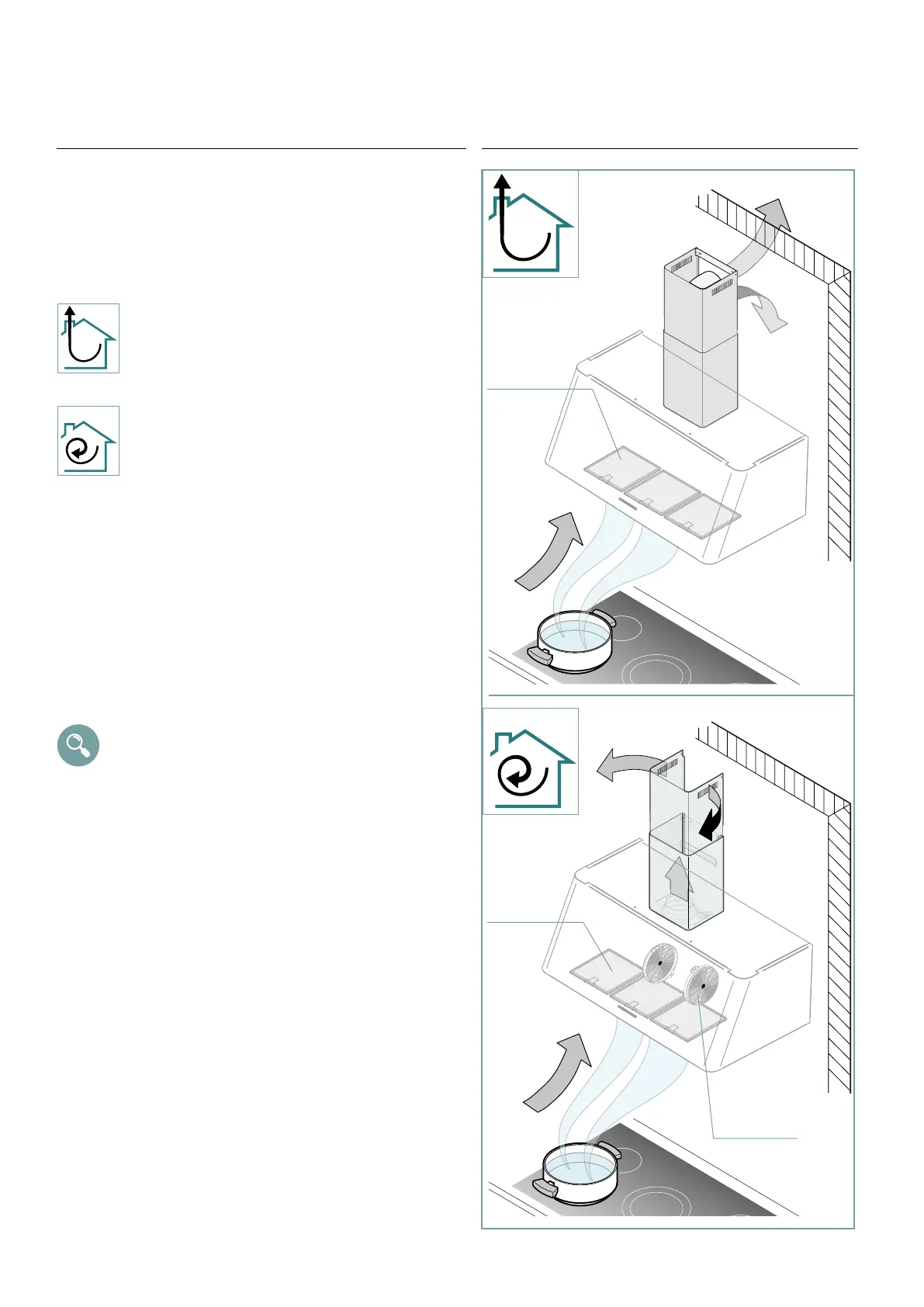
external
evacuation
hood
fumes and
steam
fumes and
steam
internal air
recirculation
hoob
metal lters
metal
lters
active
carbon
lter
Fig. 1.
Fig. 2.
INSTRUCTIONS FOR USE
Product’s operation
The hood extract fumes and steam generated during
cooking from the environment, channelling them through
metal lters that must be regularly removed and washed.
And then, depending on the type of installation, fumes
and steam:
are driven outside from the building through a
drain pipe: this model does not require the use of
carbon lters (ducting or external drain cooker
hood - Fig. 1.);
are funneled through one or more carbon lters
(usually one or two) to be puried: the clean air is
then blown into the room thanks to the grid holes
placed on the top of the hood’s chimney (ltering
or internal recirculation cooker hood - Fig. 2.).
Operating instructions
The hood must be switched on at least a couple of
minutes
before starting to cook, to promote the suction of fumes
and steam.
After nishing cooking, leave the hood in operation for an
extra few minutes: in this case, it may be appropriate to
activate the “Timer” function, which automatically switches
the hood off after 10 minutes.
The page that follows shows how to use the control
panel.
What speed should I use?
The unit operates at three different speeds:
speed 1: puries the air whilst limiting electricity consumption;
speed 2: normal conditions of use (e.g. steam suction)
speed 3: for the elimination of particularly intense fumes
and smells (e.g: when frying or grilling).
When should the lters be washed or replaced?
The hood has two types of lters:
metal lters: these must be removed and washed at least
once a month. For the cleaning procedure refer to chapter
“Cleaning“ on page 11.
active carbon lter: this is only found in internal air
recirculation models (Fig. 2.), and must be removed and
replaced approximately every 3-4 months, depending on
use.


 To Next Page