Wash-cycle data is measured under laboratory conditions according to European Standard EN 50242.
Based on the different conditions of use, the wash-cycle duration and data can change.
The number and type of wash cycles and options may vary depending on the dishwasher model.
Wash cycles
Instructions on wash-cycle selection and detergent dosage
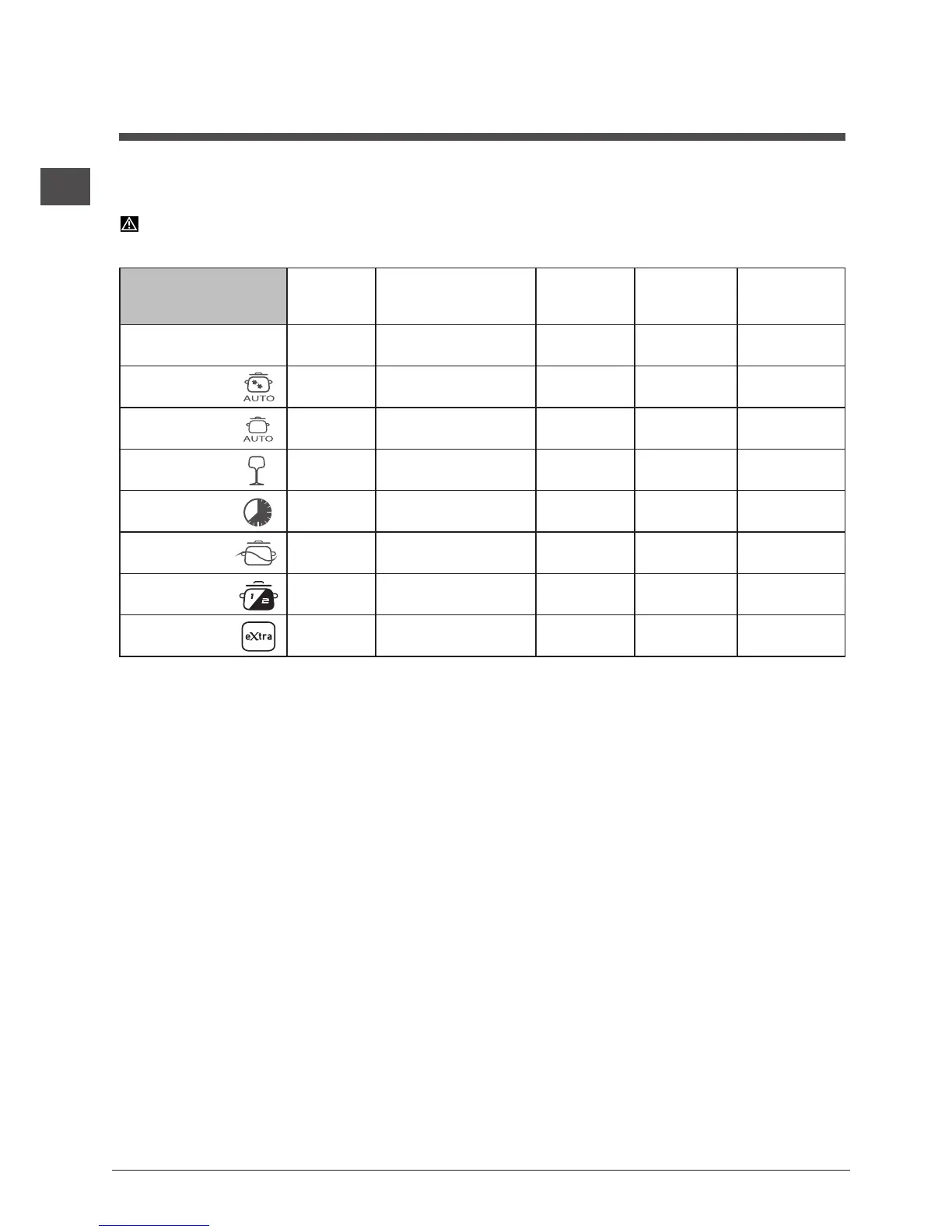
1. The ECO wash cycle is the standard cycle to which the energy label data refers. It can be used to wash crockery with a normal
soil level and is the most efficient cycle in terms of energy and water consumption for this type of crockery.
29 gr/ml + 6 gr/ml** – 1 Tab
(**Quantity of pre-washing detergent)
2. Heavily soiled dishes and pans (not to be used for delicate items). 35 gr/ml – 1 Tab
3. Normally soiled pans and dishes. 29 gr/ml + 6 gr/ml** – 1 Tab
4. Cycle for delicate items, which are more sensitive to high temperatures 35 gr/ml – 1 Tab
5. Fast cycle to be used for slightly dirty dishes (ideal for 2 place settings) 25 gr/ml – 1 Tab
6. Pre-wash while awaiting completion of the load with the dishes from the next meal. No detergent.
7. Ideal cycle for small loads of crockery with a normal soil level. 25 gr/ml – 1 Tab
8. Large crockery.
(Do not use on delicate items)
35 gr/ml – 1 Tab
Standby consumption: Left-on mode consumption: 5,0 W - Off mode consumption: 0.5 W
n.a. = non applicable
Wash Cycle Drying Options
Wash Cycle
Duration
Water
Consumption (l/
cycle)
Energy
Consumption
(kWh/cycle)
1. Eco Yes Delayed start 03:10’ 9,0 0,93
2. Intensive Yes Delayed start 02:00’ - 03:10’ 14,0 - 15,5 1,40 -1,70
3. Normal Yes Delayed start 01:30’ - 02:30’ 14,5 - 16,0 1,15 - 1,30
4. Delicates Yes Delayed start 01:40’ 11.0 1,05
5. Rapid 40’ No Delayed start 00:40’ 9,0 0,50
6. Prewash No Delayed start 00:12’ 4,5 0,01
7. Half Load Yes Delayed start 01:20’ 12,0 1,15
8. Extra No Delayed start
01:00’ 11,0 n.a.



 To Next Page