D-0125111-A – 2020/04
TRV chair – Instructions for Use - EN Page 28
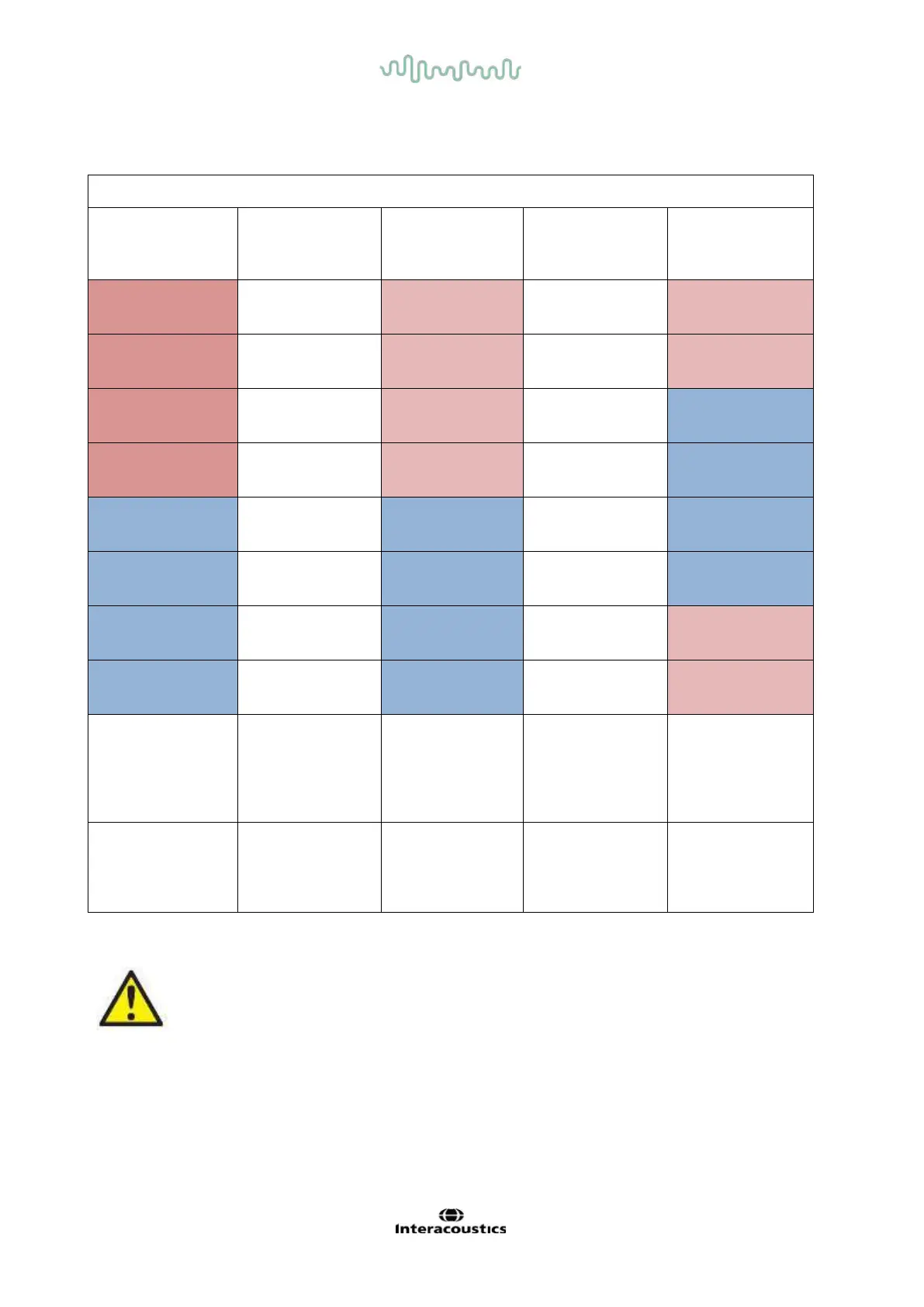
4.2 Characteristics of positional nystagmus
The following table may be helpful when diagnosing BPPV from eye movements during positional tests:
Horizontal
component
Component
Canal Involved
and BPPV Variant
Hallpike/Sidelying
Canalithiasis
Hallpike/Sidelying
Cupololithiasis
Hallpike/Sidelying
Canalithiasis
Hallpike/Sidelying
Cupololithiasis
Hallpike/Sidelying
Canalithiasis
Hallpike/Sidelying
Cupololithiasis
Hallpike/Sidelying
Canalithiasis
Hallpike/Sidelying
Cupololithiasis
Roll Right/Left
(horizontal)
when affected ear
is closest to the
ground
indicates HC
Roll Right/Left
(horizontal)
when affected ear
is furthest from the
ground indicates
Whenever a position is selected following rotation of the secondary frame,
it is important to check that the mechanical locking system is correctly
engaged.
Before the primary frame is released, the patient should be informed what type of movement to expect as
well as of the probability of vertigo during the maneuver. Throughout the various maneuvers, it is
recommended that the operator keeps talking with the patient to provide reassurance.


 To Next Page