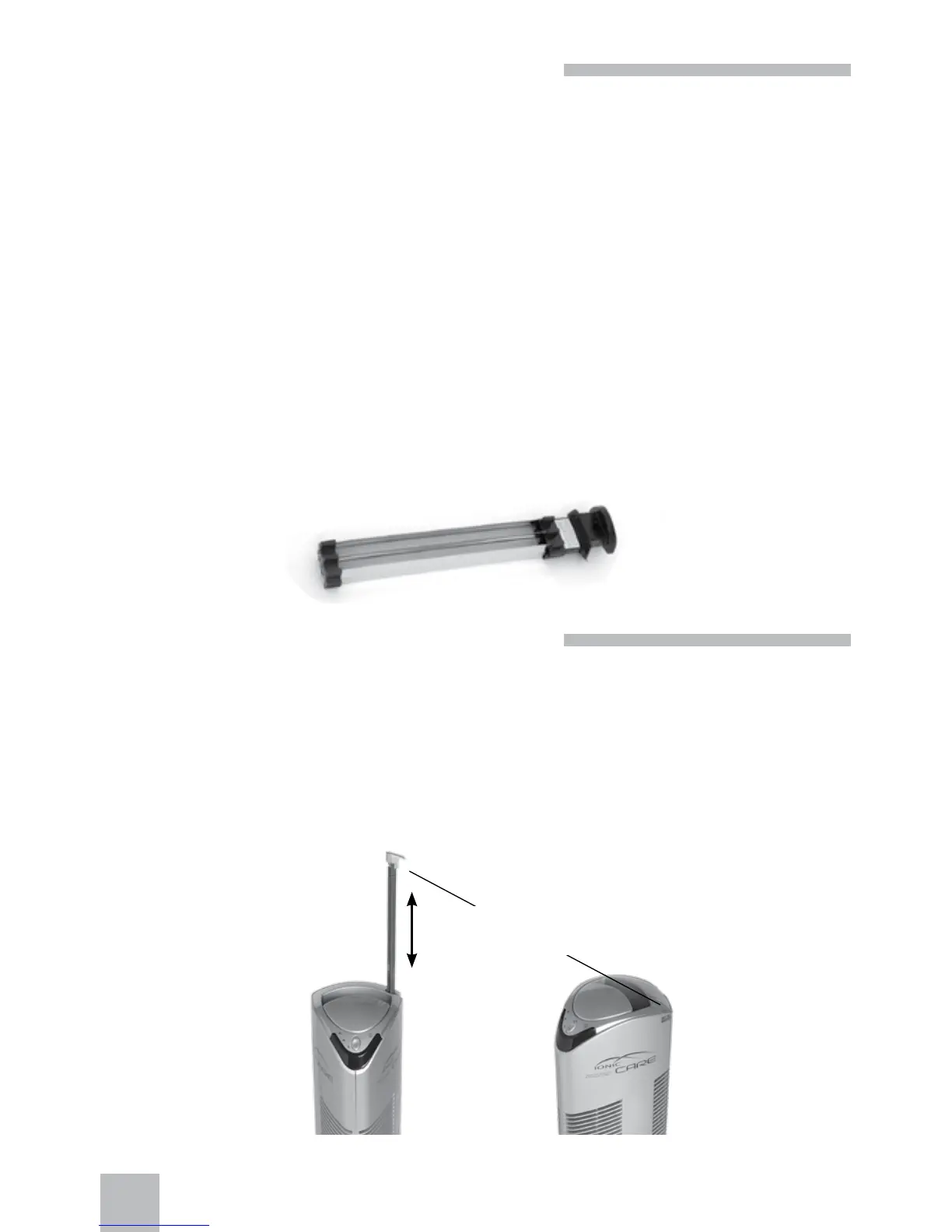
Mechanism for ionizing
wires cleaning
8
STAINLESS FILTER CLEANING
Switch the unit o, unplug it from the electrical network and let it stay for about 1 minute to discharge
the static electricity. Press and hold the lock preventing unintended removal of the stainless lter (in
the bottom part of the lter handle) and then remove the lter slowly from the unit body. Wipe o all
impurities caught on all collecting lter sheets by a damp cloth, or wash them under running water.
Always use a cloth or sponge with soft surface and non-abrasive detergents to avoid scratching of the
polished lter surface. Do not therefore use scourers, liquid cleansing powders, pastes and creams,
rough side of foamed plastic sponges etc.
Note: If you scratch the lter surface despite of our advice, the unit air purifying and ionizing function
will not be impaired. At the most, scratching may make future lter cleaning more dicult. If you use
damp cloth for the stainless lter cleaning, the lter may be completely dry within 2 to 3 hours. Always
let the stainless lter dry thoroughly in vertical position before you reinsert it in the unit.
If you used some detergent and water to clean the stainless lter, let it dry for 24 hours at least and
before you reinsert it in the unit, ensure that it is dried thoroughly. Before you reinsert the stainless
lter in the unit, check undamaged state of all ionizing wires in the unit.
Important!!!
To prevent the unit damage, ensure that the collecting sheets of the stainless lter are absolu-
tely dry and do not contain any humidity.
IONIZING WIRES CLEANING
The inner ionizing wires must be cleaned every 4-7 days of the air purier use. For this purpose, the me-
chanism for ionizing wires cleaning is used. Ceramic beads wired on the wires serve for more thorough
removal of impurities. Remove impurities caught on the wires by moving the mechanism upwards and
downwards The movement must be performed 3-4 times to ensure sucient eciency of cleaning.
Do not forget to put the mechanism for the ionizing wires cleaning in its initial position before
you switch on the unit; the unit otherwise cannot be switched on!



 To Next Page