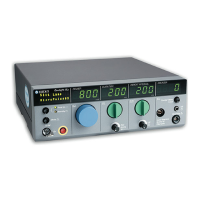
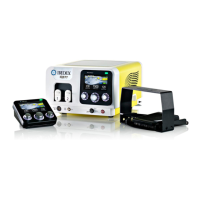
8 IRIDEX IQ 577
®
/IQ 532
®
Laser Systems Operator Manual 15510-EN Rev G
Specic Warnings and Precautions
It is essential that the surgeon and attending staff be trained in all aspects of these
procedures. No surgeon should use these laser products for ophthalmic and ENT surgical
procedures without first obtaining detailed instructions in laser use. Refer to “Warnings and
Cautions” for more information. Proper eye protection for 532 nm light must be utilized. Follow the
Eye Protection Policy at your facility.
Laser Settings
Beginningatlowpowerwithshortdurationexposures,thesurgeonshouldnotethesurgical
effectandincreasepower,powerdensity,orexposuredurationuntilthedesiredsurgicaleffectis
obtained. The information in the following tables is intended to provide guidance only for treatment
settings, which are not prescriptive for any condition. The operative needs of each patient should be
individually evaluated based on the indication, treatment location, and on the patient’s medical and
woundhealinghistory.Ifuncertainofexpectedclinicalresponse,alwaysstartwithaconservative
setting and increase the setting in small steps.
532 nm Typical Laser Treatment Parameters for Ocular Photocoagulation
532 nm Continuous-Wave
Application Delivery Device Spot Size at
Target* (µm)
Power
(mW)
Exposure
Duration (ms)
Central Retina Focal/Grid SLA 50–100 100–300 30–100
Peripheral Retina/PRP/Tears SLA, LIO, EndoProbe 125–500 100–600 30–200
Trabeculoplasty SLA 50 600–1000 100
Iridotomy SLA 50 500–1000 100–200
Nylon Suture Lysis SLA 50 200–750 100–200
*Spot size at target is dependent on many parameters, including spot size selection, physician’s choice of laser
delivery lens, and patient’s refractive power.
532 nm MicroPulse
Application Delivery
Device
Spot Size at
Target* (µm)
Power
(mW)
Duty Cycle
(500 Hz)
Exposure
Duration (ms)
Central Retina Focal/Grid SLA 50–200 100–400 5%, 10%, 15% 100–300
Peripheral Retina/PRP SLA 500–1000 500–1000 5%, 10%, 15% 100–300
Trabeculoplasty SLA 200–300 400–1200 5%, 10%, 15% 100–300
*Spot size at target is dependent on many parameters, including spot size selection, physician’s choice of laser
delivery lens, and patient’s refractive power.


 To Next Page