121
Range Hood (if so equipped)
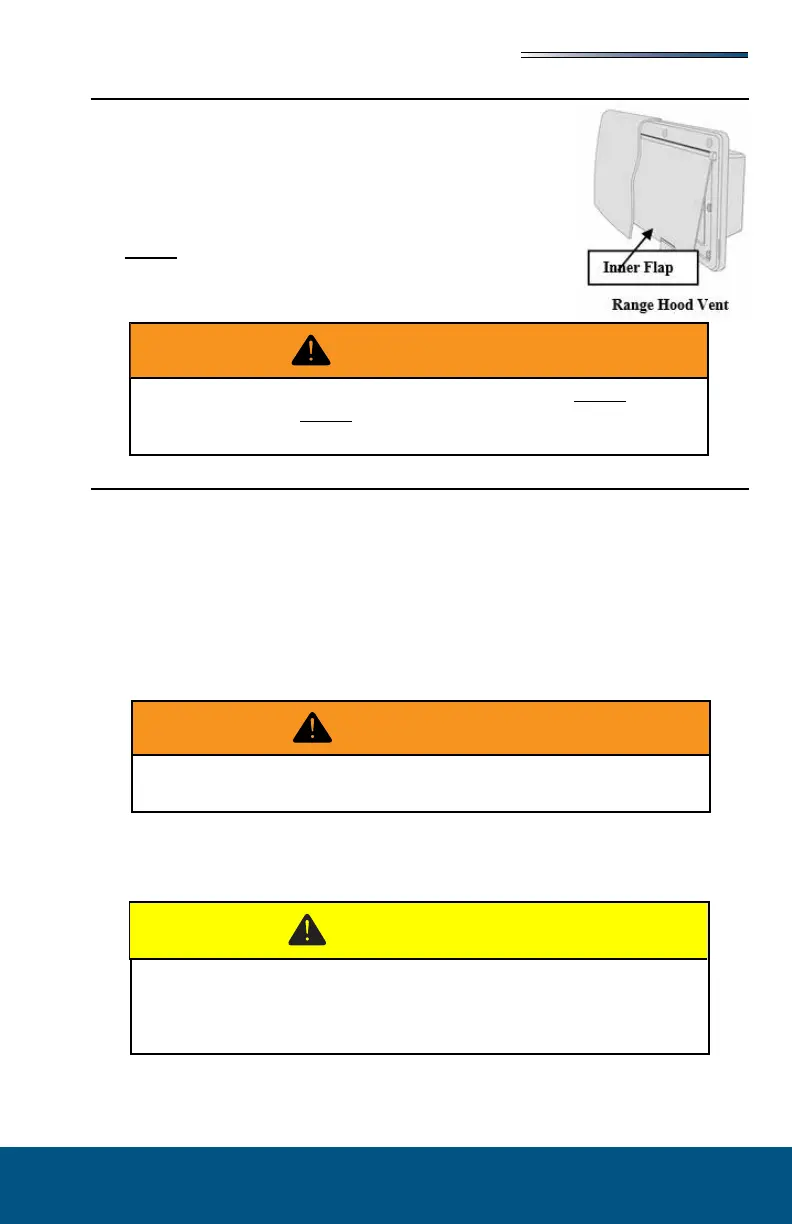
If your recreational vehicle is equipped with a range hood, it will be
connected to an exterior vent.
The vent has an inner ap with two snaps. This ap can be snapped
shut when the vehicle is in motion, or during storage to keep in-
sects, debris, snow, rain, etc. from entering the recreational vehicle.
Anytime the stove inside the recreational vehicle is being used, this
ap
Whenever the stove in the RV is being used, the range hood be turned
on, and the inner ap be unsnapped and free to move.
Refrigerator
The refrigerator is not intended for quick freezing or cooling. We recommend stocking it
with pre-frozen or pre-cooled food when possible. The shelves should not be covered with
paper or plastic and the food items should be arranged so air can circulate freely. Keep the
area at the back of the refrigerator clean and free of debris. Check for obstructions in the
exterior refrigerator vent area (i.e., spider webs, bird nests, etc.). Use a soft cloth to dust o
the debris. For optimum eciency and performance, it is recommended the refrigerator be
checked at least twice a year as part of the routine maintenance.
For detailed operating and safety information, refer to the manufacturer’s user guide.
The following are general cleaning guidelines. For detailed information on cleaning your
specic refrigerator, refer to the manufacturer’s user guide.
If you smell propane gas ! Follow the directions located in your manu-
facturer’s owner’s manual and in this manual.
The ice maker should be turned o and the ice tray emptied when power to
your motor home has been shut o. With no power, the ice will melt and water
will “pool” in the refrigerator door. When power is restored, the vibration will
cause this water to run out of the door and on to the motor home oor.




 To Next Page