17
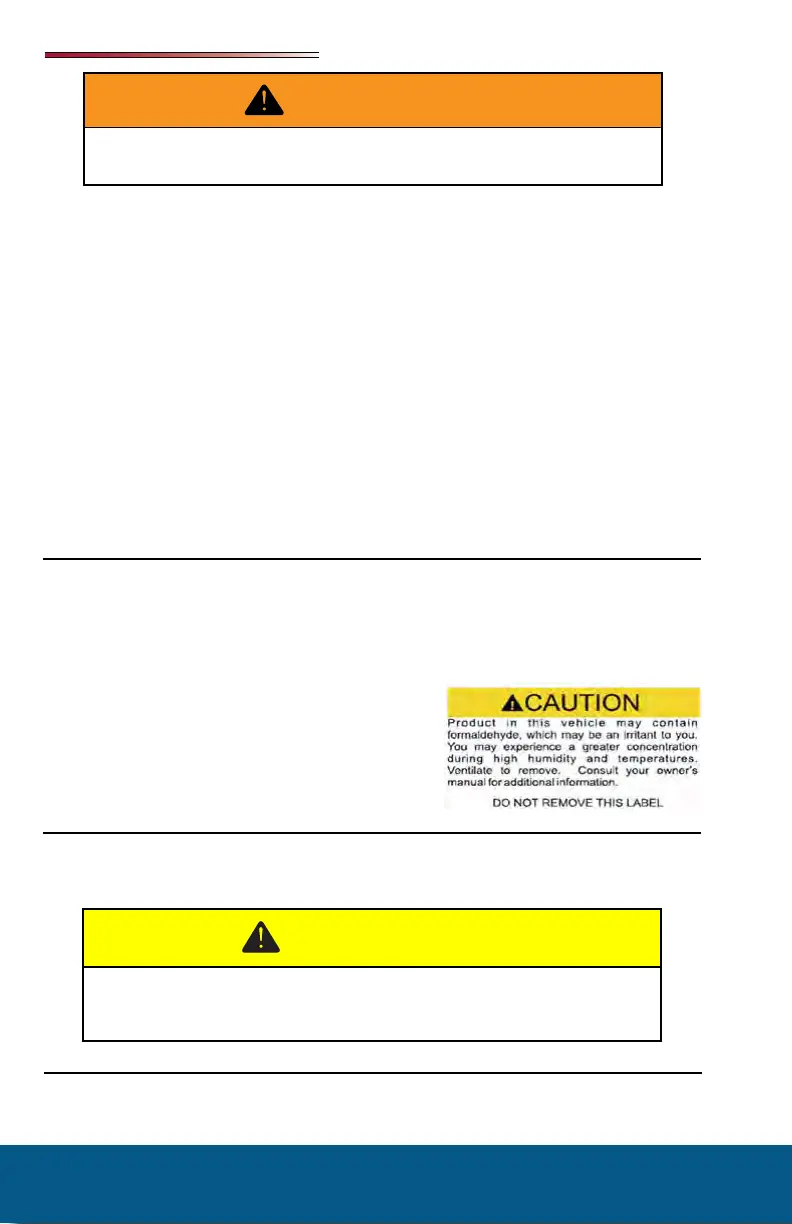
Formaldehyde
Some components in the recreation vehicle contain formaldehyde-based adhesives that may
release formaldehyde fumes into the air for an unknown period of time. Individuals who are
allergic to formaldehyde gas fumes may experience irritation to eyes, ears, nose and throat.
Indoor air quality may also be aected by leaving your vehicle closed for a period of time.
To aid in dissipation, ventilate the recreation vehicle by opening all windows and circulate
the air with a fan.
This label is located inside the vehicle near the entry
door.
.
Extended Or Full Time Usage
Your new recreation vehicle has been built for enjoyment in a recreational manner. It is not
intended for use as full-time quarters or a permanent residence. Continuous living in your
vehicle could cause accelerated wear and damage to the various components.
Cold Weather Usage
When used in freezing or below freezing temperatures, the precautions should be taken:
Fresh water and drainage systems - preparations to avoid freeze-ups.
Continuous or permanent living in your recreation vehicle may aect your
warranty coverage and may void the “Limited Warranty” applicable to your
vehicle.
Actuation of this detector indicates the presence of carbon monoxide which
can kill you.
If the alarm sounds:
1. Immediately move to fresh air—outdoors or by an open door or window. Do a head
count to check that all persons are accounted for. Do not re-enter the premises, or
move away from the open door or window until the emergency services responder has
arrived, the premises have been aired out, and your CO Alarm remains in its normal
condition.
2. Call your emergency services, re department or 911.
3. After following steps 1-2, if your CO Alarm reactivates within a 24-hour period, re-
peat steps 1-2 and call a qualied appliance technician to investigate for sources of
CO from fuel-burning equipment and appliances, and inspect for proper operation of
this equipment. If problems are identied during this inspection have the equipment
serviced immediately. Note any combustion equipment not inspected by the technician,
and consult the manufacturers’ instructions, or contact the manufacturers directly, for
more information about CO safety and this equipment. Make sure that motor vehicles
are not, and have not, been operating in an attached garage or adjacent to the residence.








 To Next Page