7
SCORPION G2 MANUAL - WATER JETTER/DRAIN CLEANER
4. Inspect the jetter nozzle orices for any damage or
blockage. Blockages can be cleaned with a nozzle
cleaning tool. Use care not to enlarge nozzle orices
while cleaning. Damaged nozzles or nozzles with
enlarged orices can decrease jetter performance and
should be replaced.
5. Inspect the hoses, connectors and ttings for wear and
damage. If there are any kinks, cracks, breaks or wear
through the outer jacket of the hose or other damage,
do not use the hose. Damaged hoses can burst or
leak high pressure water and cause serious injury.
Replacement hoses and tting should be rated at or
higher than the jetter pressure rating.
6. Inspect and maintain the engine per the engine
operator’s manual.
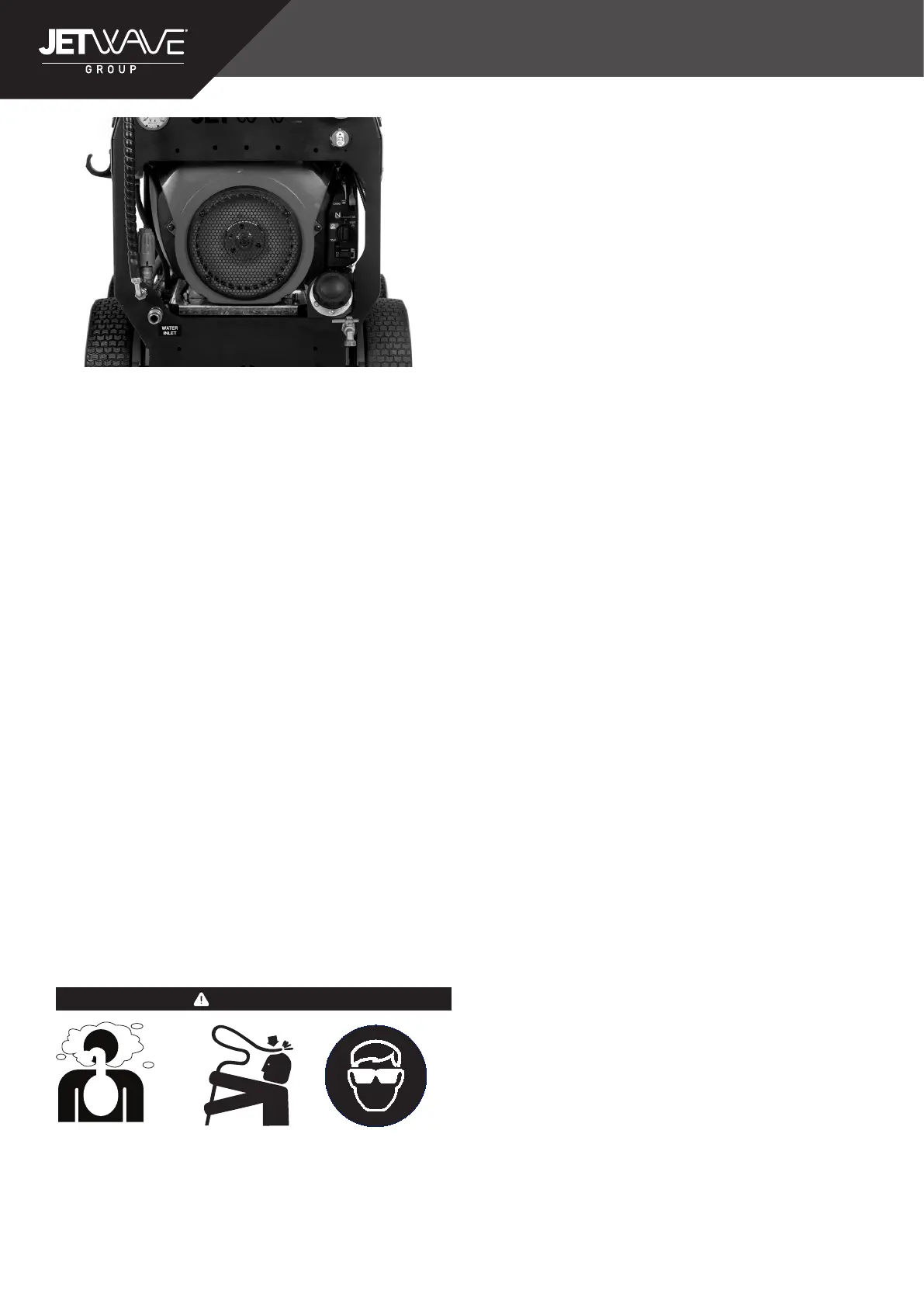
7. Check engine fuel level (Figure 4A). If needed, add
unleaded gasoline. See engine operator’s manual for
requirements. Use caution when handling gasoline.
Work in a well ventilated area. Never ll the tank while
unit is running, do not overll tank and do not spill fuel.
Make sure tank cap is securely closed.
8. Check the oil level(s) in the pump and gear box through
the sight glass and add oil if needed (see Maintenance
Instructions section). Inspect Engine as directed in the
engine operator’s manual.
Machine and Work Area Set-up
Always wear safety glasses, gloves and other
appropriate protective equipment when setting up
your jetter to protect against chemicals and bacteria
on the equipment. Rubber soled, non-slip shoes can
help prevent slipping on wet surfaces.
Engines produce carbon monoxide, a colorless,
odorless poison gas. Breathing carbon monoxide
can cause nausea, fainting or death. Do not start and
run engine in an enclosed area, even if doors and
windows are open. Only operate outside.
Set-up the jetter and work area according to these
procedures to reduce the risk of injury from high
pressure water, chemical burns, infections, carbon
monoxide and other causes, and prevent jetter
damage.
1. Check work area for:
• Adequate lighting.
• Flammable liquids, vapors or dust that may ignite.
If present, do not work in area until sources have
been identied and corrected. The machine is not
explosion proof and can cause sparks.
• Clear, level, stable dry place for machine and
operator.
• If needed, remove the water from the work area.
Wood or other coverings may need to be put
down.
• Jetter location that is in a well ventilated outdoor
area. Do not place the jetter indoors, even with
doors and windows open. Jetter can be located
remotely from the point of use.
• Suitable water supply. Clear path to transport the
jetter to the set up location.
2. Inspect the drain to be cleaned. If possible, determine
the access point(s) to the drain, the size(s) and
length(s) of the drain, distance to tanks or mainlines,
the nature of the blockage, presence of drain cleaning
chemicals or other chemicals, etc. If chemicals are
present in the drain, it is important to understand the
specic safety measures required to work around
those chemicals. Contact the chemical manufacturer
for required information.
If needed, remove xture (water closet, etc.) to allow
access to the drain. Do not feed the hose through a
xture. This could damage the hose and the xture.
3. Determine the correct equipment for the application.
See the Specications section for information on the
jetter. Drain cleaners and jetters for other applications
can be found by consulting the Jetwave
®
Catalog, on
line at www.jetwave.com.au
4. Make sure all equipment has been properly inspected
5. Evaluate the work area and determine if any barriers
are needed to keep bystanders away. Bystanders
can distract the operator. If working near trafc, erect
cones, signs or other barriers to alert drivers.
WARNING


 To Next Page