XM Wheeled Dry Chemical Fire Extinguisher
Operation and Maintenance Manual
(Part No. S-50651)
2023-AUG-30 REV. 02 PAGE 7
RECHARGE
RECHARGE
To recharge the extinguisher after use, complete the following
steps:
1. Pull the ring pin and close the red tank valve.
2. Pull the ring pin and close the black dry chemical valve.
3. Pull the ring pin and open the green vent valve.
4. Pull the ring pin and open the blue hose clean-out valve.
5. Open the nozzle to clear hose line of dry chemical. Close the
nozzle when stream is clear of dry chemical. Do not relieve
remaining pressure at this time.
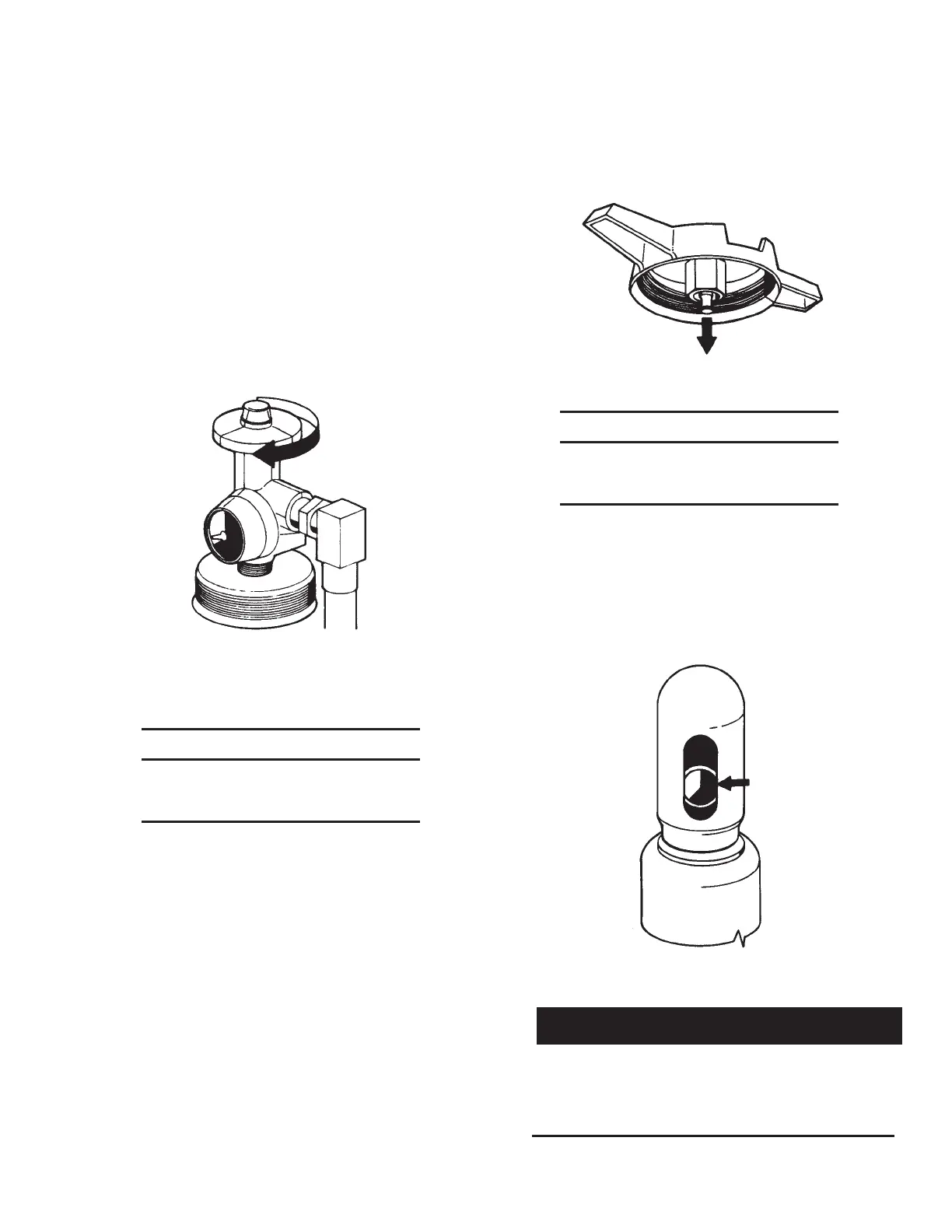
6. Close the nitrogen cylinder valve, turning the handwheel
clockwise, then hand tighten.
FIGURE 6
002658
7. Open the black dry chemical valve to clear the pick-up tube
of dry chemical.
NOTICE
A small quantity of dry chemical may
discharge from the open green vent valve
at this time.
8. Close the blue hose clean-out valve.
9. Fill the dry chemical tank, as follows:
a. Remove the ll cap and place a funnel in opening.
b. Fill the tank to its rated capacity using only the ANSUL® dry
chemical specied on the nameplate.
c. Clean the ll opening threads and gasket seating surface.
d. Examine the ll cap gasket for elasticity, cuts, or weather
checking.
e. Clean and coat the gasket lightly with a good grade of high
heat-resistant grease, then replace it.
f. Inspect the threads in the ll cap and on the ll opening,
looking for nicks, burrs, cross-threading, and rough or
feathered edges.
g. Clean and coat ll cap threads lightly with a good grade of
high heat-resistant grease.
h. Check that the gasket is in place before reinstalling the ll
cap.
i. Secure the ll cap and hand tighten.
FIGURE 7
002649
NOTICE
If the fill cap is an indicator model, be
sure the red indicator stem is in the
down position before securing fill cap.
10. Read the cylinder gauge. Note the pressure, check the
ambient temperature and refer to the Temperature Correction
Chart section of the ANSUL® Wheeled and Stationary Dry
Chemical Fire Extinguishers Operation, Inspection, Service
and Maintenance, and Recharge Manual (Part No. 79012).
Replace the cylinder if below 1500 PSI (10341 kPa) at 70 °F
(21 °C).
FIGURE 8
002667
!
WARNING
Do not place body or head in front of cylinder valve outlet.
If valve is accidentally operated, the velocity of unre-
stricted escaping gas is forceful enough to cause injury,
especially about the face and head.


 To Next Page
 Loading...