Metasys System FEC1611 and FEC1621 Field
Equipment Controller Installation Guide
Application
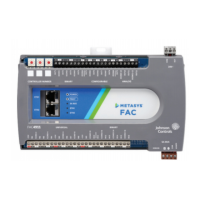
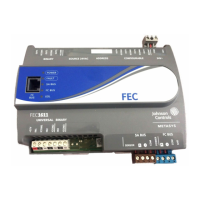
The FEC16 Field Equipment Controller (FEC) is part of
the Metasys
®
system Field Equipment Controller family.
The FEC16 controller runs pre-engineered and user-
programmed applications and provides the inputs and
outputs required to monitor and control a wide variety of
HVAC equipment.
The FEC controllers can communicate using either BACnet
MS/TP or N2 communications protocols. These controllers
used as MS/TP devices operate on an RS-485 BACnet
®
MS/TP Bus as BACnet Application Specific Controllers (B-
ASC) and integrate into Johnson Controls
®
and third-party
BACnet systems.
With Release 10.1, you can use the Controller
Configuration Tool (CCT) 13.0 and later software to switch
the FEC to use the N2 protocol.
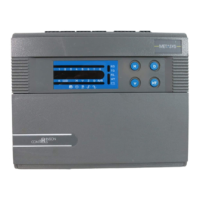
The FEC16 controller is available with or without an
integral LCD and push-button user interface.
Communications protocol
The Metasys
®
system FEC Family Controllers and network
sensors communicate using either the standard BACnet
protocol, based on the ANSI/ASHRAE 135-2008, or the
BACnet/IP protocol. The BACnet protocol is a standard
for ANSI, ASHRAE, and the International Standards
Organization (ISO) for building controls.
FEC, VMA16, VMA18, and most IOM field controllers are
BTL-listed as BACnet Application Specific Controllers
(B-ASCs). FAC field controllers and the VMA1930 Field
Controller are BTL-listed as BACnet Advanced Application
Controllers (B-AACs).
Release10.1 and later of the Controller Configuration Tool
(CCT) can be used to switch Field Bus communications
protocol in supported FAC, FEC, and VMA controllers to be
either the standard BACnet MS/TP or the N2 protocol. All
new controllers use either BACnet MS/TP as the default
communications protocol, or BACnet/IP. Switchable
communications protocols in the MS/TP models provide
a cost-effective upgrade and modernization path for
customers with existing N2 controllers.
North American emissions compliance
United States
This equipment has been tested and found to comply with
the limits for a Class A digital device pursuant to Part 15
of the FCC Rules. These limits are designed to provide
reasonable protection against harmful interference when
this equipment is operated in a commercial environment.
This equipment generates, uses, and can radiate radio
frequency energy and, if not installed and used in
accordance with the instruction manual, may cause
harmful interference to radio communications. Operation
of this equipment in a residential area may cause harmful
interference, in which case the users will be required to
correct the interference at their own expense.
Canada
This Class (A) digital apparatus meets all the requirements
of the Canadian Interference-Causing Equipment
Regulations.
Cet appareil numérique de la Classe (A) respecte toutes
les exigences du Règlement sur le matériel brouilleur du
Canada.
Installation
Observe these guidelines when installing a field controller:
• Transport the controller in the original container to
minimize vibration and shock damage.
• Verify that all parts shipped with the controller.
• Do not drop the controller or subject it to physical
shock.
Parts included
• One field controller with removable terminal blocks
• One installation instructions sheet
Materials and special tools needed
• Three fasteners appropriate for the mounting surface
(M4 screws or #8 screws)
• One 20 cm (8 in.) or longer piece of 35 mm DIN rail and
appropriate hardware for DIN rail mount (only)
• Small straight-blade screwdriver for securing wires in
the terminal blocks
Mounting
Observe these guidelines when mounting a field
controller:
• Ensure the mounting surface can support the
controller, DIN rail, and any user-supplied enclosure.
• Mount the controller horizontally on 35 mm DIN rail
whenever possible.
• Mount the controller in the proper mounting position
(Figure 1).
• Mount the controller on a hard, even surface whenever
possible in wall-mount applications.
• Use shims or washers to mount the controller securely
and evenly on the mounting surface.
• Mount the controller in an area free of corrosive vapors
and observe the Ambient Conditions requirements in
Table 10.
*2410143136N*
Part No. 24-10143-136 Rev. N
2019-10-18
(barcode for factory use only)
MS-FEC1611-1, MS-FEC1621-1, MS-
FEC1611-1ET


 To Next Page
 General