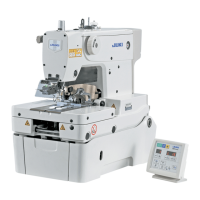
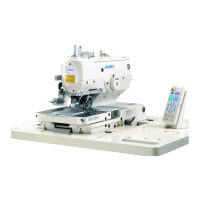
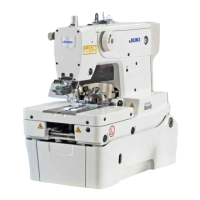
This document provides safety precautions and operational guidelines for the JUKI MEB-3900 sewing machine. It emphasizes the importance of understanding and adhering to safety instructions to prevent accidents, injuries, or damage to the machine.
General Safety Precautions
The manual classifies risk indications into three categories:
- DANGER: Indicates an immediate risk of death or serious injury if the machine is mishandled or dangerous situations are not avoided during operation or maintenance.
- WARNING: Indicates a potential risk of death or serious injury if the machine is mishandled or dangerous situations are not avoided during operation or maintenance.
- CAUTION: Indicates a risk of medium to minor injury if the machine is mishandled or dangerous situations are not avoided during operation or maintenance.
- Items requiring special attention: Highlights specific points that need careful consideration.
Pictorial warning indications are used to visually communicate various hazards:
- Moving sections: Risk of injury if contacting moving parts.
- High-voltage sections: Risk of electrical shock.
- High-temperature sections: Risk of burns.
- Laser beam: Risk of eye deficiency from direct exposure.
- Head contact: Risk of contact between the head and the sewing machine.
- Holding machine: Risk of hand injury if holding the sewing machine during operation.
- Belt entanglement: Risk of injury from entanglement in the belt.
- Button carrier: Risk of injury if touching the button carrier.
- Correct direction: Indicates the correct operational direction.
- Earth cable connection: Indicates where an earth cable should be connected.
Warning labels on the machine provide specific instructions:
- A label with an exclamation mark and a hand being caught indicates the possibility of slight to serious injury or death from touching moving parts.
- Labels with a safety guard or cover indicate that sewing work should be performed with these safety devices in place.
- A label indicating "Turn off power" emphasizes the need to turn off the power before carrying out tasks like "machine-head threading," "needle changing," "bobbin changing," or "oiling and cleaning."
- An "ADANGER" label with a lightning bolt warns of hazardous voltage and the risk of injury, instructing users to turn off the main switch, unplug the power cord, and wait at least 5 minutes before opening the cover.
Basic Precautions
Before using the machine, operators must:
- Read the instruction manual and other explanatory documents thoroughly and keep them for quick reference.
- Be aware that some content in the manual may not be specific to their product model.
- Wear safety goggles to protect against needle breakage.
- Individuals with heart pacers should consult a medical specialist before using the machine.
Safety Devices and Warning Labels
- Ensure all safety devices are correctly installed and functioning normally.
- If any safety device is removed, it must be replaced, and its normal function verified.
- Warning labels must be kept clearly visible; stained or unstuck labels should be replaced.
Application and Modification
- The machine should only be used for its intended application and as prescribed in the instruction manual. JUKI is not responsible for damages or injuries resulting from misuse or unauthorized applications.
- Never modify or alter the machine, as this can lead to personal injury or death. JUKI is not responsible for issues arising from modified machines.
Education and Training
- Only trained and educated operators should use the machine to prevent accidents due to unfamiliarity. Employers must establish and implement an education/training plan for operators.
Power-Off Requirements
The power must be turned off and the power plug removed from the outlet for the following situations:
- Immediately if any abnormality or failure is found, or in case of power failure.
- Before carrying out operations that could lead to abrupt machine start, such as threading, changing bobbins, changing or adjusting components, inspecting, repairing, or cleaning the machine. For clutch motors, ensure the machine stops completely after power-off.
- When removing the power plug, hold the plug section, not the cord, to prevent electrical shock, earth leakage, or fire.
- Whenever the machine is left unattended.
- In case of power failure, to prevent damage to electrical components.
Precautions in Various Operation Stages
Transportation
- Lift and move the machine safely, considering its weight. Refer to the instruction manual for the machine's mass.
- Take sufficient safety measures to prevent falling or dropping during lifting or moving.
- After unpacking, do not re-pack the machine for transportation to avoid breakage.
Unpacking
- Unpack the machine in the prescribed order to prevent injury. Be careful with nails if the machine is crated.
- Check the machine's center of gravity and carefully remove it from the package.
Installation
I) Table and Table Stand
- Use JUKI genuine table and table stand. If non-JUKI components are used, ensure they can support the machine's weight and reaction force during operation.
- If casters are fitted, lock them to secure the machine during operation, maintenance, inspection, and repair.
II) Cable and Wiring
- Prevent extra force on cables to avoid electrical shock, earth leakage, or fire. Maintain at least 30 mm clearance between cables and operating sections like the V-belt.
- Avoid starburst connections to prevent electrical shock, earth leakage, or fire.
- Securely connect connectors, holding the connector section when removing them.
III) Grounding
- An electrical expert must install an appropriate power plug and connect it to a grounded outlet.
- Ground the earth cable to prevent earth leakage.
IV) Motor
- Use the specified rated JUKI genuine motor to prevent burnout.
- If a commercial clutch motor is used, select one with an entanglement-preventive pulley cover.
Before Operation
- Ensure connectors and cables are free from damage, dropout, and looseness.
- Never put hands into moving sections. Check that the pulley rotation direction matches the arrow.
- If using a table stand with casters, secure it by locking the casters or using adjusters.
During Operation
- Keep fingers, hair, or clothing away from moving sections (handwheel, hand pulley, motor) while the machine is in operation.
- Do not place fingers near the needle, thread take-up lever cover when turning on power or during operation.
- The machine runs at high speed. Keep hands away from moving sections (looper, spreader, needle bar, hook, cloth trimming knife) during operation. Turn off power and ensure the machine stops completely before changing thread.
- Be careful not to get fingers or other body parts caught between the machine and table when removing or replacing the machine head.
Lubrication
- Use JUKI genuine oil and grease.
- If oil contacts eyes or body, wash it off immediately.
- If oil is swallowed, consult a medical doctor immediately.
Maintenance
- Repair and adjustment must be carried out by a service technician familiar with the machine. Use JUKI genuine parts for replacements. JUKI is not responsible for accidents caused by improper repair, adjustment, or non-genuine parts.
- For electrical components, contact an electrical technician from your company, JUKI, or a distributor.
- When repairing air-driven parts (e.g., air cylinder), remove the air supply pipe to expel residual air.
- Check for loose screws and nuts after repair, adjustment, and part replacement.
- Periodically clean the machine, ensuring power is off and the machine/motor stop completely before cleaning.
- If the machine cannot be operated normally after repair, stop operation and contact JUKI or a distributor.
- If a fuse blows, turn off power, eliminate the cause, and replace the fuse.
- Periodically clean the fan's air vent and inspect wiring to prevent fire.
Operating Environment
- Use the machine in an environment free from strong noise sources (e.g., high-frequency welders).
- Do not operate if voltage fluctuates by more than ±10% of the rated voltage.
- Verify that air-driven devices operate at the specified air pressure.
- Operate within ambient temperature of 5°C to 35°C and relative humidity of 35% to 85%.
- If moving the machine from a cold to warm environment, wait for condensation to dissipate before turning on power.
- Stop operation and remove the power plug during lightning flashes.
- If the machine causes TV or radio interference, move the TV/radio away from the machine.
- Follow local laws and regulations for the work environment. Wear ear protection if noise control is necessary.
- Dispose of products, packages, and used lubricating oil according to local laws.
MEB-3900 Specific Precautions
DANGER
- Never open the control box cover or touch internal components while the power switch is ON to prevent electric shock.
- Do not lift the sewing machine for purposes other than installation, repair, or adjustment. Lifting should only be done by a familiar maintenance technician.
- If the gas spring malfunctions due to outgassing, the machine may be too heavy to lift. Do not lift in this state, as it can drop and cause serious injury.
- Do not raise/return the sewing machine with two or more workers to prevent personal injury.
- Do not hold the sewing machine in its raised position by hand. Lock the hinge stopper to firmly secure the machine in the raised position.
- Do not hold any part of the sewing machine other than the rib on the bed periphery on the near side.
- Do not use the sewing machine if the gas spring is not installed.
- The cloth trimming knife operates with strong pressure. Keep hands and fingers away from the knife and trimming hammer during operation.
- If power cord and/or motor cord conductors are exposed, turn off power and stop using the machine to prevent electrical shock.
- Turn off power before opening the power switch if necessary.
WARNING
- When returning the machine head from the raised to home position, ensure no tools or components are under the gas spring.
- Avoid damaging the rod section of the gas spring in the bottom cover with tools or components.
- Immediately replace the gas spring if its rod section is flawed or defective. Use only JUKI genuine gas spring (Part No.: 40100390). Refer to "Standard of replacing time of the gas spring" for defectiveness criteria.
- Keep hair, accessories, etc., away from the thread take-up lever during sewing to prevent entanglement.
CAUTION
- Never operate the machine without the belt cover, finger guard, eye guard, or other safety devices removed.
- Keep fingers away from the needle, cloth cutting knife, and bobbin thread cutting knife when turning ON power or during operation.
- Never bring fingers into the needle bar cover while the machine is running.
- Ensure no person or object is around the machine when raising the machine head.
- Do not use the sewing machine with the gas spring removed.
- Turn OFF the power switch when the machine is tilted or covers are removed to prevent abrupt starts.
- The motor does not produce noise when stopped. Turn OFF the power switch when stopping the machine to prevent abrupt starts.
- Do not operate the machine with the ground wire removed.
- Turn OFF the power switch before inserting or removing connectors or the power plug to prevent electrical shock and damage.
- Handle this product carefully; avoid water, oil, or dropping, as it is a precision instrument.
- Keep hands and fingers away from the work clamp while it is in operation.
- Keep hands and fingers away from the thread drawer and thread take-up lever while the machine is in operation.
- Do not place hands in the opening section in the front face of the bed while the machine is in operation.
- Keep away from the exhaust port of the solenoid valve during operation, as high-pressure air is exhausted.
- Do not look directly into the LED lamp.
- Close the front cover before starting and operating the sewing machine.
- In a domestic environment, this product may cause radio interference, requiring corrective actions.
Cautions in Operation
- Always lubricate the machine head before operation.
- Remove dust from machine sections after use.
- Connect the power suitable for the machine's voltage and phase.
- Standard patterns (Nos. 88-99) allow changing sewing speed and thread tension, but not shape. To change shape, copy it to another pattern number.
- The control box temperature is monitored, and the cooling fan runs/stops accordingly. Periodically inspect the ventilation hole and surrounding wiring.
- Do not operate with materials stacked on your lap, as they can be pinched between the feed base and bed, causing machine seizure.
- Do not operate the cloth cutting knife without the knife guard installed, as the knife arm and oscillating shaft can interfere and cause breakage.
Safety Devices and Warning Labels (Detailed)
Temporary stop switch: Stops the machine during operation.
Needle bar cover: Prevents contact between the human body and the needle bar.
Warning label (page i): Provides minimum precautions for operating the machine.
Turning gear cover: Prevents human body contact with turning gear.
Warning label against pinching (feed base): Caution label for preventing pinching of fingers and hands in the feed base (two locations).
Electrical-shock danger label (page i): Safety precautions for electrical shock.
Finger guard: Prevents contact between fingers and the needle.
Warning label against pinching (looper mechanism): Caution label for preventing pinching of fingers and hands between the looper mechanism and the bed.
Front cover: Prevents contact between the human body and the looper driving mechanism.
Power switch: Disconnects power unit from power supply; also serves as emergency stop switch.
Looper cam cover: Prevents pinching of fingers or hands in the moving part of the looper mechanism.
Gas spring: Reduces machine weight for safe raising/returning. The machine is heavy, and a malfunctioning gas spring poses a personal injury risk. Refer to the instruction manual for "Standard of replacing time of the gas spring" and "Replacing the gas spring."
Warning label against pinching (bed and machine): Warning label to prevent pinching of hands between the bed and the machine when returning the latter to its home position.
Warning label against pinching (thread take-up lever/drawer): Caution label for preventing pinching of fingers and hands between the thread take-up lever and thread drawer.
Warning label against pinching (cloth trimming knife): Warning label to prevent pinching of fingers and hands in the cloth trimming knife.
Sewing machine up/down lock: Locks the machine to prevent accidental lifting, except for installation, repair, or adjustment.
Holding prohibition label: Indicates parts not to be held when raising the machine from its home position (two locations).
Hinge stopper: Used for raising, locking, and holding the machine in raised or intermediate positions to prevent drop accidents and pinching.
Warning label against pinching (looper bracket mechanism): Caution label for preventing pinching of fingers or hands in the moving part of the looper bracket mechanism.
The manual notes that safety devices like the "eye protection cover" and "finger guard" may be omitted in illustrations for explanation purposes but should never be removed in practical use.

 Need help?
 General

 To Next Page