EasyManua.ls Logo

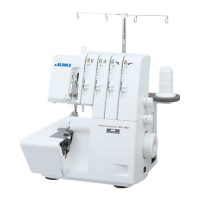
JUKI MO-735 - User Manual

JUKI MO-735
70 pages
Print Icon
To Next Page IconTo Next Page
Loading...
Instruction Manual
Manual de instrucciones
Bedienungsanleitung
Manuel d’instructions
MO-735
2-Needle, 2/3/4/5-Thread Overlock+Cover Stitch Sewing Machine
Maquina de coser Sobreorilladora de 2 Agujas, 2/3/4/5 Hilos+Punto de Cobertura
Überwendlich-Nähmaschine Mit 2 Nadeln, 2/3/4/5 Fäden+Cover Stich
Surjeteuse-Raseuse 2 Aiguilles, 2/3/4/5 Fils+Point Enveloppant
IMPORTANT:
Avant de mettre la machine en marche, lire
attentivement et assimiler les regles de securite
de ce manuel.
Conserver le manuel afin de pouvoir le consulter
ul terieurement.
IMPORTANTE:
Lea cuidadosamente todas las recomendaciones
con respecto a la seguridad y comprendalas
perfectamente antes de usar su maquina.
Guarde este libro de instrucciones para referencias
futuras.
WICHTIG:
Alle sicherheitsvorschriften vor gebrauch der
nähmaschine sorgfältig durchlesen.
Bewahren Sie diese bedienungsanleitung für
weitere bezüge auf.
IMPORTANT:
Read all safety regulations carefully and under-
stand them before using your sewing machine.
Retain this instruction manual for future reference.
®

Table of Contents

Other manuals for JUKI MO-735

Questions and Answers

  • E
    eknightSep 1, 2025
    Why is the fabric not feeding evenly through my JUKI MO-735?
    • K
      Kimberly JonesSep 1, 2025
      If the fabric is not feeding evenly through your JUKI Sewing Machine, it could be due to a few reasons. First, check the differential feed setting to ensure it is properly adjusted. Next, verify that the presser foot pressure is not too low and adjust it if necessary. Finally, inspect the lower and upper knives; if they are blunt or wrongly positioned, replace them.
  • J
    John SandersAug 31, 2025
    Why are the fabric edges curling when using my JUKI MO-735?
    • J
      Jeremy LopezAug 31, 2025
      If the fabric edges curl when using your JUKI Sewing Machine, it could be due to a few reasons. There might be too much fabric in the stitch, so try reducing the cutting width. Another possibility is that the thread tension is too tight, in which case you should reduce the thread tension. Lastly, check that the stitch selection lever is not set on roll hem; if it is, set it to overlock.
  • S
    saravalenzuelaAug 30, 2025
    How to troubleshoot a JUKI Sewing Machine that does not sew?
    • N
      Nicole PowellAug 30, 2025
      If your JUKI Sewing Machine is not sewing, there are a few things to check. First, make sure that the looper or cloth plate cover is closed. If either is open, close them. Next, verify that the main switch is turned on (set to “I”). Lastly, ensure that the machine is properly plugged into the main socket.
  • S
    Sonia NelsonAug 29, 2025
    How to troubleshoot poor stitch formation on a JUKI MO-735?
    • K
      Katie BlackwellAug 29, 2025
      If you're getting poor stitch formation with your JUKI Sewing Machine, make sure the threads are correctly positioned between the tension dials. Check if the thread is lying between the tension discs. Also, see if the thread has gotten caught and, if so, raise the presser foot and pull the thread. Finally, ensure the machine is correctly threaded by checking the threading path of each thread.
  • M
    Matthew HendersonAug 28, 2025
    How to fix a JUKI Sewing Machine that does not sew?
    • B
      Brenda ForbesAug 28, 2025
      If your JUKI Sewing Machine is not sewing, make sure that the looper or cloth plate cover is closed. Also, check that the main switch is turned on (set to “I”).
  • M
    Margaret MasseyAug 27, 2025
    How to fix poor stitch formation on my JUKI MO-735?
    • J
      Jennifer PhillipsAug 27, 2025
      If you notice poor stitch formation on your JUKI Sewing Machine, make sure the threads are correctly positioned between the tension dials. Check if the thread is lying between the tension discs. Also, ensure the thread hasn't gotten caught; raise the presser foot and gently pull the thread to release it. Finally, verify the threading path of each thread to ensure the machine is threaded correctly.
  • L
    Lauren WilcoxAug 27, 2025
    Why does the thread keep breaking on my JUKI Sewing Machine?
    • J
      jamie39Aug 27, 2025
      If your JUKI Sewing Machine thread breaks, it might be due to several reasons. The thread tension could be too tight for the thread you're using, so try reducing the thread tension. Also, double-check that the machine is threaded correctly. Ensure the needles are correctly inserted fully into the needle clamp with the flat side to the back. Finally, make sure you're using the correct needles, specifically needle system 130/705H or JLx2.
  • H
    harrisrichardAug 25, 2025
    Why is my JUKI MO-735 skipping stitches?
    • L
      lisajonesAug 26, 2025
      If your JUKI Sewing Machine is skipping stitches, ensure that the needles are not bent or blunt and replace them if necessary. Also, make sure you're using the correct needle system 130/705H, and type JLx2 for cover and chainstitch. If the presser foot pressure is too low, increase it.
  • L
    Laura BowersAug 25, 2025
    What to do if my JUKI Sewing Machine skips stitches?
    • L
      Lawrence McgrathAug 25, 2025
      If you're experiencing skipped stitches with your JUKI Sewing Machine, start by replacing the needles if they are bent or blunt. Ensure you are using the correct needle system, such as 130/705H or JLx2. Also, try increasing the presser foot pressure.

Summary

Important Safety Instructions

DANGER: Risk of Electric Shock

Instructions to reduce the risk of electric shock when using the appliance.

WARNING: Risks of Burns, Fire, Electric Shock, or Injury

Precautions to prevent burns, fire, electric shock, or injury to persons.

Servicing Double-Insulated Products

Guidelines for servicing double-insulated products, requiring qualified personnel.

Save These Instructions

Instruction to retain the manual for future reference.

Machine Setup and Preparation

Machine Components Overview

Identification and description of the various parts and components of the sewing machine.

Attaching the Foot Control

Steps to connect the foot control pedal to the machine and power outlet.

Thread Stand and Spool Holder Setup

Instructions for setting up the thread stand and placing the spool holder for chain thread.

Thread Spooling and Thread Net Usage

Guidance on placing spools, cones, and using thread nets for proper thread management.

Machine Operation and Adjustments

Power;Light Switch and Upper Knife Operation

How to operate the power/light switch and raise/lower the upper knife.

Presser Foot Lifter and Changing the Presser Foot

Details on changing, adjusting, and using the presser foot lifter for various sewing tasks.

Needle Insertion and Threading Preparations

Instructions for inserting needles and preparing the machine for threading.

Stitch Length and Cutting Width Adjustment

How to adjust the stitch length and cutting width for different sewing effects.

Differential Feed Adjustment

Guidance on adjusting the differential feed for preventing puckering or stretching.

Special Stitch Functions: Upper Looper Converter and Roll Hemming

Instructions for using the upper looper converter and performing roll hemming.

Presser Foot Pressure and Tape Sewing

Adjusting presser foot pressure and sewing tape with the specialized presser foot.

Thread Breakage and Seam Unpicking

Procedures for handling thread breakage and unpicking seams on the machine.

Threading Preparations and Tips

General tips and preparations for threading the machine, including using guides and aids.

Stitching Techniques and Troubleshooting

Threading for 4;3 Thread Overlock

Step-by-step guide for threading the machine for 4/3 thread overlock stitches.

Threading Chainstitch and Overlock Stitches

Instructions for threading chainstitch and combined overlock stitches.

Trial Sewing and Tension Adjustment

Performing trial sewing and adjusting thread tensions for optimal stitch formation.

Cover Stitch Specific Tension Adjustments

Detailed guidance on adjusting thread tensions for various cover stitch applications.

Practical Sewing: Seam Finishing Techniques

Techniques for securing seams, unpicking stitches, and using seam guides for hems.

Troubleshooting Common Sewing Issues

Guide to diagnosing and resolving common problems encountered during sewing machine operation.

JUKI MO-735 Specifications

General IconGeneral
Number of Threads2/3/4/5
Maximum Stitch Length4 mm
Stitch Length Range1-4 mm
Differential FeedYes
Differential Feed Ratio0.7-2.0
Rolled HemYes
Cover Stitch CapabilityYes
Needle Type130/705H
Overlocking Width5-9 mm
Maximum Sewing Speed1, 500 stitches per minute
Thread TensionManual
Presser Foot Lift5 mm
Stitch OptionsRolled Hem
Power Requirements120V AC, 60Hz
Weight19.4 lbs

Related product manuals