EasyManua.ls Logo

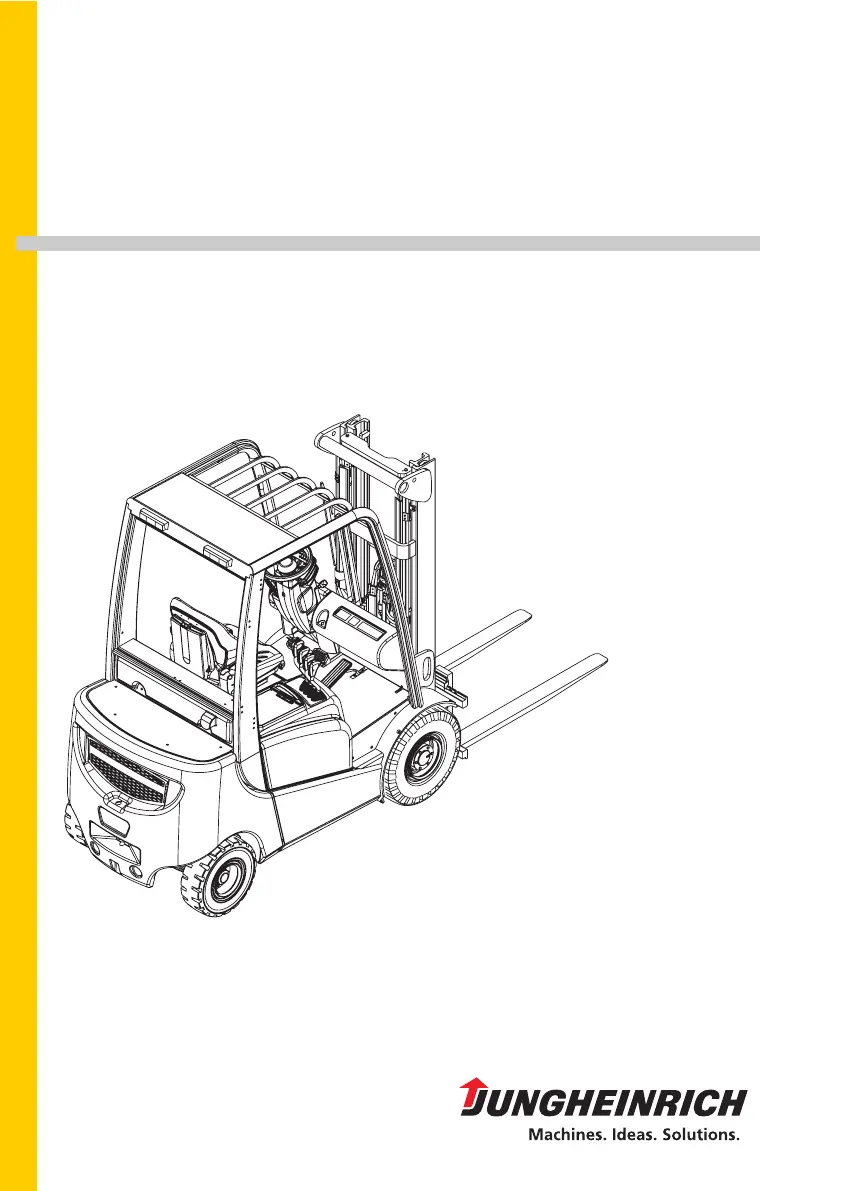
Jungheinrich DFG 316 - User Manual

Jungheinrich DFG 316
186 pages
Print Icon
To Next Page IconTo Next Page
Loading...
öJUNGHEINRICH
11.09 -
08.11
51167624
DFG/TFG 316-435
Operating instructions G
TFG 430
DFG 320
DFG 425
DFG 430
DFG 435
TFG 316
TFG 320
TFG 425
TFG 435
DFG 316

Table of Contents

Questions and Answers

  • Q
    qvaldezSep 12, 2025
    Why is my Jungheinrich Forklifts not reaching maximum speed?
    • D
      Darryl ObrienSep 12, 2025
      If your Jungheinrich Forklifts isn't reaching its maximum speed, the transmission oil level might be too low. Check the transmission oil level and add more if needed.
  • C
    Connor PhillipsAug 27, 2025
    Why is the engine temperature display in the red zone on my Jungheinrich Forklifts?
    • T
      Todd JohnsonAug 27, 2025
      If the engine temperature display on your Jungheinrich Forklifts is in the red zone, it could be due to several reasons. Check the engine oil level and top it up if necessary. Also, the radiator might be contaminated, so clean it. Ensure the coolant level is adequate, checking the engine radiator system for leaks and adding coolant if needed. Lastly, a slipping fan V-belt can cause overheating, so check the V-belt tension, tightening or replacing it as required.
  • K
    Kenneth DeleonAug 27, 2025
    What to do if the engine oil indicator is lit during operation in Jungheinrich DFG 316 Forklifts?
    • T
      Tony MarshAug 27, 2025
      If the engine oil indicator is lit during operation, it indicates that the engine oil level is too low. Check the engine oil level and top it up if necessary.
  • D
    Diane NorrisAug 29, 2025
    What to do if the starter does not turn in Jungheinrich Forklifts?
    • R
      Richard CoxAug 29, 2025
      If the starter doesn't turn, it could be due to several reasons: * The travel direction switch might not be in neutral. Turn the travel direction switch to neutral. * The battery charge might be too low. Check the battery charge and charge the battery if necessary. * The battery terminal cable could be loose or the terminals oxidized. Clean and grease the terminals, then tighten the battery terminal cable. * The starter cable might be loose or broken. Check the starter cable, and tighten or replace it as required. * The starter magnetic switch might be jammed. Check if the magnetic switch audibly engages.
  • A
    Amanda FreemanAug 31, 2025
    What to do if the engine temperature display is in the red zone in Jungheinrich DFG 316?
    • G
      Gregory YatesAug 31, 2025
      If the engine temperature display is in the red zone, it could indicate several problems: * The engine oil level might be too low; check and top up if necessary. * The radiator might be contaminated; clean it. * The coolant level might be too low; check the engine radiator system for leaks and add coolant if necessary. * The fan V-belt might be slipping; check the V-belt tension and tighten or replace it as required.
  • A
    Angela RogersSep 1, 2025
    What to do if the transmission oil indicator is lit during operation in Jungheinrich DFG 316?
    • S
      Stephanie MitchellSep 1, 2025
      If the transmission oil indicator is lit during operation, it suggests that the transmission oil level is too low. Check the transmission oil level and top up if necessary. Also, the radiator might be contaminated, so ensure you clean it.
  • D
    Dr. Jennifer BradleyNov 20, 2025
    What to do if the engine does not start in Jungheinrich DFG 316 Forklifts?
    • M
      mary19Nov 20, 2025
      If the engine doesn't start, several issues could be the cause: * The air filter might be contaminated, so you should clean or replace it. * The Bowden cable could be faulty or hanging, requiring a check. * The LPG bottle shutoff valve might be closed, so ensure it's open. * The LPG bottle may be empty, requiring a replacement. * The ignition distributor cap could be damp; dry it and apply contact spray if needed. * Spark plugs might be damp, oily, or loose; dry, clean, and tighten them. * The spark plugs could be faulty, so replace them. * The fuel tank might be empty, with the injection system having suctioned in air; fill up with diesel and bleed the injection system. * There could be water in the fuel system; discharge the fuel system and add fuel. * The fuel filte...
  • M
    Mario SummersNov 23, 2025
    What to do if my Jungheinrich DFG 316 engine does not start?
    • M
      Matthew LeeNov 23, 2025
      If the engine of your Jungheinrich Forklifts fails to start, several factors could be responsible. A contaminated air filter can prevent the engine from starting, so clean or replace it. Check the Bowden cable for any faults or if it's hanging. If you're using LPG, ensure the LPG bottle shutoff valve is open and that the LPG bottle isn't empty—replace it if it is. Dampness on the ignition distributor cap can also cause issues; dry the cap and apply contact spray if necessary. Inspect the spark plugs to ensure they are dry, clean, and properly tightened; replace them if they are faulty. For diesel engines, ensure the fuel tank isn't empty and that the injection system hasn't suctioned in air; fill up with diesel and bleed the injection system if needed. Water in the fuel system can also be ...
  • A
    andersonlauraSep 12, 2025
    What to do if the engine is running but my Jungheinrich DFG 316 won't move?
    • T
      Tracey GilmoreSep 12, 2025
      If your Jungheinrich Forklifts engine is running but the truck isn't moving, ensure the travel direction switch is set to the required direction and not in neutral. Also, make sure the parking brake is released.
  • M
    Melissa SmithSep 7, 2025
    What does it mean if the motor oil indicator is lit on my Jungheinrich Forklifts?
    • A
      Alexandra HardinSep 8, 2025
      If the motor oil indicator is lit during operation of your Jungheinrich Forklifts, it means that the motor oil level is too low. Check the engine oil level and top up if necessary.

Summary

Operating Instructions

Declaration of Conformity

Formal statement confirming the truck's compliance with EU directives.

Foreword

Introduction to the manual, its structure, and safety mark-ups.

A Correct Use and Application

General

Describes the intended purpose and usage of the industrial truck.

Correct Application

Details correct usage, load handling, and transport guidelines.

Approved Application Conditions

Specifies approved environments, temperatures, and inclines for truck operation.

Proprietor Responsibilities

Outlines duties and responsibilities of the truck owner/proprietor.

Adding Attachments and;or Accessories

Explains requirements for mounting additional equipment.

B Truck Description

Application

Introduces the DFG/TFG 316-435 as a four-wheel IC motor sit-down forklift truck.

Truck Models and Rated Capacity

Explains how rated capacity depends on the specific truck model.

Assemblies and Functional Description

Details the various assemblies and their functions within the truck.

C Transport and Commissioning

Transport

Outlines methods for transporting the truck, considering mast configuration.

Truck Laden

Discusses aspects related to a loaded truck, including center of gravity.

D Fuelling the Truck

General

General safety regulations for handling diesel fuel and LPG.

Adding Diesel

Procedures and safety for adding diesel fuel to the truck.

LPG Containers

Information on using LPG containers and safety regulations.

E Operation

Safety Regulations for the Operation of the Forklift Truck

General safety rules for operating the forklift truck.

Hazardous Area

Defines hazardous zones around the truck during operation.

2 Displays and Controls

2.1 Control Panel with Display Unit

Details the functions of the control panel and display unit.

3 Preparing the Truck for Operation

Checks and Operations to be Performed Before Starting Daily Operation

Daily pre-operation checks to ensure truck safety and functionality.

Entry and Exit

Instructions for safely entering and exiting the truck cab.

Trucks with Reduced Headroom X (o)

Safety warnings for trucks with restricted headroom.

Setting Up the Operator Position

Steps for adjusting the operator's seat and controls for optimal ergonomics.

Seat Belt

Starting the Industrial Truck on Steep Slopes

4 Industrial Truck Operation

4.1 Safety Regulations for Truck Operation

Essential safety rules for operating the forklift truck.

Negotiating Slopes and Inclines

Negotiating Lifts and Docks

Type of Loads to be Carried

Towing Trailers

Exhaust Emissions Can Be Fatal

4.2 Preparing the Truck for Operation

Before Starting the Truck

General advice on operating the truck from the driver's seat.

Requirements

Lists checks needed before starting daily operation.

Switching on the Truck

Procedure for starting the truck's engine and systems.

4.2.1 Starting Procedure for the DFG

4.2.2 Starting Procedure for the TFG

4.3 Parking the Truck Securely

Parking and Leaving the Truck

Step-by-step instructions for parking and leaving the truck.

4.4 Emergency Disconnect

4.5 Travel

Travel

General procedure for moving the truck.

Neutral Locking

Explanation of the neutral locking feature.

Slow Travel; Brake Pedal

4.6 Steering

Steering

Instructions for steering the truck.

4.7 Brakes

4.7.1 Service Brake

How the service brake operates and is applied.

4.7.2 Parking Brake

Instructions for using and engaging the parking brake.

4.8 Adjusting the Forks

Adjusting the Forks

Steps to correctly adjust the forks for load handling.

4.9 Replacing the Forks

4.10 Lifting, Transporting and Depositing Loads

Lifting Load Units

Steps for safely lifting load units onto the forks.

Transporting Load Units

Safe practices for transporting loads.

Depositing Load Units

Procedures for safely placing loads.

4.11 Operating the Lift Mechanism and Integrated Attachments

Controlling the Speed of the Lifting Device

How engine speed and levers control lifting device speed.

4.11.1 Operating the Lift Mechanism with the SOLO PILOT

Using the SOLO PILOT for lift mechanism operations.

Positioning the Integrated Sideshift (Option)

Operating the integrated sideshift function with the SOLO PILOT.

Positioning the Forks with an Integrated Fork Adjuster (Option)

Adjusting fork positions with an integrated adjuster.

4.12 Safety Instructions for Operating Additional Attachments

Safety Instructions for Sideshifter and Fork Adjuster Attachments

Specific safety for sideshifters and fork adjusters.

Safety Instructions for Rotary Attachments

Safety considerations for rotary attachments.

Safety Instructions for Telescopic Attachments

Safety for telescopic attachments and tipover risks.

Safety Instructions for Attachments When Transporting Suspended Loads

Safety Instructions for Using Loading Buckets as Attachments

Safety Notices for Fork Extensions

4.13 Operating Additional Attachments for the SOLO-PILOT

4.13.1 Solo Pilot with Control of ZH1 Hydraulic Port

Operating the SOLO PILOT for ZH1 hydraulic port functions.

4.13.2 Solo Pilot with Control of ZH1 and ZH2 Hydraulic Ports

Operating SOLO PILOT for ZH1 and ZH2 hydraulic ports.

4.13.3 Solo Pilot with Control of ZH1, ZH2 and ZH3 Hydraulic Ports

Operating SOLO PILOT for ZH1, ZH2, and ZH3 hydraulic ports.

4.14 Fitting Additional Attachments

Hydraulic Ports

Information on hydraulic ports and hose connections.

Hydraulic Ports for Clamping Attachments

Specifics on hydraulic ports for clamping attachments.

5 Towing Trailers

Attaching the Trailer

Steps for safely attaching a trailer to the truck.

6 Optional Equipment

6.1 Steel Cab

Features and operation of the steel cab option.

6.2 Sliding Windows

Opening and Closing the Windows

How to open and close the sliding windows.

6.3 Panel Door

6.4 Operator Position Extension

6.5 Backrest Extension

6.6 Heating and Air Conditioning System

6.6.1 Heating

How to operate the heating system.

6.6.2 Air Conditioning System

Safety and operation of the air conditioning system.

Power On and Off

Using the Air Conditioning System at High Air Humidity and Temperature Levels

6.7 Removable Load Backrest

Load Backrest Disassembly

Steps to disassemble the load backrest.

Load Backrest Assembly

Steps to assemble the load backrest.

6.8 Fire Extinguisher

6.9 Rockinger Coupling with Hand Lever or Remote Control

Rockinger Coupling Operation (Attaching Trailers)

Procedure for attaching trailers using the Rockinger coupling.

Rockinger Coupling Operation (Disconnecting Trailers)

Procedure for disconnecting trailers.

6.10 Camera System

Using the Camera System

How to operate the camera system and adjust settings.

Adjusting the Menu Items

Steps for adjusting menu items on the camera monitor.

6.11 Optional Equipment for Working in Areas with Heavy Accumulation of Dust

Procedure

Procedure for fitting and cleaning the lint filter.

6.12 Roof Window Wiper

6.13 Tilt Angle Display

6.14 Speed Reduction

6.15 Reversing Block

6.16 Direction Switch Mounted to the Steering Column

6.17 Temperature Control System

7 Troubleshooting

7.1 Troubleshooting

General approach to troubleshooting and reporting faults.

7.2 Operating the Truck Without Its Own Drive System

7.2.1 Towing the Truck

Safety precautions and procedure for towing the truck.

7.2.2 Emergency Lowering

7.2.3 Starting Aid

F Industrial Truck Maintenance

1 Operational Safety and Environmental Protection

Safety and environmental considerations for maintenance.

2 Maintenance Safety Regulations

Rules and regulations for safe maintenance practices.

Cleaning

Fire Hazard

Safety measures to prevent fires during cleaning.

Risk of Electrical System Damage

Precautions to avoid damaging the electrical system with water.

Risk of Component Damage When Cleaning the Truck

Warning about using high-pressure cleaners and water.

Electrical System

Accident Risk from Electrical System

Safety for personnel working on the electrical system.

Electric Currents Can Cause Accidents

Ensuring the system is voltage-free before maintenance.

Consumables and Used Parts

Environmental considerations for disposing of used parts and fluids.

Welding

Precautions before performing welding operations.

Tyre Type

Lift Chains

Diesel Fuel Can Be Hazardous

Hydraulic Hoses

Hydraulic Line Leaks Can Cause Accidents

Hairline Cracks in the Hydraulic Lines Can Cause Injury and Infection

Danger from Hot Fluids and Components!

3 Servicing and Inspection

WARNING!

Risk of accidents and damage due to improper maintenance.

4 Maintenance Checklist DFG

4.1 Owner

Maintenance tasks to be performed by the owner.

4.1.2 Optional Equipment

Work Lights

Maintenance for work lights.

Strobe Light;Beacon

Maintenance for strobe light/beacon.

Heating

Clamping Device

Sideshifter

Road Traffic Approval (StVZO)

Telescopic Forks

Weather-Proof System

Wiper;Washer System

Fork Positioner

5 Maintenance Checklist TFG

5.1 Owner

Maintenance tasks for the owner on TFG trucks.

5.1.2 Optional Equipment

Work Lights

Maintenance for work lights.

Strobe Light;Beacon

Maintenance for strobe light/beacon.

Heating

Clamping Device

Sideshifter

Road Traffic Approval (StVZO)

Telescopic Forks

Weather-Proof System

Wiper;Washer System

Fork Positioner

6 Lubricants and Lubrication Schedule

6.1 Handling Consumables Safely

Safe handling procedures for consumables.

6.2 Lubrication Schedule

6.3 Consumables

Grease Guidelines

Coolant Specification

Anti-freeze is Poisonous

Warnings about the toxicity of anti-freeze.

Corrosion Damage

Importance of anti-freeze for corrosion protection.

Anti-freeze;Water Mixture Ratio

Correct mixture ratio for anti-freeze and water.

7 Maintenance and Repairs

7.1 Preparing the Truck for Maintenance and Repairs

Safety precautions before starting maintenance or repairs.

WARNING!

Risks associated with working under the truck or raised components.

7.2 Opening the Rear Panel

Procedure for opening the rear panel to access components.

7.3 Unlocking the Engine Bonnet

Unlocking the Engine Bonnet

Procedure to unlock the engine bonnet.

Closing the Engine Cover

Procedure for closing the engine cover.

7.4 Checking the Wheel Attachments.

Checking the Wheel Attachment

Procedure for checking wheel attachments.

7.5 Hydraulic System

7.5.1 Checking the Hydraulic Oil Level

Procedure for checking and topping up hydraulic oil.

7.5.2 Adding Hydraulic Oil

Steps for adding hydraulic oil.

7.5.3 Replacing the Hydraulic Oil Filter

7.5.4 Replacing the Ventilation;Discharge Filter

7.6 Engine Maintenance

7.6.1 Starting the Engine with the Cover Open

Starting the engine with the engine cover open.

7.6.2 DFG Engine Maintenance

Specific engine maintenance for DFG models.

Draining the Engine Oil

Replace the Engine Oil Filter

Adding Engine Oil

7.6.3 Replacing the Fuel Filter

7.6.4 Bleeding the Fuel System

7.6.5 Check V-Belt for Damage

7.6.6 Checking the V Belt Tension

7.6.7 Adjusting the V Belt Tension

7.6.13 Cooling System

Checking the Coolant Level

Procedure for checking the coolant level.

Check the Coolant Concentrate

Check the Cooler and Fan and Clean if Necessary

7.6.14 Replace Air Filter Cartridge

Replace Air Filter Cartridge

Steps to replace the air filter cartridge.

Cleaning the Filter Housing

How to clean the air filter housing.

7.6.15 Adding Window Washer System Fluid

7.7 Checking Electrical Fuses

Checking Electrical Fuses

General procedure for checking electrical fuses.

7.7.1 Fuse Ratings

Fuses

Checking a Fuse

How to check a specific fuse.

Fuse Box for Optional Equipment (DFG;TFG)

Road Traffic System Fuse Box

DFG Options Fuse Box

TFG Options Fuse Box

7.8 Starter Battery

Checking the Battery Condition, Acid Level* and Acid Density*

Procedure for checking battery condition, acid level, and density.

7.9 Exhaust System

Check the Exhaust System Regularly for Leaks.

Procedure for checking exhaust system leaks.

NOTE

Checking emissions at regular intervals.

7.10 Seat Belt Maintenance

Check the Safety Restraint Belt

How to inspect the seat belt for damage and proper function.

Testing the Automatic Blocking System

Testing the seat belt's automatic blocking mechanism.

7.11 Transmission

7.11.1 Checking the Transmission Oil Level

Procedure for checking and topping up transmission oil.

7.12 Brake

7.12.1 Checking the Parking Brake

How to check the parking brake's effectiveness.

7.12.2 Checking the Brake Fluid Level

Procedure for checking and topping up brake fluid.

7.13 Restoring the Truck to Service After Maintenance and Repairs

8 Decommissioning the Industrial Truck

WARNING!

Safety precautions for lifting and jacking the truck during decommissioning.

8.1 Prior to Decommissioning

8.2 During Decommissioning

Full Discharge Can Damage the Battery

Warning about battery self-discharge during storage.

8.3 Restoring the Truck to Service After Decommissioning

WARNING!

Warning about faulty brakes upon restoring service.

9 Safety Tests to be Performed at Intervals and After Unusual Incidents

10 Final De-commissioning, Disposal

11 Human Vibration Measurement

Jungheinrich DFG 316 Specifications

General IconGeneral
Drive TypeDiesel
Load Capacity1600 kg
Standard Lift Height3000 mm
Lift Height3000 mm
Weight (without battery)2750 kg

Related product manuals