This document is a care and instruction manual for the Kenroy Home Gantry Floor Fountain, model 50089. It provides comprehensive guidance on assembly, operation, troubleshooting, and maintenance of the water feature.
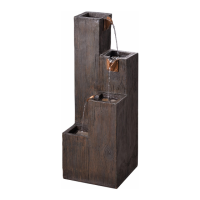
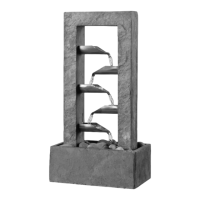
The Kenroy Home Gantry Floor Fountain is a freestanding water feature designed to enhance both indoor and outdoor living spaces with peaceful water displays. Its primary function is to circulate water, creating a soothing visual and auditory experience. The fountain features a contemporary design with a main fountain body, a basin, and a water-guiding pad to ensure even water flow. It also incorporates lighting elements to add to its aesthetic appeal, especially in low-light conditions.
Usage Features:
The fountain is designed for straightforward assembly and operation. The manual emphasizes that while it can be used indoors, splashing may occur, so careful placement is advised. For outdoor use, it is rated to withstand various weather conditions, though "winterizing" is recommended in regions where temperatures drop below 33°F to prevent damage.
- Location Selection: The manual recommends placing the fountain against a wall for optimal display and stability. It also advises considering the proximity to a grounded 110V outlet, as the pump and light cords extend 9.5 feet from the pump access door. For best results, the fountain should be placed on a firm, level surface. Leveling shims are provided to address uneven ground, ensuring proper water flow.
- Assembly Process: The assembly involves several steps, starting with attaching the rubber hose to the metal tube on the bottom of the fountain body. Subsequently, the pump is attached to the rubber hose. The pump and light cords are then fed up through an entry on the back of the fountain body. The fountain body is secured to the basin using specific fasteners (J and K).
- Final Steps for Operation: Once the main structure is assembled, the lid and splash guard are placed into the top of the fountain body. Decorative river stones are then placed onto the top of the basin, adding to the aesthetic. The basin requires approximately 4.2 gallons of distilled water for proper operation. The light connectors and cords are connected and securely tightened. Finally, the pump and light transformer are plugged into outlets, and the light can be turned on via a switch. It's important to note that the light does not need to be on for the pump to operate.
- Water Type: Distilled water is highly recommended to minimize mineral deposits, bacterial growth, and algae buildup, which can damage the water feature basin and pump. If distilled water is not used, more frequent maintenance will be necessary.
- Pump Speed Adjustment: Depending on the pump type, the water flow rate can be adjusted by moving a slider or turning a knob on the pump, allowing users to customize the water display.
- Safety Precautions: The manual highlights several safety warnings. It advises protecting surrounding surfaces from splashing, especially when the fountain is first turned on. The water feature should not be placed on or near surfaces that can be damaged by water. To reduce the risk of electrical shock, the power supply should always be disconnected before performing any work on the water feature. Small children and pets should be kept away from the fountain to prevent accidental drowning.
Maintenance Features:
Regular maintenance is crucial for the longevity and optimal performance of the Kenroy Home Gantry Floor Fountain. The manual provides detailed instructions for cleaning the pump, maintaining water quality, and addressing common issues.
- Pump Cleaning: To clean the pump, it must first be unplugged from the electrical outlet. A small, soft brush or a stream of water can be used to remove debris. For a more thorough cleaning, the front cover and impeller cover should be removed. The impeller/rotor assembly can then be gently pulled out of the pump housing, rinsed with clean water, along with the cavity. If the pump includes a sponge filter, it should also be rinsed. Algae buildup can be flushed out with a garden hose.
- Water Quality Maintenance: Periodically changing the water is recommended to prevent algae buildup. Using distilled water significantly reduces the need for frequent cleaning related to mineral deposits and organic growth.
- General Fountain Cleaning: Over time, oils, dirt, and algae can accumulate on the water feature. To restore its original state, all water should be emptied, and a mild soap (like dish detergent) along with an acrylic brush can be used to clean all parts. For uneven water flow, which can be caused by oil and dirt interrupting the water path, the water guiding pad (if included) or a mildly abrasive scrub pad with mild soap can be used to clean the surface.
- Water Level Monitoring: The water level will recede over time due to evaporation. The frequency of refilling depends on environmental factors such as humidity and sun exposure, as well as how often the fountain is run. It is recommended to check the water level before each operation to ensure the pump is fully submerged, as this is critical for proper function and to prevent pump damage. Some models may include fill lines to aid in visualizing the required water level.
- Troubleshooting Pump Issues:
- Pump Fails to Run: The pump has an overheating protection feature that will shut it off if it gets too hot or is not covered by water. It may take a few minutes to cool down and restart once submerged. If the pump cycles on and off, it might be due to cooling and heating without sufficient water coverage. An air lock can also prevent the pump from running; unplugging and plugging it back in several times can clear trapped air. Users should also check the circuit breaker, try a different outlet, inspect tubing for kinks or obstructions, and clean any algae buildup. If the rotor is jammed or broken, the front cover and impeller cover should be removed to access and inspect the impeller area.
- Low Flow Rate ("Spewing" or "Burping"): This usually indicates insufficient water level. The water should always be above the minimum fill line (if present) to ensure the pump is fully submerged.
- Abnormal Noise (with water): If the pump makes abnormal noise, disconnect the power supply, remove the pump front cover and impeller cover. Gently pull out the impeller/rotor assembly from the pump housing, rinse it and the cavity with clean water. If any breakage or surface damage is found, contact customer service for a replacement part. Additionally, ensure the pump is fully submerged and not touching any part of the water feature other than the bottom, as vibrations can cause unwanted noise. Placing a sponge or soft material between the pump and other parts can help pad the pump and reduce noise.
- Hose Length Adjustment: If the hose is too long, it can be cut to the desired length using a sharp blade or scissors.
- Weekly Inspection: A weekly inspection of the water feature, floor, and adjacent wall for moisture build-up is advised, especially in humid environments, with cleaning performed as necessary.
The manual also provides contact information for customer support via phone, email, and social media, and directs users to the Kenroy Home website and YouTube channel for additional resources and information on water features.

 Need help?
 General


 To Next Page