This document provides instructions for the Kenwood Type KM28, KM240 series, KM260 series, and KM280 series kitchen machines. It covers safety guidelines, operation of the main unit and various attachments, and care and cleaning instructions.
Before using the appliance, it is crucial to read and retain all instructions. Always remove packaging and labels. Ensure the appliance is switched off and unplugged before fitting or removing tools and attachments, after use, and before cleaning. Never allow the cord to hang where a child can reach it. Keep fingers away from moving parts and fitted tools/attachments, and never put fingers or other objects into the hinge mechanism. The appliance should never be left unattended while operating. Do not use a damaged appliance or attachment; seek repair if necessary. Prevent the power unit, cord, or plug from getting wet. Only use authorized attachments, and never more than one at a time. When using an attachment, refer to the specific safety information provided in the manual for that product. Do not exceed maximum capacities. When lifting the appliance, ensure the head is locked, and the bowl, tools, and cord are secure. This appliance can be used by individuals with reduced physical, sensory, or mental capabilities, or lack of experience and knowledge, if they are supervised and instructed on safe use and understand the hazards. Misuse can lead to injury. This appliance is not for use by children; keep it and its cord out of their reach. Children should be supervised to prevent them from playing with the appliance. The appliance is intended for domestic use only; Kenwood will not be liable for improper use or failure to comply with these instructions.
Blenders AT282 and AT283
- SCALD RISK: Allow hot ingredients to cool to room temperature before blending.
- Blade Safety: Do not touch the sharp blades; keep the blade unit away from children.
- Goblet Use: Only use the goblet with the supplied blade unit. Never attempt to fit the blade unit to the machine without the goblet.
- Operation Safety: Always unplug the machine before putting hands or utensils into the goblet. Never run the blender empty. Operate the blender only with the lid in place. Never fit the blade unit to the power unit without the blender goblet.
- Cleaning Blades: Handle the blade assembly with care, avoiding contact with the cutting edge during cleaning.
- Removing Blender: When removing the blender from the power unit, switch off and wait until the blades have completely stopped. For model AT283, take care not to unscrew the goblet from the base assembly.
- Misuse: Misuse of the blender can result in injury.
- Overheating: Do not run the blender for longer than one minute to prevent overheating. Switch off as soon as the desired consistency is achieved.
Food Processor AT284
- Blade and Disc Safety: The blades and discs are very sharp; handle with care. Always hold the knife blade by the finger grip at the top, away from the cutting edge, during both handling and cleaning.
- Pouring Contents: Always remove the knife blade before pouring contents from the bowl.
- Operation Safety: Keep hands and utensils out of the processor bowl while connected to the power supply. Never use fingers to push food down the feed tube; always use the supplied pusher(s).
- Bowl Capacity: When slicing/shredding or rasping, do not let the bowl fill up to the cutting disc; empty it regularly. Do not exceed the 'MAX' capacity level on the bowl.
- Vibration: If excessive vibration occurs, reduce speed or stop the machine and remove some contents.
- Interlock Mechanism: This machine can be damaged and cause injury if the interlock mechanism is subjected to excessive force.
Before Plugging In
Ensure your electricity supply matches the rating on the underside of the appliance. For UK users, the cord wires are colored Blue (Neutral) and Brown (Live). The appliance must be protected by a 13A approved (BS1362) fuse. For non-rewireable plugs, the fuse cover must be refitted when replacing the fuse. If the fuse cover is lost, the plug must not be used until a replacement is obtained. The correct fuse cover is identified by color and can be obtained from a Kenwood Authorized Repairer. If a non-rewireable plug is cut off, it must be destroyed immediately to prevent electric shock hazard. This appliance conforms to EC directive 2004/108/EC on Electromagnetic Compatibility and EC regulation no. 1935/2004 of 27/10/2004 on materials intended for contact with food.
Before Using for the First Time
Wash all parts as per 'care and cleaning' instructions. Push any excess cord into the cord storage compartment at the back of the appliance.
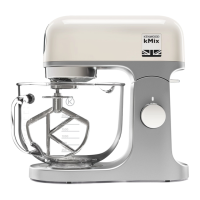
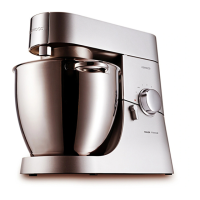
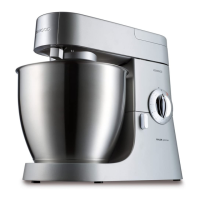
Kitchen Machine Key
- Medium speed outlet
- High speed outlet
- Tool socket
- Head release lever
- Mixer head
- Bowl
- On/off and speed switch
- Power unit
- Cord storage compartment
- Beater
- Dough hook with removable guard
- Whisk
- Splashguard
Attachments (Model Variant Dependent)
- Blender (AT282 and AT283)
- Citrus press
- Food processor (AT284)
- Beater: Ideal for cakes, biscuits, pastry, icing, fillings, éclairs, and mashed potato.
- Whisk: Used for eggs, cream, batters, fatless sponges, meringues, cheesecakes, mousses, and soufflés. Avoid using the whisk for heavy mixtures like creaming fat and sugar, as this may cause damage.
- Dough Hook: Designed for yeast mixtures.
To Use Your Mixer
- Press down the head release lever (4) and raise the mixer head until it locks into position.
- Select a tool and push it into the tool socket (3). Ensure the guard is fitted onto the shaft of the dough hook before inserting into the outlet, then fit the guard to the mixer outlet to prevent food ingress.
- Fit the bowl into the base and turn clockwise to lock it into position (6).
- Press down the head release lever (4) and lower the mixer head until it locks into position.
- Plug into the power supply, then switch on and turn the speed switch (7) to the desired setting. To switch off, turn to '0'. Use the pulse setting for short bursts.
- Unplug from the power supply.
- Raise the mixer head and, while holding it steady, pull the tool from the outlet.
Important Mixer Operation Notes
- Some movement of the mixer head is normal when mixing heavy loads like bread dough.
- If the mixer head is raised during operation, the machine will stop immediately. To restart, lower the mixer head, turn the speed switch to the off position, wait a few seconds, then re-select the speed.
- If power is interrupted, turn the speed switch to the off position, wait a few seconds, then re-select the speed.
- The mixer will not operate unless all outlet covers are correctly fitted.
- If the machine labors, switch off and remove some mixture or increase speed.
- Always remove attachments from the medium and high-speed outlets before raising the mixer head.
Mixing Hints
- Switch off and scrape the bowl with a spatula when necessary.
- Eggs at room temperature are best for whisking.
- Before whisking egg whites, ensure no grease or egg yolk is on the whisk or bowl.
- Use cold ingredients for pastry unless the recipe specifies otherwise.
- When creaming fat and sugar for cake mixes, use fat at room temperature or soften it first.
- The mixer has a 'soft start' feature to minimize spillage. With heavy mixtures like bread dough, it may take a few seconds to reach the selected speed.
Points for Bread Making
- Never exceed maximum capacities to avoid overloading the machine.
- Some movement of the mixer head is normal with heavy bread dough loads.
- Ingredients mix best if liquid is added first.
- Stop the machine at intervals to scrape mixture off the dough hook.
- Different flours require varying liquid quantities, affecting dough stickiness and machine load. Observe the machine while mixing; operation should not exceed 6-8 minutes.
Speed Switch Guide
These are general guides and may vary based on mixture quantity and ingredients.
- Beater:
- Creaming fat and sugar: Start on minimum, gradually increasing to a higher speed.
- Beating eggs into creamed mixtures: Use medium to high speed.
- Folding in flour, fruit, etc.: Use a low to medium speed.
- All-in-one cakes: Start on a low speed, gradually increasing to a higher speed.
- Rubbing fat into flour: Use a low to medium speed.
- Whisk: Gradually increase to maximum.
- Dough Hook: Use a low to medium speed.
Maximum Capacities
- Shortcrust pastry: 450g flour weight
- Sponge cake (one stage mix): 1.6 Kg total mix
- Fruit cake mix: 1.8 Kg total mix
- Bread dough: 500g flour weight
- Egg whites: 8
Electronic Speed Sensor Control
Your mixer features an electronic speed sensor control that maintains speed under varying load conditions (e.g., kneading bread dough, adding eggs to cake mix). You may notice speed variations as the mixer adjusts to the load and selected speed, which is normal.
To Fit and Use the Splashguard
- Fit the bowl into the base and add ingredients.
- Fit the tool, then lower the mixer head.
- Fit the splashguard onto the bowl by sliding the cut-away section around the mixer head (13).
- To remove, reverse the procedure.
- Ingredients can be added directly to the bowl via the chute during mixing.
Care and Cleaning
- Always switch off and unplug before cleaning.
- Power Unit: Wipe with a damp cloth, then dry. Never use abrasives or immerse in water.
- Bowl, Tools, Splashguard, Removable Guard on Dough Hook: Wash by hand, then dry thoroughly or wash in the dishwasher. Never use a wire brush, steel wool, or bleach on the stainless steel bowl. Use vinegar to remove limescale. Keep away from heat (cooker tops, ovens, microwaves).
Blenders AT282 and AT283 (If Supplied)
Use the blender for soups, drinks, pâtés, breadcrumbs, biscuit crumbs, chopping nuts, and crushing ice.
Important Blender Notes
- The skirt on the bottom of the AT282 acrylic goblet is fitted during manufacture and should not be removed.
- The attachment will not operate if incorrectly assembled, incorrectly fitted to the kitchen machine, or if the medium speed outlet cover is not fitted.
- Do not put dry ingredients into the blender before switching on. Cut them into cubes, then remove the filler cap and drop cubes through the lid hole while the machine is running.
- Model AT282: Do not process spices like cloves, dill, and cumin seeds, as they can damage the acrylic.
- Do not use the blender as a storage container; keep it empty before and after use.
- Never crush ice on its own; always add a little water.
- Model AT282: Never blend more than 1.5 liters (2 pints 12fl oz); less for frothy liquids like milkshakes.
- Model AT283: Never blend more than 1.2 liters (2 pints 2fl oz); less for frothy liquids like milkshakes.
- Smoothie Recipes: Never blend frozen ingredients that have formed a solid mass; break them up before adding to the blender.
Acrylic Blender AT282 Key
- Lid
- Filler cap
- Goblet
- Sealing ring
- Blade unit
Glass Blender AT283 Key
- Filler cap
- Lid
- Goblet
- Sealing ring
- Blade unit
- Base
To Use Your Acrylic Blender AT282
- Ensure the sealing ring (4) is correctly fitted on the blade unit (5).
- Hold the underside of the blade unit and insert the blades into the base of the blender. Twist to lock the assembly firmly.
- Put ingredients into the goblet (3).
- Fit the lid (1) to the goblet and twist clockwise, ensuring the tab on the lid slots into the handle groove. Markings should align when correctly fitted.
- Place the filler cap (2) into the lid.
- Remove the high speed outlet cover (2) by turning anti-clockwise and lifting off.
- Place the blender over the outlet, handle towards the back, and turn clockwise to lock firmly in place.
- Switch to maximum speed.
- Once desired consistency is achieved, switch off and unplug.
- Remove the blender.
- Refit the high speed outlet cover after use.
To Use Your Glass Blender AT283
- Ensure the sealing ring (4) is correctly fitted on the blade unit (5).
- Fit the blade unit inside the base (6).
- Screw the glass goblet (3) onto the base.
- Put ingredients into the goblet.
- Fit the lid (2) and push down to secure.
- Place the filler cap (1) into the lid and push down to secure.
- Remove the high speed outlet cover (2) by turning anti-clockwise and lifting off.
- Place the blender onto the outlet, handle towards the back. Turn the blender clockwise to lock firmly in place until the two arrows align.
- Switch to maximum speed.
- Once desired consistency is achieved, switch off and unplug.
- Remove the blender.
- Refit the high speed outlet cover after use.
Blender Hints
- To prevent leaks, ensure the base is locked firmly into the goblet.
- When making mayonnaise, put all ingredients except oil into the blender. With the machine running, remove the filler cap and add oil slowly and evenly.
- For thick mixtures (e.g., pâté, dips), use low to medium speed, scraping down when necessary. If processing is difficult, add more liquid. Alternatively, use the pulse setting to move ingredients over the blades.
Blender Care and Cleaning
- Always switch off and unplug before removing the attachment from the kitchen machine.
- Dismantle the attachment fully before cleaning.
- Empty the goblet before unlocking the base.
- Blade Unit: Remove and wash the sealing ring. Brush the blades clean under the tap, keeping the underside of the unit dry. Leave to dry.
- Other Parts: Wash by hand in hot, soapy water. Alternatively, the filler cap, lid, base, and glass blender can be washed in your dishwasher.
Carrot and Coriander Soup Recipe
- Ingredients: 25g butter, 1 chopped onion, 1 crushed garlic clove, 750g carrot cut into 1.5 cm cubes (or 600g for a lighter soup), cold chicken stock, 10-15ml ground coriander, salt, and pepper.
- Method:
- Melt butter in a pan, add onion and garlic, and fry until soft.
- Place carrot into the blender, add onion and garlic. Add enough stock to reach the 1.5 level marked on the goblet. Fit the lid and filler cap.
- Blend on the pulse setting for 5 seconds for a coarse soup or longer for a finer result.
- Transfer mixture to a saucepan, add coriander and seasoning, and simmer for 30-35 minutes or until cooked.
- Adjust seasoning and add extra liquid as needed.
Additional recipes can be found on the Kenwood website: www.kenwoodworld.com
Food Processor AT284 (If Supplied)
Use the food processing attachment to chop, slice, shred, and rasp. The citrus juicer attachment (if supplied) can be used to juice citrus fruit and only with the AT284 food processor.
Important Food Processor Notes
- When removing packaging, ensure the plastic blade cover is removed from the knife blade. Handle with care as blades are very sharp. The cover is for protection during manufacture and transit only and should be discarded.
- The attachment will not operate if incorrectly assembled or fitted to the kitchen machine, or if the high speed outlet cover is not fitted.
Food Processor Key (15 & 16)
- Pushers: large and small
- Feed tube
- Food processor lid
- Finger grip
- Knife blade
- Food processor bowl
- Drive shaft
- Thick slicer/shredder disc
- Thin slicer/shredder disc
- Rasping disc
Discs (If Supplied)
- Thin (julienne style) chipper disc
- Standard chipper disc
- Extra coarse shredding disc
Citrus Juicer (If Supplied)
- Cone
- Sieve
Not all parts listed are necessarily included; contents depend on the model variant.
Knife Blade
Use the knife blade to chop raw and cooked meat, cooked eggs, vegetables, nuts, pâtés, and dips, and to make crumbs from bread and biscuits.
To Use the Knife Blade
- Remove the medium speed outlet cover by lifting off (1).
- Place the drive shaft (7) onto the outlet (2).
- Fit the bowl (6) over the drive shaft with the handle above the on/off and speed switch, and turn clockwise until it locks into position (3).
- Fit the knife blade (5) over the drive shaft and turn until it drops all the way down. The knife blade is very sharp; always handle with care.
- Cut food and place into the bowl, ensuring even distribution.
- Fit the lid (3), feed tube (2) above the speed switch, and turn clockwise, ensuring the tab on the lid slots into the groove in the bowl handle (4). Markings should align when correctly fitted.
- The attachment will not operate if incorrectly assembled or fitted to the kitchen machine, or if the high speed outlet cover is not fitted.
- Fit the pushers (1).
- Switch on and process until desired consistency is achieved. A high speed is recommended for most chopping functions.
- Use the pulse setting for short bursts of power. The pulse operates as long as the switch is held.
- Switch off and unplug.
- Remove the attachment.
- Refit the medium speed outlet cover after use.
Knife Blade Hints
- Cut food before placing into the bowl. Meat, bread, vegetables, and other similar-textured foods should be cut into approximately 2cm/¾ inch cubes. Biscuits should be broken into pieces and added down the feed tube while the machine is operating.
- Herbs are best chopped when clean and dry.
- Do not blend liquid ingredients as they may leak around the lid. A blender is available for this purpose. However, when puréeing soups, drain solids, blend, and then return to the liquid.
- Take care not to over-process when using the knife blade.
- Do not use the knife blade to mix heavy loads like bread dough, as this may damage the mixer. Use the dough hook in the mixing bowl for bread and the beater in the bowl for cakes and pastry.
- Do not use the knife blade to chop ice cubes or other hard foods, such as spices, as they may damage the attachment.
- If adding almond essence or flavoring, avoid contact with plastic, as this may result in permanent marking.
Knife Blade Maximum Capacity
- Meat: 400g (14oz). To make mince, trim raw meat of excess fat, cut into 2 cm/¾ inch cubes, place into the processor bowl, and operate for approximately 20 seconds or until the desired texture is achieved. Longer processing results in a smoother texture.
Slicer/Shredder and Rasping Disc
Use the slicer/shredder to slice or shred fruit, vegetables, and cheese, and the rasping disc for grating Parmesan cheese and potato for German potato dumplings.
What the Cutting Discs Do
- Slicer/Shredders (8 and 9): These discs are reversible; one side slices, the other shreds. You can slice cheese, carrot, potato, cabbage, cucumber, courgette, beetroot, onion. You can shred cheese, carrot, potato, and similar-textured foods. Your chosen cutting side must be uppermost.
- Rasping Disc (10): Grates Parmesan cheese and potato for German potato dumplings.
- Thin (Julienne Style) Chipper (11): Cuts potatoes for Julienne style French fries and firm ingredients for salads, garnishes, casseroles, and stir-fries (e.g., carrot, swede, courgette, and cucumber).
- Standard Chipper (12): Cuts potatoes for thin French fries and firm ingredients for salads and dips (e.g., swede, cucumber).
- Extra Coarse Shredder (13): Coarsely shreds cheese and carrot.
Using the Cutting Discs
- Remove the medium speed outlet cover by lifting off.
- Place the drive shaft (7) onto the outlet (2).
- Fit the bowl (6) over the drive shaft with the handle above the on/off and speed switch, and turn clockwise until it locks into position (3).
- Place the cutting disc onto the drive shaft. Your chosen cutting side must be uppermost. Handle the cutting discs with care; they are extremely sharp. Hold the discs by the center grip.
- Fit the lid (3), feed tube (2) above the speed switch, and turn clockwise, ensuring the tab on the lid slots into the groove in the bowl handle (4). Markings should align when correctly fitted.
- The attachment will not operate if incorrectly assembled or fitted to the kitchen machine, or if the high speed outlet cover is not fitted.
- Choose which feed tube to use. The pusher contains a smaller feed tube for individual items or thin ingredients.
To Use the Small Feed Tube
First, put the large pusher inside the feed tube.
To Use the Large Feed Tube
Use both pushers together.
- Put the food into the feed tube.
- Switch on and push down evenly with the pusher. Never put your fingers in the feed tube. A medium speed is recommended for soft foods like cucumber, and a medium/high speed for firmer foods like carrots and hard cheese.
- When slicing/shredding or rasping, do not let the bowl fill up to the cutting disc; empty it regularly.
- Do not exceed the 'MAX' capacity level on the bowl.
- Switch off and unplug.
- Remove the attachment.
- Refit the medium speed outlet cover after use.
Cutting Disc Hints
- Use fresh ingredients.
- Do not cut food too small. Fill the width of the large feed tube fairly full to prevent food from slipping sideways. Alternatively, use the small feed tube.
- When slicing or shredding, food placed upright comes out shorter than food placed horizontally.
- After using a cutting disc, there will always be a small amount of waste on the disc or in the food.
Cutting Disc Care and Cleaning
- Always switch off and unplug before removing the attachment from the kitchen machine.
- Dismantle the attachment fully before cleaning.
- Bowl, Lid, and Attachments: Wash by hand, then dry. Take care as the blades and cutting discs are sharp. Alternatively, they can be washed on the top rack of your dishwasher. A short, low-temperature program is recommended.
- After use, store the knife blade in the processor bowl.
Citrus Juicer
- Note: This attachment can only be used with the food processor AT284.
- Use the citrus juicer to squeeze juice from citrus fruits like oranges, lemons, limes, and grapefruits.
Citrus Juicer Key
- Cone
- Sieve
To Use Your Citrus Juicer
- Remove the medium speed outlet cover by lifting off (1).
- Place the drive shaft (7) onto the outlet (2).
- Fit the bowl (6) over the drive shaft with the handle above the on/off and speed switch, and turn clockwise until it locks into position (3).
- Fit the sieve (15) into the bowl, ensuring the lug on the rim locks into the corresponding slot in the bowl handle (5).
- The attachment will not operate if incorrectly assembled or fitted to the kitchen machine, or if the high speed outlet cover is not fitted.
- Place the cone (14) over the drive shaft, turning until it drops all the way down.
- Cut the fruit in half. Switch to speed 3 and press the fruit onto the cone.
- Note: Empty the bowl regularly and never let the juice reach the underside of the sieve.
- Switch off and unplug.
- Lift off the cone. Unlock and and remove the sieve.
- Unlock the bowl and pour off the juice.
Citrus Juicer Care and Cleaning
- Always switch off and unplug before removing the attachment from the kitchen machine.
- Wash the cone, sieve, and bowl by hand, then dry thoroughly. Alternatively, wash in the dishwasher (top rack only).
Service and Customer Care
- If the cord is damaged, it must be replaced by Kenwood or an authorized Kenwood repairer for safety reasons.
- UK: For help with using your appliance, servicing, or repairs, call Kenwood Customer Care on 023 9239 2333. Have your model number (e.g., KM280 series or Type KM28) and date code (5 digit code e.g., 13L35) ready. These are located on the underside of the Kitchen machine.
- Spares and Attachments: Call 0844 557 3653.
- Other Countries: Contact the shop where you bought your appliance.
- Designed and engineered by Kenwood in the UK.
- Made in China.
At the end of its working life, the product must not be disposed of as urban waste. It must be taken to a special local authority differentiated waste collection center or to a dealer providing this service. Disposing of a household appliance separately avoids possible negative consequences for the environment and health deriving from inappropriate disposal and enables the constituent materials to be recovered to obtain significant savings in energy and resources. As a reminder of the need to dispose of household appliances separately, the product is marked with a crossed-out wheeled dustbin.
Guarantee (UK Only)
If your machine goes wrong within one year from the date of purchase, it will be repaired or replaced free of charge, provided:
- You have not misused, neglected, or damaged it.
- It has not been modified.
- It is not second-hand.
- It has not been used commercially.
- You have not fitted a plug incorrectly.
- You supply your receipt to show when you bought it.
This guarantee does not affect your statutory rights.

 Need help?
 General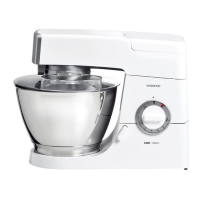






 To Next Page