6. IN CASE OF FIRE
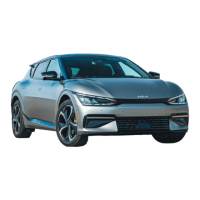
6.3.2 High-Voltage Battery
Damage and Fluid Leaks
If electrolyte solution leakage, or any
damage to the Lithium ion battery
casing is observed, the first responders
should attempt to neutralize the battery
by applying a large volume of water to
the battery pack while wearing
appropriate Personal Protective
Equipment (PPE). The neutralization
process helps stabilize the thermal
condition of the battery pack but does
not discharge the battery.
• Do not put any smoke, spark, flame
around the vehicle.
• Do not touch or step on the spilled
electrolyte.
• If electrolyte leak occurs, wear
appropriate solvent resistant PPE and
use soil, sand, or a dry cloth to clean up
the spilled electrolyte. Be sure to
adequately ventilate the area.
6.3 How to Deal with the Situation
When there is a fire:
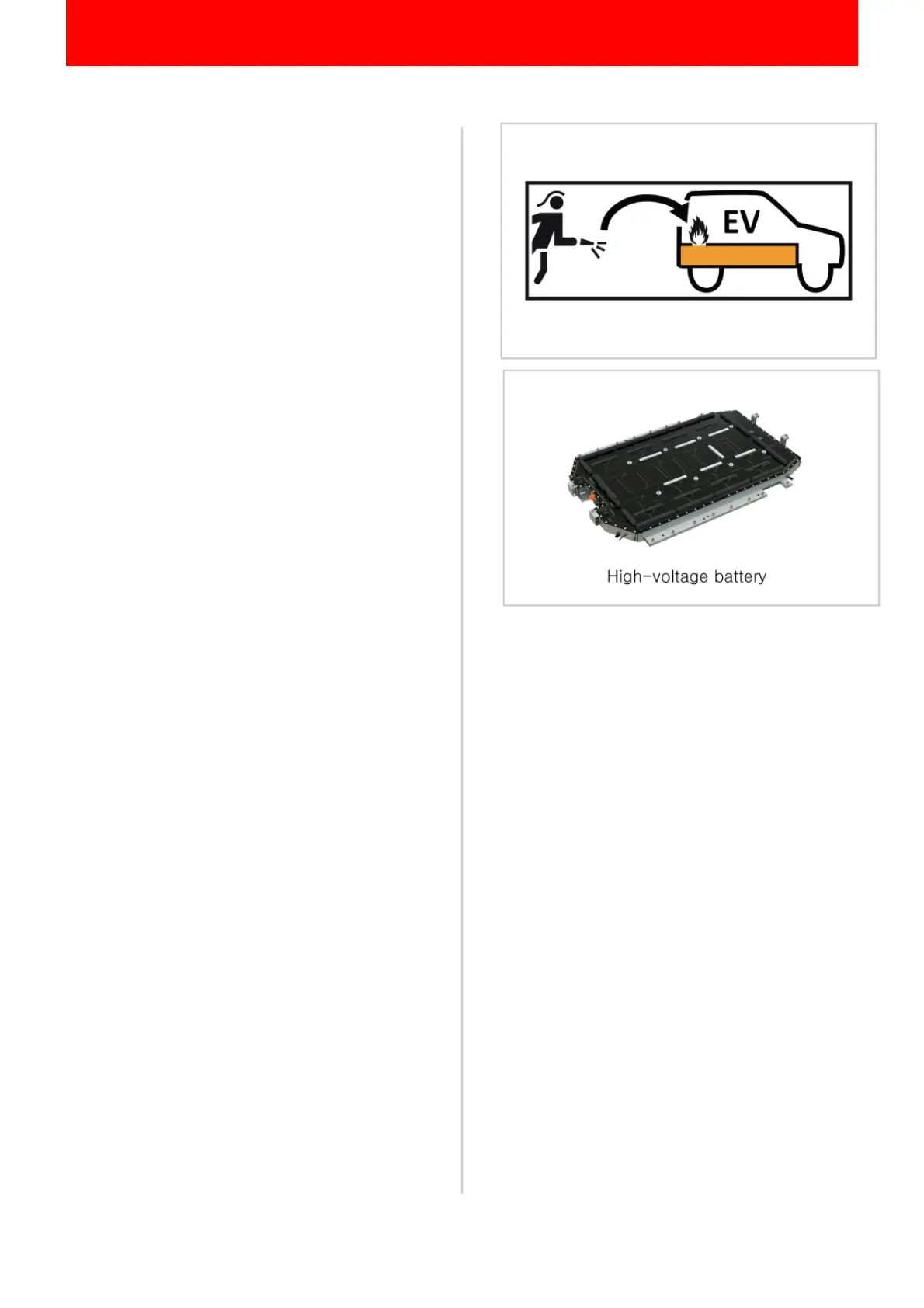
Extinguish the fire with a large amount of
water. Don’t use seawater or salt water. It
can generate the toxic vapor or cause the
re-ignition.
When damaged battery or fluid leak:
• Disconnect 12 V Battery (-) terminal
• Disable the high-voltage system
• Neutralize the battery by applying a
large volume of water. (Note: this
doesn’t discharge the battery)
• Discharge battery
6.3.1 Vehicle Fire
• Use a large volume of water (max.
100,000 liter). Water must cool down the
battery.
• Adding water to the high-voltage battery
casing can enhance the battery's cooling
process. However, it is crucial to avoid
attempting to penetrate the HV battery or
its casing in order to apply water.
• Introducing water into the high-voltage
battery can be difficult due to the battery
case.
• Introduce water into any openings that
may have resulted from the accident or fire.
Kia EV9
Emergency Response Guide
18



 To Next Page