15
3
3
Safety features of your vehicle Seats
den stop. Objects carried on the folded
down seatback should not extend higher
than the top of the front seats. This
could allow cargo to slide forward and
cause injury or damage during sudden
stops.
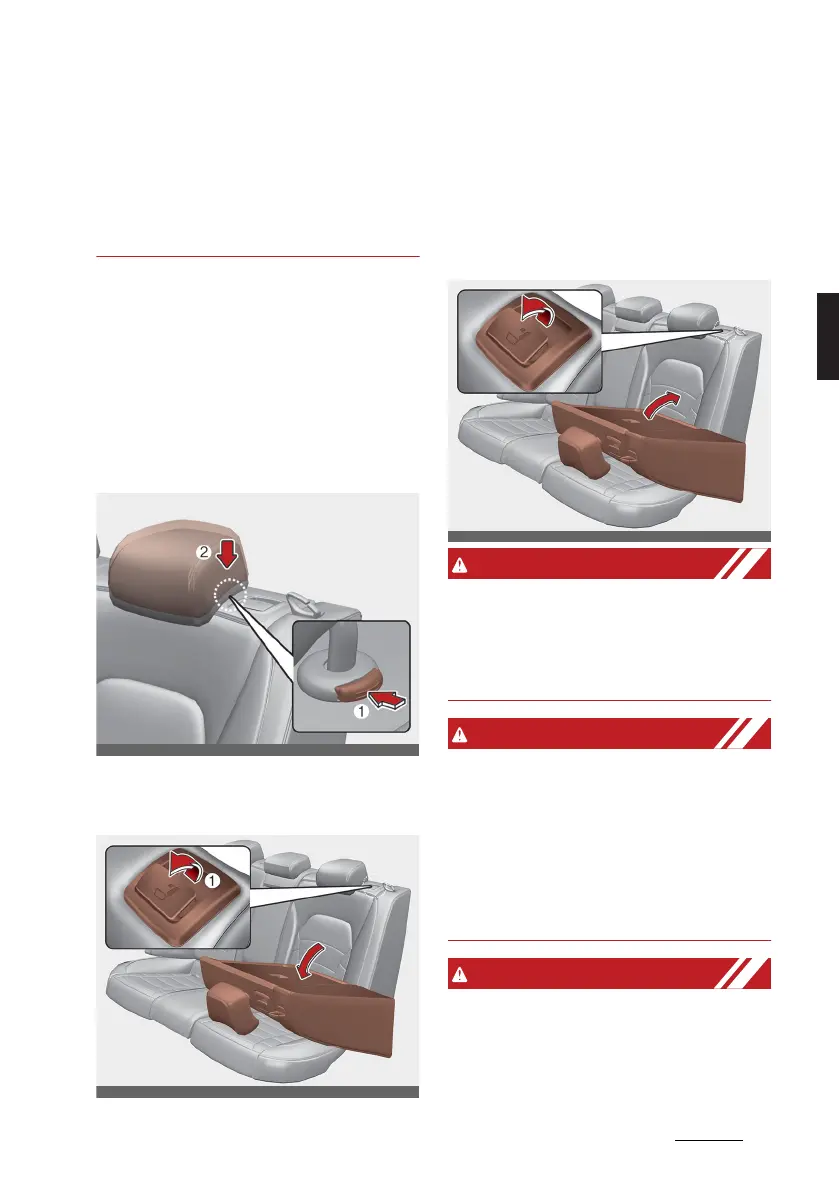
To fold down the rear seatback
1. Make sure the rear seat belt webbing
is in the guide to prevent the seat belt
from being damaged.
2. Set the front seatback to the upright
position and if necessary, slide the
front seat forward.
3. Lower the rear headrests to the lowest
position.
4. Pull on the seatback folding lever(1),
then fold the seat toward the front of
the vehicle.
5. To use the rear seat, lift and push the
seatback backward. Push the seat
back firmly until it clicks into place.
Make sure the seatback is locked in
place.
6. Return the rear seat belt to the proper
position.
After folding the rear seat, unless the
driver’s position is properly set accord
-
ing to the driver’s physical figure, do not
fold the rear seat. It may increase body
injuries in a sudden stop or collision.
Uprighting seat
When you return the seatback to its
upright position, hold the seatback and
return it slowly. If the seatback is
returned without holding it, the back of
the seat could spring forward resulting
in injury caused by being struck by the
seatback.
When you return the rear seatback to its
upright position after being folded
down:
Be careful not to damage the seat belt
webbing or buckle. Do not allow the seat


 To Next Page