To Next PageTo Next Page
 Need help?
Do you have a question about the Kidde P9040 and is the answer not in the manual?
Instructions for replacing the smoke alarm battery, including tamper-resist feature release and recommended battery types.
Procedure for cleaning the smoke alarm interior and exterior to ensure proper operation and replacement if needed.
Guidance on creating and practicing a family escape plan, including fire drills and meeting points.
Instructions on how to react when the smoke alarm sounds, including evacuation and contacting emergency services.
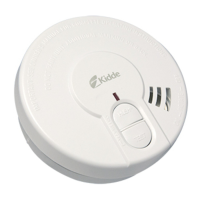
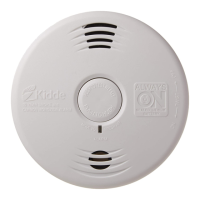
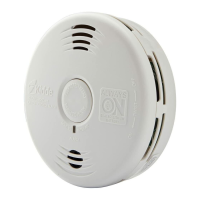
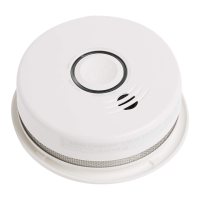
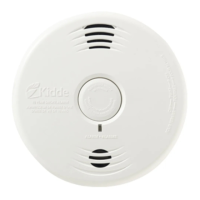
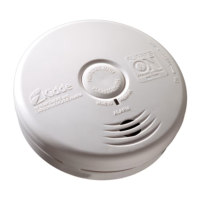
This document describes the P9040 Smoke Alarm, a 9-volt battery-operated photoelectric smoke alarm equipped with a "HUSH" control feature designed to temporarily silence nuisance alarms. This device is an essential component of a family's home safety plan, offering high-quality safety protection.
The P9040 Smoke Alarm is designed to detect products of combustion and alert occupants with a loud 85dB pulsating alarm. It operates once a fresh battery is installed and initial testing is complete. The photoelectric sensing technology is particularly effective at detecting visible fire particles, which are typically associated with slow smoldering fires. While ionization alarms may detect invisible fire particles from fast flaming fires sooner, the P9040 provides reliable early warning for a common type of residential fire.
The alarm features a "HUSH" control, which allows for temporary desensitization of the alarm circuit for approximately 8 minutes. This feature is intended for use when a known alarm condition, such as smoke from cooking, activates the alarm. By pushing the "HUSH" button on the alarm cover, the alarm will silence immediately if the smoke is not too dense. A flashing red LED will indicate the temporarily desensitized state, flashing every 10 seconds for about 8 minutes. After this period, the alarm automatically resets and will sound again if smoke is still present. The "HUSH" feature can be used repeatedly until the air is clear. It is important to note that dense smoke will override the "HUSH" control and trigger a continuous alarm. Users are cautioned to identify the source of the smoke and ensure a safe condition exists before using the "HUSH" feature.
A flashing red LED indicator light on the alarm provides visual confirmation that the smoke alarm is receiving power, flashing every 40-45 seconds. The smoke sensing chamber also includes an operational self-check; if any components in the chamber fail, the alarm will emit a "chirp" between the flashes of the red LED indicator light. If this chirp coincides with the red LED flash, it indicates a low battery condition.
The P9040 Smoke Alarm offers flexibility in installation locations to maximize protection. It is recommended to place the first alarm in the immediate area of bedrooms, monitoring the exit path. For homes with multiple sleeping areas, additional alarms should be installed in each. Stairways, which can act as chimneys for smoke and heat, should also be monitored with additional alarms. At least one alarm should be on every floor level, and ideally, an alarm in every bedroom. Rooms where electrical appliances are operated (e.g., portable heaters, humidifiers) or where someone sleeps with the door closed should also have an alarm, as a closed door can prevent an alarm in another room from waking the sleeper.
For optimal smoke detection, the alarm should be mounted on the ceiling in the center of the room, as smoke, heat, and combustion products rise and spread horizontally. When ceiling mounting, it should be at least 4 inches (10cm) from the side wall. For wall mounting, the top edge of the alarm should be a minimum of 4 inches (10cm) and a maximum of 12 inches (30.5cm) below the ceiling, on an inside wall. In hallways or large rooms exceeding 30 feet (9.1m), smoke alarms should be placed at both ends. For sloped, peaked, or cathedral ceilings, alarms should be installed at or within 3 feet (0.9m) horizontally of the highest point. In mobile homes, especially older ones with poor insulation, installing the alarm on an inside wall with the top edge between 4 inches (10cm) and 12 inches (30.5cm) below the ceiling is recommended to avoid thermal barriers.
There are specific locations to avoid to prevent nuisance alarms or ensure proper operation. These include garages (due to combustion products from automobiles), areas less than 4 inches (10cm) from the peak of an "A" frame ceiling, areas where temperatures fall below 40°F or rise above 100°F (e.g., garages, unfinished attics), dusty areas, very humid areas (over 95% R.H.), and insect-infested areas. Smoke alarms should also not be installed within 3 feet (0.9m) of kitchen doors, bathroom doors with tubs or showers, forced air supply ducts, ceiling or whole house ventilating fans, or other high airflow areas. While cooking can cause nuisance alarms, if a kitchen alarm is desired, it should have a silence feature or be a photoelectric type. Proximity to fluorescent lights should also be avoided due to electronic "noise." Smoke alarms should not be used with detector guards unless the combination has been evaluated for suitability.
Installation involves removing the mounting plate from the back of the alarm by twisting it in the "OFF" direction. For aesthetic alignment, the "A" line on the mounting plate should be parallel with the hallway when ceiling mounted or horizontal when wall mounted. The mounting plate is then secured to the ceiling or wall using the provided screws and anchors, ensuring the "UP FOR WALL MOUNTING" text and arrow face up for wall installations. Battery installation instructions are provided inside the battery compartment; the battery reminder finger must be held down by the battery for the unit to attach to the mounting bracket. After installing the mounting plate, the alarm is placed on it, aligning the marks, and twisted in the "ON" direction until it locks. A tamper-resist feature can be activated by breaking out blocks on the mounting plate, deterring unauthorized removal. To change the battery with this feature active, a tool is needed to push the tab away from the mounting plate.
The P9040 Smoke Alarm is powered by a 9-volt battery, and both carbon zinc and alkaline batteries can be used. A fresh battery is expected to last for one year under normal operating conditions. The alarm includes a low battery monitor circuit that will cause it to "chirp" approximately every 30-40 seconds for a minimum of seven days when the battery is low. When this condition occurs, the battery should be replaced immediately. Only specific 9-volt batteries are recommended for replacement: EVEREADY 1222, GOLD PEAK 1604S (Carbon Zinc Type); and ENERGIZER 522, DURACELL MN1604, MX1604, GOLD PEAK 1604A, PANASONIC 6AM6, 6AM-6, 6AM-6PI, 6AM6X, and 6LR61(GA) (Alkaline Type). Using different batteries may have a detrimental effect on the smoke alarm's performance.
Regular testing is crucial to ensure proper operation. The alarm should be tested weekly by depressing and holding down the test button on the cover for at least 5 seconds. This will sound the alarm if the electronic circuitry, horn, and battery are functioning correctly. If no alarm sounds, the unit may have defective batteries or another failure. Users are explicitly warned against using an open flame to test the alarm, as this could damage the device or ignite combustible materials. Erratic or low sound during testing may indicate a defective alarm, which should be returned for service.
Cleaning the smoke alarm at least once a year is recommended to maintain its effectiveness. To clean, the alarm should be removed from its mounting bracket. The interior sensing chamber can be cleaned using compressed air or a vacuum cleaner hose to blow or vacuum through the openings around the perimeter. The exterior of the alarm can be wiped with a damp cloth. After cleaning, the alarm should be reinstalled and tested. If cleaning does not restore the alarm to normal operation, it should be replaced.
 General
| Brand | Kidde |
|---|---|
| Model | P9040 |
| Category | Smoke Alarm |
| Language | English |