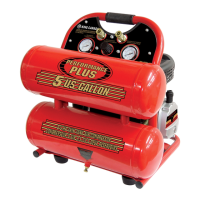
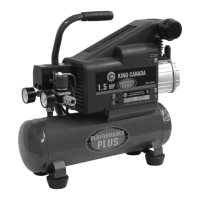
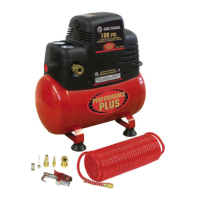
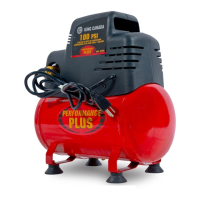
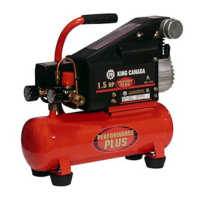
This document is the instruction manual for the KING CANADA 5 GALLON TWIN TANK AIR COMPRESSOR, model 8488C. It provides comprehensive information on the device's function, specifications, usage, safety, and maintenance.
The KING CANADA 5 GALLON TWIN TANK AIR COMPRESSOR is a portable air compressor designed for various applications, both commercial and non-commercial, as indicated by the warranty information. Its primary function is to compress air and store it in its twin tanks, providing a readily available source of pressurized air for tools and other uses. The compressor is part of the "PERFORMANCE PLUS" series, suggesting a focus on reliability and efficiency.
Important Technical Specifications:
- Model: 8488C
- Voltage: 120V
- Horsepower: 2.5 HP
- Amperage: 13A
- RPM (no load speed): 3400
- Phase: 1
- Hertz: 60Hz
- Operating pressure: 115 PSI (Max 125 PSI)
- CFM @ 40 PSI: 5.0
- CFM @ 90 PSI: 4.0
- Tank size: 2 x 2.5 Gallon (total 5 gallons)
These specifications indicate a robust compressor suitable for tasks requiring a steady supply of air at moderate pressures. The 2.5 HP motor and 13A amperage suggest it can be powered by standard household electrical outlets, though a dedicated 15-amp branch circuit is recommended for optimal performance and safety. The twin 2.5-gallon tanks provide a combined 5-gallon capacity, offering a good balance between portability and air storage.
Usage Features:
The compressor is designed for ease of use with several key operational controls and features:
- Assembly: The manual details the assembly of the air compressor, including installing the muffler and plastic cap, ensuring proper setup before first use.
- Location: It emphasizes the importance of locating the compressor in a clean, dry, and well-ventilated area, away from obstructions that would restrict airflow to the cooling system. This is crucial for preventing overheating and ensuring longevity.
- Controls:
- Regulator (A) (Fig.6): This control allows users to adjust the air pressure delivered to the outlet. Turning the knob clockwise increases pressure, while counter-clockwise decreases it.
- Outlet Pressure Gauge (B) (Fig.6): Displays the air pressure available at the outlet side of the regulator.
- Tank Pressure Gauge (C) (Fig.6): Indicates the reserve air pressure in the tank.
- ON/AUTO-OFF Switch (A) (Fig.7): This switch controls the automatic pressure switch and turns the compressor on or off.
- Pressure Switch (B) (Fig.7): Automatically starts the motor when tank pressure drops below the factory set "Cut-In" pressure and stops it when the tank pressure reaches the factory set "Cut-Out" pressure.
- Safety Valve (A) (Fig.8): A critical safety feature that prevents over-pressurization by releasing air if the pressure switch fails to shut off the compressor at its cut-out pressure setting.
- Drain Valve (A) (Fig.9): Located at the base of the air tank, this valve is used to drain condensation, which is essential for preventing rust and maintaining tank integrity.
- Motor Thermal Overload Protector (Reset) (A) (Fig.10): This protector automatically shuts off the motor if it overheats, preventing damage. It can be reset once the motor cools down.
- Operating Procedures: The manual outlines detailed steps for preparing the compressor for use, including connecting accessories, setting the pressure, and turning it on. It also provides instructions for shutting down the compressor and draining the tanks after use.
- Extension Cords: Specific guidelines are provided for using extension cords, emphasizing the need for a minimum 12-gauge, 3-wire grounding type cord to prevent voltage drops and ensure safety.
Maintenance Features:
Regular maintenance is crucial for the longevity and safe operation of the air compressor. The manual details several key maintenance tasks:
- Daily or Before Each Use:
- Check oil level.
- Drain condensation from the tank.
- Check for any unusual noise or vibration.
- Ensure all nuts and bolts are tight.
- Monthly:
- Inspect the air system for leaks by applying soapy water to all joints.
- Tighten loose joints if leakage is observed.
- 24 Hours or Six Months (whichever comes first):
- Change compressor oil.
- Inspect painted spray operations or dusty environments.
- Changing Oil: Detailed instructions are provided for changing the compressor oil, including the type of oil (SAE30 weight non-detergent oil) and the amount.
- Keep Tool Clean: Regular cleaning of all air passages with dry compressed air and cleaning plastic parts with a soft damp cloth are recommended.
- Failure to Start: Instructions are given for troubleshooting if the compressor fails to start, including checking the prongs on the cord plug and ensuring good contact in the outlet.
- Storage: Proper storage involves setting the "OFF/AUTO" lever to "OFF," turning the regulator counterclockwise to set the outlet pressure to zero, removing the air hose, draining the tank, and ensuring the compressor is completely drained and dry before storage.
Safety Instructions:
The manual places a strong emphasis on safety, dedicating a significant section to "IMPORTANT SAFETY INSTRUCTIONS." Key warnings include:
- Risk of Explosion or Fire:
- Avoid operating near electrical contacts, flammable materials, gasoline, or solvent vapors.
- Maintain a minimum distance of 20 feet from the spray area if spraying flammable materials.
- Ensure proper ventilation and avoid operating in confined areas.
- Risk of Bursting:
- Regularly drain condensation from the steel tank to prevent rust and weakening.
- Do not modify or attempt repairs to the tank.
- Do not exceed the unloader valve, safety valve, or any other control tank pressure.
- Excessive vibration can weaken the air tank and cause rupture or explosion.
- Accessories and attachments must not exceed the operating pressure of the air tools.
- Risk of Burns:
- Avoid touching exposed metal parts on the compressor head or outlet tubes during or immediately after operation, as they can be hot.
- Risk of Property Damage When Transporting Compressor:
- Always place the compressor on a protective mat when transporting to protect against damage to vehicles or floors.
- Remove the compressor from vehicles immediately upon arrival.
KING CANADA offers a 2-year limited warranty for this air compressor. For non-commercial use, it's a 2-year limited warranty. The warranty covers defects in materials and workmanship but excludes damage due to misuse, abuse, normal wear and tear, negligence, or unauthorized repairs. Customers are advised to register their product and contact authorized service centers for warranty claims.
In summary, the KING CANADA 5 GALLON TWIN TANK AIR COMPRESSOR (model 8488C) is a versatile and robust air compressor designed for both professional and home use. Its detailed manual provides essential information for safe operation, effective maintenance, and troubleshooting, ensuring users can maximize the lifespan and performance of their device.

 Need help?
 General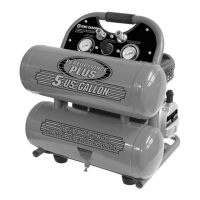

 To Next Page