If your blood pressure reaches upper
values of 140~160 mmHg and lower
values of 90~95 mmHg in repeated
measurements over several days, you
should consult your doctor for detailed
medical examination. You can assist
the treatment prescribed by your
doctor in the following ways:
Loose weight and lower your
cholesterol level;
Reduce the consumption of alcohol;
Reduce the intake of salt;
Stop smoking;
Take regular exercise;
Monitor your blood pressure.
Treatment of High
Blood Pressure
Overweight;
High cholesterol level;
Smoking;
Excessive alcohol consumption;
Stress and emotional upset;
Excessive consumption of salt;
Lack of physical exercise;
Genetic / hereditary predisposition;
Underlying illnesses, such as kidney
disorders or endocrine disturbance.
High blood pressure can go unnoticed
for a long time, since it doesn't cause
noticeable symptoms. The following
are all possible causes of abnormally
high blood pressure:
Symptoms of High
Blood Pressure
80
85
90
100
110
Diastolic
Blood
Pressure
(mmHg)
120 130 140 160 180
Systolic
Blood
Pressure
(mmHg)
Optimal
blood pressure
(target value)
Normal blood pressure
Normal systolic value
Mild hypertension
Moderate hypertension
Severe hypertension
According to the blood pressure classification by the WHO / ISH.
Classification of Blood Pressure
10
About Blood Pressure
The incidence of hypertension increases with age. In addition, a lack of
exercise, excess body fat and high levels of cholesterol (LDL), which sticks to
the inside in blood vessels, reduces elasticity of these vessels. Hypertension
accelerates arterial sclerosis which can lead to very serious conditions such
as stroke and myocardial infarction. For these reasons it is very important to
know whether the blood pressure is within a healthy range. Blood pressure
fluctuates from minute to minute, throughout the day. Therefore it is essential
to take regular measurements to help you identify an average blood pressure.
1862412
Time of day
Lower curve: diastolic blood pressure
Upper curve: systolic blood pressure
50
100
200
mmHg
150
Health and Blood Pressure
Lower pressure
Relaxation of the
heart muscle
Pressure decreased
to the blood vessel
Blood return heart
Higher pressure
Contraction of
the heart muscle
Pressure increased
to the blood vessel
Extrude blood
Systolic Blood Pressure Diastolic Blood Pressure
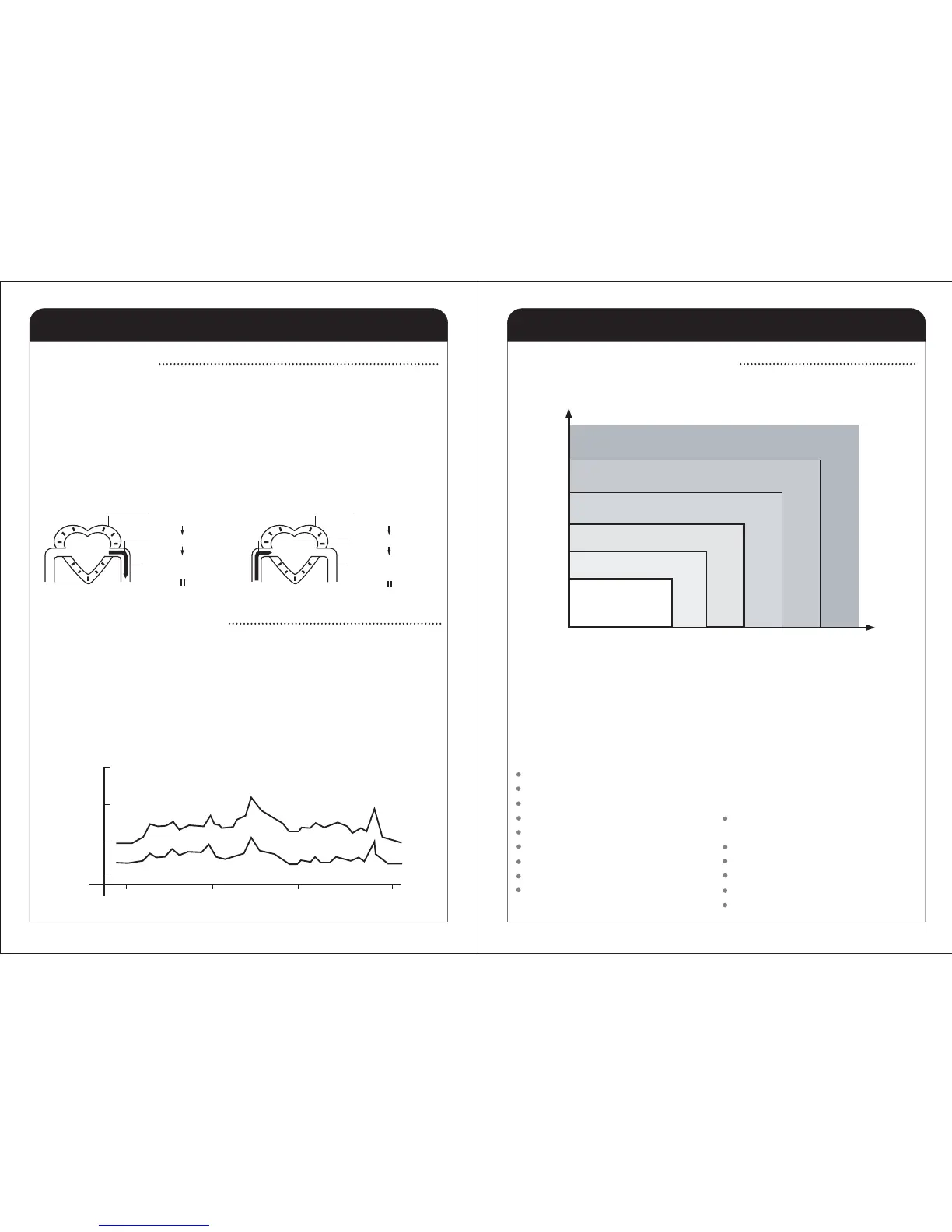
The blood circulation is responsible for supplying the body with oxygen.
Blood pressure is the pressure exerted on the arteries.
The systolic blood pressure value (higher pressure or top value) represents
the blood pressure produced by contraction of the heart muscle.
The diastolic blood pressure value (lower pressure or lower value) represents
the blood pressure produced by relaxation of the heart muscle.
Blood Circulation


 To Next Page