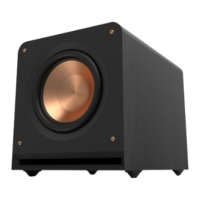
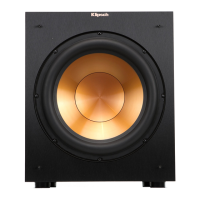
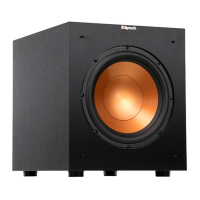
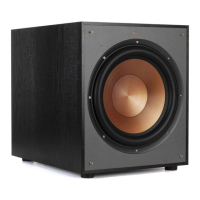
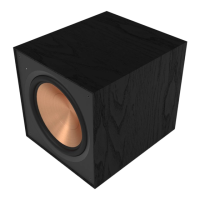
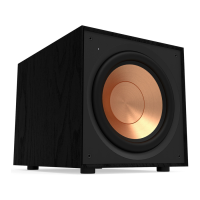
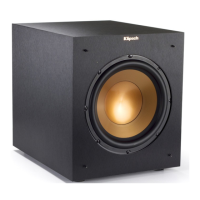
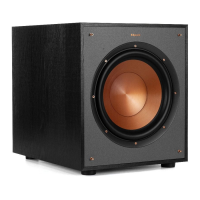
This document describes the Klipsch Reference Premiere Subwoofers, a line of powered subwoofers designed to reproduce deep bass and enhance the audio experience for movies and music.
Function Description:
Klipsch Reference Premiere Subwoofers are designed to deliver powerful, detailed, and emotional bass, bringing movies and music to life. The subwoofers are a result of Klipsch's obsession with aural perfection, building on the legacy of Paul W. Klipsch, who revolutionized the audio industry in 1946 with proprietary horn technology and acoustic principles. These subwoofers are an integral part of a home audio system, providing the low-frequency effects that main speakers might not fully capture. They are designed to integrate seamlessly with existing audio setups, whether connected via a wired connection or wirelessly with an optional kit.
Important Technical Specifications:
The Reference Premiere Subwoofer line includes several models: RP-1000SW, RP-1200SW, RP-1400SW, and RP-1600SW. While specific technical specifications for each model (like frequency response, power output, driver size, etc.) are not detailed in the provided text, the naming convention suggests increasing driver size and potentially power output across the models (e.g., RP-1000SW likely has a 10-inch driver, RP-1200SW a 12-inch, RP-1400SW a 14-inch, and RP-1600SW a 16-inch).
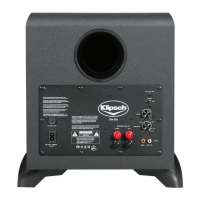
The subwoofers feature a built-in amplifier and offer multiple connectivity options:
- "LINE IN" Connection (L/LFE and R inputs): This is the primary connection method. Most surround receivers and pre-amplifiers have a dedicated "Subwoofer Pre Out," "Sub Out," or "SW Out" line level output. Users should connect one end of a subwoofer cable to this output on their receiver and the other end to the L/LFE input on the subwoofer. This allows the subwoofer to operate with both music and surround sound movies. Alternatively, if a receiver lacks a dedicated subwoofer output, users can connect Left and Right channel Pre-Amp Outputs from their receiver to the L/LFE and R inputs on the subwoofer.
- WA-2 Port Connection: For wireless connectivity, the optional WA-2 Wireless subwoofer kit can be used. This kit is compatible with select Klipsch, Energy, Mirage, and Jamo subwoofers that feature a "WA Port" input. The WA-2 operates on a 2.4 GHz frequency and can wirelessly transmit a signal up to a 50-foot radius.
Control features on the subwoofer include:
- "LOWPASS" Control: This knob determines the crossover point, which is where low bass frequencies are "handed off" from the main speakers to the subwoofer. If the crossover point is set in the receiver, this knob should be turned to its maximum (160Hz). Otherwise, it should be set between 50Hz-90Hz for larger, floorstanding speakers, or 90Hz-150Hz for smaller bookshelf or "satellite" speakers. The goal is to achieve a smooth blend of bass frequencies between the main speakers and the subwoofer.
- "PHASE" 0/180 Control: Used to acoustically match the subwoofer's output to the main speakers. Users should select the position (0° or 180°) that yields more output at the listening position.
- "POWER" AUTO/ON/OFF Switch:
- ON/AUTO/STANDBY: In this position, the subwoofer automatically turns "on" when it senses an audio signal and enters "standby mode" after 15-20 minutes of no signal.
- OFF: The subwoofer remains off until manually switched back to "ON/AUTO/STANDBY."
- Power LED indicator: Located on the front baffle, this LED indicates the amplifier's status. It lights green when the amplifier is on and receiving a signal, and is dark when the amplifier is off.
Usage Features:
- Placement: For optimum performance, Klipsch recommends placing the subwoofer in a corner of the room on the same wall as the front channel speakers (refer to Figure 1 in the manual). Corner placement increases bass output. Placing the subwoofer along the middle of a wall or out in the room will decrease bass output. Experimentation with different placements and control settings is encouraged to find the best sound for a particular room and taste. It's crucial to remember that the subwoofer's built-in amplifier needs to be connected to an AC power outlet.
- Level (Volume) Adjustment:
- If connected to a receiver's Subwoofer Output, first set the receiver's subwoofer volume level control to "half way" or "0 dB." Then, increase the subwoofer's volume (gain) until it matches the output of the main speakers. After this, the system's main amplifier or pre-amplifier volume control will adjust both the subwoofer and speakers together.
- If connected to the L/R Pre-Amp Outputs of a receiver, there will be no subwoofer volume control in the receiver; the subwoofer's gain control should be set directly.
- Wireless Option: The optional WA-2 Wireless subwoofer kit provides convenience by eliminating the need for long audio cables, allowing for more flexible placement of the subwoofer within a 50-foot radius.
Maintenance Features:
- Cleaning: The subwoofer features a durable vinyl finish that only requires dry dusting or cleaning with a dry cloth. Abrasive or solvent-based cleaners and harsh detergents should be avoided. A vacuum cleaner's brush attachment can be used to remove dust from the subwoofer enclosure.
- Inspection upon Delivery: Users are advised to promptly check for any transit damage upon receiving the new speaker system. The system should be carefully unpacked, and components verified against the packing list. If damage is discovered, the delivery service and dealer should be notified immediately, and their instructions for inspection and evaluation followed. It is important to retain the product's original shipping carton.
- Product Registration: Users are encouraged to register their product online at www.klipsch.com/register. This helps them stay up-to-date on new products and promotions. Klipsch assures that personal information will not be resold and that registration information is not used for warranty purposes. Users should retain their receipt for warranty claims.

 Need help?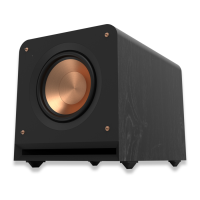

 To Next Page
 General