EasyManua.ls Logo

Kohler Command PRO ECV740 - User Manual

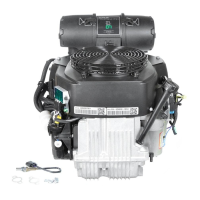
Kohler Command PRO ECV740
152 pages
Print Icon
To Next Page IconTo Next Page
Loading...
SERVICE MANUAL
ECV630-ECV749
VERTICAL CRANKSHAFT

Questions and Answers

  • K
    Kevin JohnsonAug 17, 2025
    Why is my Kohler Command PRO ECV740 Crankshaft engine so hard to start?
    • T
      timothygibsonAug 17, 2025
      If your Kohler Crankshaft engine is hard to start, make sure the PTO drive is not engaged. Check for dirt or water in the fuel system, a clogged fuel line or fuel filter, and loose or faulty wires or connections. Faulty spark plugs, low compression, a weak spark, a fuel pump malfunction causing lack of fuel, an overheated engine due to restricted cooling/air circulation, poor fuel quality, a sheared flywheel key, an intake system leak, or faulty or improperly adjusted throttle controls could also be the reason.
  • G
    gonzalesjefferyAug 20, 2025
    What to do if Kohler Command PRO ECV740 Crankshaft engine will not crank?
    • E
      Emily BellAug 20, 2025
      If your Kohler Crankshaft engine will not crank, verify that the PTO drive is not engaged and that the battery is not discharged. Ensure the safety interlock switch is not engaged and check for loose or faulty wires or connections. A faulty key switch or ignition switch, a faulty electric starter or solenoid, seized internal engine components, a blown fuse, insufficient voltage to the electronic control unit, or a faulty electronic control unit could also prevent the engine from cranking.
  • K
    Kaitlyn VanceAug 23, 2025
    What to do if my Kohler Command PRO ECV740 Crankshaft engine cranks but won't start?
    • A
      ashley72Aug 23, 2025
      If your Kohler Crankshaft engine cranks but refuses to start, several factors could be at play. Start by checking for an empty fuel tank or a closed fuel shut-off valve. Ensure you're using good quality fuel, free from dirt or water. Inspect the fuel line for clogs and make sure the spark plug leads are securely connected. Verify that the key switch or kill switch isn't in the OFF position. Other potential causes include faulty spark plugs or ignition coils, a backwards battery connection, an engaged safety interlock system, a malfunctioning vacuum fuel pump (or oil in the vacuum hose), a leaking or cracked vacuum hose to the fuel pump, a blown fuse, a faulty electronic control unit, or insufficient voltage to the electronic control unit.
  • J
    Jennifer MartinezAug 26, 2025
    Why is my Kohler Command PRO ECV740 engine losing power?
    • J
      Justin BensonAug 26, 2025
      If your Kohler Crankshaft engine is losing power, consider these potential causes: Check for low or high crankcase oil levels. Ensure the air cleaner element is clean. Verify that the fuel system is free from dirt or water and that you are not experiencing excessive engine load. Overheating, faulty spark plugs, low compression, exhaust restriction, a low battery, or an incorrect governor setting could also be contributing factors.
  • A
    Amanda BarrAug 28, 2025
    How to fix Kohler Command PRO ECV740 Crankshaft engine overheating?
    • B
      Brittany ClineAug 28, 2025
      If your Kohler Crankshaft engine is overheating, check for a clogged air intake/grass screen, cooling fins, oil cooler, or cooling shrouds. Also, verify that the engine is not under an excessive load. Low or high crankcase oil levels or a lean air-fuel mixture could also cause overheating.
  • D
    Donna CollinsAug 30, 2025
    Why does my Kohler Crankshaft engine start but not stay running?
    • J
      Joseph DouglasAug 31, 2025
      If your Kohler Crankshaft engine starts but doesn't keep running, consider these potential issues: a restricted fuel tank cap vent, poor fuel quality or contaminants in the fuel system, loose wires or connections, a faulty cylinder head gasket, an intake system leak, faulty ignition coil(s), faulty or improperly adjusted throttle controls, a vacuum fuel pump malfunction (or oil in the vacuum hose), a leaking or cracked vacuum hose to the fuel pump, a blown fuse, or insufficient voltage to the electronic control unit.
  • B
    Brittany SantiagoSep 2, 2025
    What causes a Kohler Command PRO ECV740 engine to run but miss?
    • D
      Deborah RodriguezSep 2, 2025
      If your Kohler Crankshaft engine runs but misses, check for dirt or water in the fuel system and ensure the spark plug lead is connected. Poor fuel quality, faulty spark plug(s), loose wires or connections, an overheated engine, faulty ignition coil(s), an incorrect crankshaft position sensor air gap, or insufficient voltage to the electronic control unit could also be the cause.
  • A
    Amy ComptonSep 5, 2025
    Why is my Kohler Command PRO ECV740 engine knocking?
    • K
      Karen AguilarSep 5, 2025
      If your Kohler Crankshaft engine knocks, it could be due to excessive engine load, low crankcase oil level, old or improper fuel, internal wear or damage, hydraulic lifter malfunction, poor fuel quality, or using the incorrect grade of oil.
  • J
    Jason SimmonsSep 7, 2025
    Why won't my Kohler Command PRO ECV740 Crankshaft engine idle?
    • S
      shanetaylorSep 8, 2025
      If your Kohler Crankshaft engine will not idle, it could be due to dirt or water in the fuel system, stale fuel or dirty fuel injectors, faulty spark plugs, inadequate fuel supply, low compression, a restricted fuel tank cap vent, or the engine is overheated due to cooling system/air circulation problems.
  • C
    carneymitchellSep 12, 2025
    Why does my Kohler Command PRO ECV740 engine use so much oil?
    • L
      Lisa LewisSep 12, 2025
      If your Kohler Crankshaft engine uses an excessive amount of oil, it could be due to incorrect oil viscosity/type, a clogged or improperly assembled breather, a broken breather reed, worn or broken piston rings, a worn cylinder bore, worn valve stems/valve guides, an overfilled crankcase, or a blown head gasket/overheating.

Summary

Safety and General Information

Safety Precautions

General guidelines and warnings for safe engine operation and maintenance.

Engine Identification

How to locate and use engine model, specification, and serial numbers for identification.

Oil Recommendations

Guidance on selecting the correct oil type and viscosity based on temperature and API service class.

Fuel Recommendations

Details on appropriate gasoline types, blends, and storage for optimal engine performance.

Maintenance Schedule

A table outlining required maintenance tasks by frequency and corresponding sections.

Engine Dimensions

Provides detailed physical dimensions for engine configurations, illustrated with diagrams.

General Specifications

Lists key engine performance parameters including power, bore, stroke, displacement, and weight.

Torque Specifications

Lists torque values for various engine components and fasteners for proper assembly.

Tools & Aids

Tools

Lists specific tools required for engine service with their part numbers and sources.

Tool Suppliers

Contact information for suppliers of specialized tools.

Troubleshooting

Engine Start Issues

Common causes and solutions for engines failing to start or starting hard.

Engine Running Problems

Troubleshooting guide for issues like stalling, missing, rough idling, and power loss.

Basic Engine Tests

Procedures for performing crankcase vacuum and cylinder leakdown tests.

Air Cleaner and Air Intake System

Heavy-Duty Air Cleaner Service

Procedures for checking and maintaining the heavy-duty air cleaner elements.

Low-Profile Air Cleaner Service

Procedures for servicing the precleaner and paper element of the low-profile air cleaner.

Paper Element Service

Detailed steps for replacing the paper element in air cleaner systems.

Electronic Fuel Injection (EFI) System

EFI System Overview

Introduces EFI system, its components, and general operation principles.

Electrical Components

Details critical electrical parts like ECU, sensors, wiring harness, and ignition system.

Fuel Components

Describes key fuel system parts including the fuel pump, filter, lines, and injectors.

EFI Troubleshooting

Provides guidance on diagnosing and resolving EFI system issues using fault codes and flow charts.

Lubrication System

Oil Recommendations

Guidance on selecting the correct oil type and viscosity based on temperature and API service class.

Check Oil Level

Procedure for ensuring the engine oil level is maintained correctly for safe operation.

Changing Oil and Filter

Instructions for performing routine oil and oil filter changes for engine longevity.

Oil Sentry System

Information on the optional low oil pressure warning/shutdown system and its testing.

Electrical System and Components

Spark Plugs

Details on spark plug types, gap, service, and inspection for engine misfires.

Battery and Charging System

Information on battery requirements, maintenance, testing, and charging system operation.

Electric Starting Motors

Covers starter motor operation, precautions, troubleshooting, and disassembly procedures.

Disassembly

Engine Core Disassembly

Steps for removing internal engine parts like crankshaft, camshaft, rods, and pistons.

Fuel System Components Removal

Procedures for removing fuel pump, injectors, throttle body, and intake manifold.

Electrical Components Removal

Steps for removing starter motor, ECU, sensors, and stator.

Lubrication System Components Removal

Instructions for removing oil pan, oil cooler, and oil separator.

Air and Exhaust System Removal

Procedures for removing air cleaner assembly and muffler.

Inspection and Reconditioning

Crankshaft Inspection

Procedures for inspecting crankshaft journals, bearings, keyways, and crankpin for wear.

Cylinder Bore Inspection

Steps for measuring cylinder bore for wear, taper, and roundness after honing.

Valve Inspection

How to inspect cylinder heads, valves, seats, and guides for wear or damage.

Piston and Ring Inspection

Guidelines for inspecting pistons and rings for damage like sticking, scoring, or detonation.

Hydraulic Lifter Inspection

Procedures for checking hydraulic lifters for wear and proper "bleeding" before installation.

Governor Gear Assembly Inspection

Steps for inspecting governor gear teeth and weights for wear or damage.

Reassembly

Engine Core Reassembly

Steps for installing crankshaft, connecting rods, pistons, camshaft, and cylinder heads.

Fuel System Reassembly

Procedures for installing fuel injectors, throttle body, fuel pump module, and lines.

Electrical System Reassembly

Steps for installing ECU, starter motor, sensors, and rectifier-regulator.

Air Cleaner and Muffler Installation

Instructions for installing air cleaner assembly and muffler components.

Final Engine Preparation

Steps for connecting spark plugs, filling oil, adjusting idle speed, and checking for leaks.

Kohler Command PRO ECV740 Specifications

General IconGeneral
Crankshaft OrientationVertical
Compression Ratio8.5:1
Crankshaft Diameter1.125 inches
Crankshaft Keyway0.312 inches
Engine Type4-Cycle OHV
Bore3.27 inches
Stroke69 mm (2.72 in.)
Oil Capacity2 quarts

Related product manuals