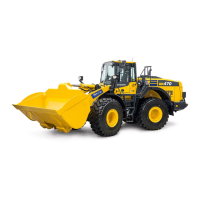
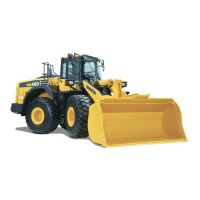
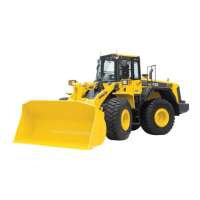
This document is the Operation & Maintenance Manual for the Komatsu WA450-6 Wheel Loader, identified by serial numbers WA450-6 A44001 and up, and powered by a 6D125E-5 engine. The manual, published in March 2016, provides comprehensive information for the safe and effective operation, handling, lubrication, maintenance, checking, and adjustment of the machine. It emphasizes the importance of reading and understanding the manual to prevent serious injury or death.
Function Description:
The Komatsu WA450-6 Wheel Loader is designed for various heavy-duty operations, primarily focusing on material handling and earthmoving tasks. Its core functions include:
- Loading Operations: Efficiently loading materials into trucks or hoppers.
- Excavating: Digging and moving earth or other materials.
- Grading: Leveling surfaces to a desired slope or elevation.
- Pushing: Moving large quantities of material across a surface.
- Material Handling (with optional equipment): Using attachments like buckets or pallet forks for diverse material handling needs.
- Lifting Materials (with optional equipment): Utilizing an extendable boom for lifting tasks.
Important Technical Specifications:
The manual highlights key identification details for the machine:
- Model: WA450-6 Wheel Loader.
- Serial Numbers: WA450-6 A44001 and up.
- Engine: 6D125E-5.
- Service Meter Location: Located on the character display at the bottom center of the machine monitor, indicating operational hours for maintenance scheduling.
- Visibility Standards (ISO 5006):
- Immediate Area Visibility: The machine provides visibility in the area 1 meter (1.1 yd) from its outside surface at a height of 1.5 m (1.6 yd). Hatched areas (A) in diagrams indicate blocked views due to machine parts, even with standard mirrors and visibility aids.
- 12-M Radius Visibility: Visibility at a radius of 12 meters (13.1 yd) from the machine. Hatched areas (B) in diagrams show blocked views, emphasizing the need for caution during operation.
- Product Identification Number (PIN): Stamped on the right side, center of the front frame.
- Engine Serial Number: Located on a plate at the top, rear of the engine, on the right side. This is crucial for EPA regulations compliance.
Usage Features:
The manual details various aspects of using the WA450-6, emphasizing safety and operational efficiency:
- Operator's Compartment: The manual specifies the storage location for the Operation & Maintenance Manual in a pocket at the rear of the operator's seat backrest.
- Directions of Machine: For clarity in the manual, directions (front, rear, left, right, bucket) are determined from the operator's seat, facing the direction of travel (front).
- Safety Precautions: Extensive safety information is provided, including DANGER, WARNING, and CAUTION labels, to alert operators to potential hazards. It covers general safety rules, job site safety, fire and explosion prevention, mounting and dismounting procedures, and precautions within and when leaving the operator's compartment.
- Approved and Non-Approved Uses: Clearly defines the intended uses of the machine and warns against non-approved uses such as lifting personnel, transporting flammable liquids, or using the loader as a hammer, which could void warranty, damage the machine, or cause injury.
- Controls and Gauges: Provides a general view of the machine, monitor, and switch panel, along with detailed explanations of components like the machine monitor, various warning lamps (e.g., brake oil pressure, engine oil pressure, battery charge, steering oil pressure, water separator, transmission oil filter clogging), pilot display portions (e.g., parking brake, cooling fan reverse rotation, emergency steering, power mode, preheating, semi-auto digging, auto-greasing, joystick, directional selector, economy operation, shift indicator, auto-shift, torque converter lockup, shift hold, shift lever position, turn signal, head lamp high-beam), and meter display portions (e.g., torque converter oil temperature, engine coolant temperature, hydraulic temperature, fuel gauge, speedometer, meter display pilot lamp).
- Other Functions of Machine Monitor: Describes how to navigate the overall menu, display the odometer, reset filter/oil replacement times, enter telephone numbers, select language, adjust monitor brightness, and switch between travel speed and engine speed displays.
- Switches and Controls: Details the functions of various switches and levers, including the starting switch, power mode selector, transmission shift mode selector, transmission cutoff switch, transmission cutoff set switch, lamp switch, turn signal lever, dimmer switch, horn button, hazard lamp switch, parking brake switch, front working lamp switch, rear working lamp switch, machine monitor mode selector switches, kickdown switch, hold switch, front wiper switch, rear wiper switch, cigarette lighter, room lamp switch, rear heated wire glass switch, ECSS switch, emergency steering switch, cooling fan auto-reverse rotation switch, and torque converter lockup switch.
- Control Levers/Pedals: Explains the general view of control levers and pedals, including the gearshift lever, directional lever, gearshift lever stopper, work equipment lock lever, bucket control lever, lift arm control lever, brake pedals, and accelerator pedal.
- Security Locks and Safety Features: Covers the steering tilt lock lever, frame lock bar, cap with lock, fuel tank filler port cap, and backup alarm.
- Machine Features: Describes towing pin, grease pump, cab door (including emergency escape right door, left cab door, knob, handle, and sliding window), dust indicator, electrical system (power outlet, fuses, fuse capacity, and circuit names).
- Work Operations: Provides detailed procedures for starting, stopping, and moving the machine, including changing gear speed and direction, using the transmission cutoff function, turning, and emergency steering. It also covers the operation of work equipment (lift arm, bucket), various work methods (digging, loading piled soil/blasted rock, digging/loading on level ground, leveling, pushing, load-and-carry, cross-drive loading, V-shape loading), and preparations for loading/gathering rocks.
- Transportation: Outlines procedures for transportation, loading, and unloading the machine and trailers, and securing the machine.
- Lifting Machine: Describes lifting position and procedures.
- Cold Weather Operation: Provides precautions for low temperatures, and information on fuel, coolant, and battery.
- Long-Term Storage: Instructions for before, during, and after storage.
- Automatic Air Conditioner: Details the control panel, main power switch, fan switch, air conditioner switch, auto switch, temperature switch, FRESH/RECIRC selector switch, mode selector switch, method of operation (cooling, heating, heating and demisting), and precautions for regular use and maintenance.
- Troubleshooting: Guidance on what to do when the machine runs out of fuel, towing the machine, when the engine cannot be used, releasing the parking brake, emergency travel operation, and if the battery is discharged (including removal/installation, charging, starting with booster cables, and disconnecting booster cables). Also includes lowering work equipment when the engine has stopped, other troubleshooting, electrical system, chassis, and engine issues.
Maintenance Features:
The manual provides extensive guidelines for maintaining the WA450-6 to ensure its longevity and performance:
- General Maintenance Guidelines:
- Check Service Meter: Regular monitoring of the service meter for scheduled maintenance.
- Komatsu Genuine Replacement Parts: Emphasizes the use of genuine Komatsu parts.
- Komatsu Genuine Oil: Recommends using genuine Komatsu oil.
- Always Use Clean Washer Fluid: For optimal visibility.
- Always Use Clean Oil and Grease: To prevent contamination and wear.
- Checking for Foreign Materials in Drained Oil and On Filters: Important for early detection of internal wear.
- Fuel Strainer: Regular inspection and cleaning.
- Welding Instructions: Specific precautions for welding on the machine.
- Do Not Drop Things Inside Machine: To prevent damage to internal components.
- Dusty Work Sites: Special considerations for operating in dusty environments.
- Avoid Mixing Oil: To maintain proper lubrication properties.
- Locking Inspection Covers: For safety during maintenance.
- Bleeding Air from Hydraulic Circuit: Essential after hydraulic system work.
- Precautions When Installing Hydraulic Hoses: To prevent leaks and failures.
- Checks After Inspection and Maintenance: To ensure everything is correctly reassembled and functioning.
- Outlines of Service:
- Handling Oil, Fuel, Coolant, and Performing Oil Clinic: Proper procedures for managing fluids and conducting oil analysis.
- Oil, Fuel, Coolant, Grease: Detailed information on types and handling.
- Filters: Importance of regular filter replacement.
- Performing KOWA (Komatsu Oil Wear Analysis): Utilizing KOWA analysis items for predictive maintenance.
- Oil Sampling: Procedures for collecting oil samples.
- Outline of Electric System: Basic understanding of the machine's electrical components.
- Wear Parts: Lists wear parts and their replacement intervals.
- Recommended Fuel, Coolant, and Lubricants:
- Fuel, Coolant, and Lubricant Ambient Temperature Chart: Guidance on selecting appropriate fluids based on environmental conditions.
- Recommended Brands, Other Than Komatsu Genuine Oil: Alternatives if Komatsu genuine oil is unavailable.
- Biodiesel Usage: Information on biodiesel recommendation for Komatsu engines, biodiesel terminology, certification and standards, warranty and use, requirements for using biodiesel fuel, properties of biodiesel, Komatsu biodiesel blend specification (B5 to B20), and a summary of recommendations.
- Standard Tightening Torques for Bolts and Nuts: Provides a torque list for proper fastening.
- Periodic Replacement of Safety Critical Parts: Lists safety critical parts and their replacement schedule.
- Maintenance Schedule Chart: A comprehensive chart outlining all maintenance tasks and their frequencies.
- Service Procedure: Detailed instructions for various maintenance intervals:
- Initial 10 Hours Service: First checks after initial operation.
- Initial 1000 Hours Service: Major initial service.
- When Required: Tasks performed as needed (e.g., clean/replace air cleaner element, clean inside of cooling system, check/add transmission oil, check/add axle oil level, clean axle case breather, clean air conditioner condenser, check window washing fluid level, clean radiator fins and cooler fins, turn/replace bolt-on cutting edge, replace bucket teeth, clean air conditioner, replace slow-blow fuse, check function of accumulator, select tires, check tire pressure).
- Checks Before Starting: Daily checks before operation.
- Every 50 Hours Service: Drain water from fuel tank.
- Every 100 Hours Service: Lubricate rear axle pivot pin, check oil level in hydraulic tank, add oil, clean element in air conditioner fresh air filter.
- Every 250 Hours Service: Check battery electrolyte level, check parking brake, check alternator belt tension, adjust, check air conditioner compressor belt tension, adjust, check for loose wheel hub nuts, tighten, clean element in air conditioner recirculation filter, check function of brake accumulator, lubricate.
- Every 500 Hours Service: Change oil in engine oil pan, replace engine oil filter cartridge, replace fuel prefilter cartridge.
- Every 1000 Hours Service: Replace hydraulic main filter cartridge, change oil in transmission case, replace oil filter cartridge, clean strainer, clean transmission case breather, lubricate, replace corrosion resistor cartridge, check engine air intake piping clamps for looseness.
- Every 2000 Hours Service: Change oil in hydraulic tank, replace hydraulic filter element, replace hydraulic tank breather element, change axle oil.
- Every 4000 Hours Service: Replace element in air conditioner recirculation filter/fresh air filter, check brake disc wear, check function of PPC accumulator, check alternator, check engine valve clearance, adjust, check starting motor, check vibration damper, lubricate, check water pump, check air conditioner compressor, adjust, check for loose engine high-pressure piping clamps, hardening of rubber, check for missing fuel spray prevention cap, hardening of rubber.
- Every 8000 Hours Service: Replace high-pressure piping clamps, replace fuel spray prevention cap.
This manual serves as an indispensable resource for anyone operating or maintaining the Komatsu WA450-6 Wheel Loader, ensuring safe, efficient, and long-lasting performance.

 Need help?
 General

 To Next Page