


 Need help?
Do you have a question about the Korg TRITON Le and is the answer not in the manual?
Recording volume changes on a track using the DIAL to adjust the volume parameter.
Connect a microphone and set levels to record short vocal samples using the sampler.
Record samples using the TRITON Le's 89 insert effects for creative sound manipulation.
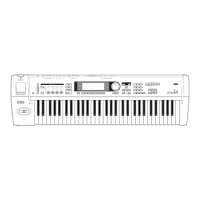
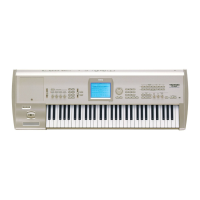
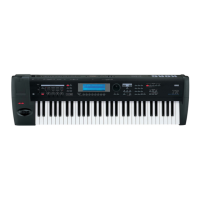
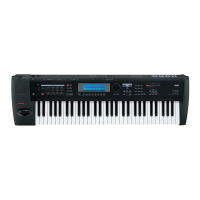
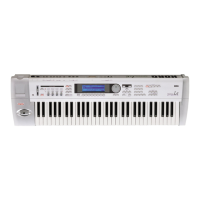
The Korg Triton Le is a music workstation designed for creating and performing music. It integrates a powerful sound engine, sequencing capabilities, and optional sampling functionality into a user-friendly interface.
The Triton Le serves as a comprehensive tool for musicians, producers, and performers. At its core is the renowned TRITON sound engine, offering a vast array of high-quality sounds across hundreds of program and combination locations. These sounds are meticulously crafted, with new programs and combinations specifically voiced for the Triton Le, ensuring a fresh and inspiring sonic palette. The workstation features dual polyphonic arpeggiators, which can be used to generate complex melodic and rhythmic patterns, adding dynamic movement to performances and compositions. These arpeggiators have pre-assigned patterns for every program and combination, which can be easily triggered by pressing the ARP ON/OFF key. Users can also explore and select new arpeggio patterns, or even create their own, offering extensive creative control over rhythmic and melodic generation.
Beyond sound generation, the Triton Le boasts an onboard 16-track sequencer. This powerful feature allows users to record, arrange, and edit complete songs with extensive editing capabilities. The sequencer supports various functions such as Song Templates, which provide quick starting points for song creation by loading pre-configured programs and effects onto tracks. The Realtime Pattern Play/Record (RPPR) function further enhances sequencing by allowing users to trigger patterns in real-time, facilitating dynamic song construction. The workstation also includes a four-part effects section, providing studio-quality sound processing to enhance programs, combinations, and sequenced tracks. This allows for a polished, professional sound directly from the device.
For those requiring audio manipulation, the Triton Le offers an optional Sampling board (EXB-SMPL). This expansion transforms the workstation into a capable sampler, allowing users to record and manipulate their own audio. It includes audio inputs with level control and Mic/Line switching, and a SCSI connector for external storage. The sampling feature supports recording "one-shot" vocal samples or other audio, which can then be integrated into programs and sequences. The SmartMedia™ storage slot provides a convenient and economical way to load and save sounds, songs, and sample data, ensuring that valuable creative work can be easily managed and backed up.
The device's interface is designed for ease of use, featuring dedicated keys for various modes (Program, Combination, Sequencer, Global, Sampling), bank selection, and category browsing. A DIAL and [INC]/[DEC] keys facilitate parameter adjustment and selection, while a numeric keypad allows for direct input. Control/Arp knobs provide real-time manipulation of sound parameters and arpeggiator settings. A joystick offers expressive control over pitch bend, modulation, and other assignable parameters.
Operating the Triton Le begins with loading factory data, which includes preload programs, combinations, and demo songs. This ensures the device is ready for immediate use with its full sonic potential. Users can easily navigate through programs and combinations, either by selecting specific banks and numbers or by browsing through categories. The CATEGORY key simplifies sound selection by allowing users to filter sounds based on type, making it quicker to find the desired instrument or effect.
A key feature for sound exploration is the AUDITION function. When selecting a new program, pressing the [AUDITION] key plays a pre-programmed musical phrase, demonstrating how the sound will perform in a musical context. This is invaluable for quickly assessing the suitability of a sound for a performance or sequencing application.
In Sequence mode, creating songs is streamlined through Song Templates. Users can select a template, which automatically loads programs and effects onto tracks, providing a foundation for composition. The ability to copy patterns into tracks, adjust loop points, and overdub new parts makes the sequencing process intuitive and efficient. The workstation also supports automation of the mix, allowing users to record volume changes and other parameters over time, adding dynamic expression to their songs.
The "Compare" function acts as an "UNDO" feature in Sequence mode, allowing users to revert to a previous state of a recorded take or mix. This provides a safety net for experimentation, enabling users to try new ideas without fear of permanently losing their previous work.
For sampling, the EXB-SMPL option offers a straightforward workflow. Users can connect a microphone or other audio source, adjust input levels, and record samples. The device allows for setting original and top key ranges for samples, and even provides the option to sample through the Triton Le's 89 insert effects, adding creative processing directly during the recording process. This integration of effects into the sampling workflow expands the creative possibilities significantly.
The display contrast can be adjusted for optimal visibility in various lighting conditions, enhancing the user experience. The device also provides information on the current ROM version and installed options upon power-up, which is useful for troubleshooting and ensuring the device is up-to-date.
While the Triton Le is designed for robust performance, certain maintenance practices are crucial for preserving user data and ensuring continued functionality. The most important maintenance feature is the ability to back up data. Any edits made to programs, combinations, drum kits, or global parameters can be written to internal memory, ensuring they are retained even after the device is powered off. However, songs and samples are not retained on power-off and must be explicitly saved.
Users are strongly advised to regularly back up all their valuable data to SmartMedia™ cards. If the EXB-SMPL option is installed, data can also be backed up via the SCSI connector to external storage devices. This proactive approach prevents data loss due to power cycles or unforeseen issues.
For users with the EXB-SMPL option, the device allows for memory expansion. The sampling option includes a 16 Mbyte DRAM SIMM module, but users can add additional SIMM modules (16 Mbyte or 32 Mbyte) to increase the total sample memory capacity up to 64 Mbytes. Specific instructions for installing these modules are provided in the Owner's Manual, making it a user-serviceable upgrade. This ensures that the device can adapt to growing sampling needs over time.
Keeping the device's operating system up-to-date is also a maintenance consideration. Korg provides updated operating systems, which can be downloaded from their website. While the manual doesn't detail the update process, it highlights the availability of these updates, implying that users can maintain their device with the latest software enhancements and bug fixes. This ensures the Triton Le remains compatible with new workflows and benefits from ongoing development.
 General
| Polyphony | 62 voices |
|---|---|
| Display | 240 x 64 pixel backlit LCD |
| MIDI | In, Out, Thru |
| Power Supply | AC adapter (included) |
| Type | Workstation Keyboard |
| Keyboard | 61 keys |
| Sound Engine | HI Synthesis |
| Synthesis Method | PCM |
| ROM Wave Memory | 32 MB |
| Programs | 512 Programs |
| Drum Kits | 24 drum kits |
| Effects | 2 multi-effects processors, 1 master effect, 1 total effect |
| Sequencer | 16-track, 200, 000 notes |
| Arpeggiator | 1 arpeggiator |
| Storage | SmartMedia card |
| Outputs | L/MONO, R, Headphones |
| Floppy Disk Drive | 3.5 inch 2DD/2HD |



 To Next Page