EasyManua.ls Logo

KTM 250 XC TPI - User Manual

KTM 250 XC TPI
147 pages
Print Icon
To Next Page IconTo Next Page
Loading...
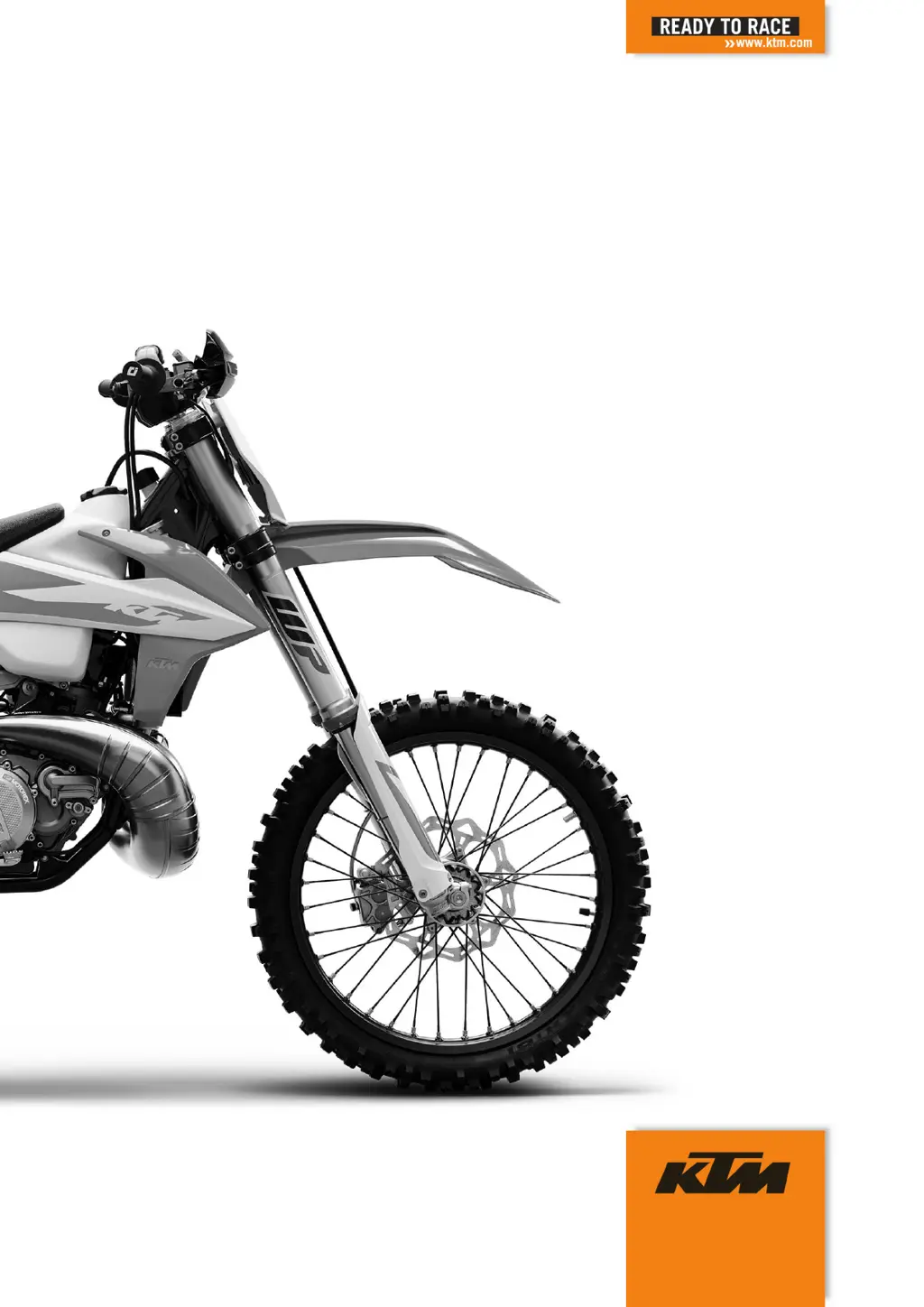
OWNER'S MANUAL 2020
250 XC TPI
300 XC TPI
Art. no. 3214002en

Table of Contents

Questions and Answers

  • S
    Samantha PrattJul 28, 2025
    Why does my KTM 250 XC TPI Motorcycle engine have too little power?
    • K
      Kevin BryanJul 28, 2025
      If your KTM Motorcycle engine lacks power, it might be due to several reasons. There could be an error in the electronic fuel injection, which requires reading the fault memory using the Husqvarna Motorcycles diagnostics tool. Another cause might be an interrupted fuel supply, so check the fuel tank breather. Also, inspect the exhaust system for leaks or deformation and consider changing the glass fiber yarn filling of the main silencer. Other potential issues include a defective ignition system (check the ignition coil and spark plug connector), a damaged diaphragm or reed valve housing, or incorrectly stored ambient pressure, which needs to be reprogrammed.
  • B
    Brandy ButlerAug 2, 2025
    What to do if my KTM 250 XC TPI Motorcycle engine dies during the trip?
    • R
      Richard WallaceAug 2, 2025
      If your KTM Motorcycle engine dies during a trip, it could be due to a lack of fuel, so refuel your motorcycle. Another potential cause is the engine taking in false air; ensure the intake flange is firmly seated. Also, check for a loose or oxidized connector or ignition coil, and if found, clean the connector and treat it with contact spray. Finally, an incorrectly stored ambient pressure can also cause this issue, so you may need to program the ambient pressure.
  • J
    jennifer51Aug 6, 2025
    How to fix KTM 250 XC TPI Motorcycle engine overheating?
    • M
      Mrs. Elizabeth GarciaAug 6, 2025
      If your KTM Motorcycle engine overheats, several factors could be the cause. First, check the cooling system for leakage and verify the coolant level, as too little coolant can lead to overheating. Insufficient air stream can also cause this, so switch off the engine when stationary. Dirty radiator fins can impede cooling, so clean them. Foam formation in the cooling system is another possibility, requiring you to drain and refill the coolant. Additionally, inspect the cylinder head and cylinder head gasket for damage. A bent radiator hose should be replaced, and a defective thermostat should be checked, with a guideline opening temperature of 70 °C (158 °F).
  • M
    Mrs. Sharon WilliamsAug 11, 2025
    What causes white smoke from my KTM 250 XC TPI exhaust?
    • D
      Dennis HarrisAug 11, 2025
      If you notice white smoke emission (steam in exhaust gas) from your KTM Motorcycle, it may indicate a damaged cylinder head or cylinder head gasket. You should check these components for damage.
  • M
    Matthew GonzalezAug 16, 2025
    Why is gear oil coming out of the vent hose on my KTM Motorcycle?
    • M
      Matthew RobinsonAug 16, 2025
      If gear oil is exiting at the vent hose of your KTM Motorcycle, it is likely that too much gear oil was added. Check the gear oil level to resolve this issue.
  • A
    Anita WallsAug 22, 2025
    How to troubleshoot water in KTM 250 XC TPI Motorcycle gear oil?
    • A
      Allison MasonAug 22, 2025
      If you find water in the gear oil of your KTM Motorcycle, it suggests a damaged shaft seal ring or water pump. You should check these components.

Summary

Safety Advice

Use Definition and Intended Use

Specifies the intended purpose and operational domain of the vehicle for safe operation.

Misuse and Safety Instructions

Details actions that constitute misuse and provides general safety instructions for operation.

Degrees of Risk and Symbols

Defines hazard levels (Danger, Warning, Caution, Note) and associated symbols.

Important Notes

Manufacturer and Implied Warranty

Details warranty conditions and voidance due to unauthorized work or conversions.

Fuel and Auxiliary Substances

Advises on proper handling of fuel and use of specified substances for safety.

Preparing for Use

First Use Preparations and Safety

Provides essential advice for initial use, including safety and controls familiarization.

Engine Running-in Procedure

Details the procedure and limits for the engine's running-in phase for optimal performance.

Lithium-Ion Battery Performance in Cold

Explains the behavior of lithium-ion batteries in cold conditions and starting attempts.

Preparing for Use (Continued)

Preparation for Difficult Operating Conditions

Outlines preparations for various challenging riding conditions like sand or mud.

Preparation for Wet and Muddy Circuits

Procedures for riding on wet and muddy circuits, focusing on air filter and chain.

Preparation for Dry Sand Riding

Specific preparations for riding on dry sand, including radiator cap check.

Preparation for High Temperatures or Slow Riding

Recommendations for high temperature or slow riding, including radiator and chain checks.

Preparation for Wet Sand Riding

Preparations for wet sand riding, including air filter and chain maintenance.

Preparation for Low Temperatures or Snow

Steps for preparing the vehicle for low temperatures or snow conditions.

Riding Instructions

Pre-Ride Checks and Maintenance

Lists essential pre-ride checks for safety and proper vehicle operation.

Starting the Engine Safely

Covers safety precautions and tips for starting the engine correctly.

Starting Off from Stationary

Provides instructions on how to start moving the motorcycle smoothly.

Riding Instructions (Continued)

Shifting Gears and Riding Techniques

Explains gear shifting, proper riding techniques, and throttle control for smooth riding.

Applying Brakes Correctly

Details correct brake application techniques and warnings about system failure.

Stopping and Parking Safely

Covers safe stopping and parking procedures, including burn warnings.

Riding Instructions (Continued)

Refueling Procedures and Safety

Safety instructions and procedures for refueling the vehicle correctly.

Adding 2-Stroke Oil

Instructions and warnings for adding 2-stroke oil to the oil tank for lubrication.

Service Schedule

Required Maintenance Work

Lists routine maintenance tasks categorized by operating hours intervals.

Recommended Maintenance Work

Outlines recommended maintenance tasks based on operating hours and time intervals.

Tuning the Chassis

Basic Chassis Setting with Riders Weight

Explains how rider weight affects chassis settings and adjustments for optimal handling.

Shock Absorber Compression Damping

Explains high-speed and low-speed compression damping for the shock absorber.

Adjusting Low-Speed Compression Damping

Provides instructions for adjusting the low-speed compression damping of the shock absorber.

Tuning the Chassis (Continued)

Adjusting High-Speed Compression Damping

Details how to adjust the high-speed compression damping of the shock absorber.

Adjusting Rebound Damping of Shock Absorber

Explains the process for adjusting the shock absorber's rebound damping.

Checking Static Sag of Shock Absorber

Explains how to check the static sag of the shock absorber using a sag gauge.

Tuning the Chassis (Continued)

Checking Riding Sag of Shock Absorber

Details the procedure for checking the riding sag of the shock absorber.

Adjusting Spring Preload of Shock Absorber

Provides instructions for adjusting the shock absorber's spring preload.

Adjusting Riding Sag

Explains how to adjust the riding sag, including spring selection.

Service Work on the Chassis (Continued)

Adjusting the Chain Tension

Detailed instructions for adjusting the chain tension and aligning the rear wheel.

Service Work on the Chassis (Continued)

Removing the Fuel Tank

Safety warnings for fuel and detailed steps for removing the fuel tank.

Service Work on the Chassis (Continued)

Installing the Fuel Tank

Safety warnings and instructions for correctly installing the fuel tank.

Checking Chain Tension

Explains how to check chain tension and the consequences of incorrect tension.

Brake System

Checking Front Brake Fluid Level

How to check the front brake fluid level and safety warnings.

Brake System (Continued)

Adding Front Brake Fluid

Instructions for adding front brake fluid, including precautions.

Brake System (Continued)

Adding Rear Brake Fluid

Instructions for adding rear brake fluid, including precautions.

Checking Rear Brake Fluid Level

How to check the rear brake fluid level and safety warnings.

Wheels and Tires

Wheels and Tires (Continued)

Electrical System

Charging the 12-V Battery

Safety precautions and procedures for charging the 12V battery.

Changing the Main Fuse

Safety warnings and steps for changing the main fuse.

Electrical System (Continued)

Changing Fuses of Individual Power Consumers

How to identify and replace fuses for various vehicle components.

Cooling System

Checking Antifreeze and Coolant Level

Safety warnings and procedures for checking coolant antifreeze and level.

Checking Coolant Level

Detailed steps for checking the coolant level in the radiator.

Cooling System (Continued)

Tuning the Engine

Adjusting Idle Speed

Explains how to adjust the engine's idle speed for optimal running.

Tuning the Engine (Continued)

Service Work on the Engine

Checking 2-Stroke Oil Level

How to check the 2-stroke oil level and warnings about lubrication failure.

Service Work on the Engine (Continued)

Checking the Gear Oil Level

How to check the gear oil level when the engine is cold.

Service Work on the Engine (Continued)

Changing the Gear Oil

Safety warnings and procedure for draining and refilling gear oil.

Adding the Gear Oil

Instructions for topping up gear oil, emphasizing correct type and level.

Cleaning and Care

Storage

Long-Term Storage Preparation

Steps and precautions for preparing the motorcycle for long-term storage.

Troubleshooting

Technical Data

Substances

KTM 250 XC TPI Specifications

General IconGeneral
Displacement249 cc
Bore x Stroke66.4 mm x 72 mm
Transmission6-speed
StarterElectric starter
Front BrakeDisc brake, 260 mm
Rear BrakeDisc brake, 220 mm
Engine Type2-stroke
Fuel SystemTPI (Transfer Port Injection)
FrameCentral Tube Frame, Made of Chrome Molybdenum Steel
Front SuspensionWP Xplor 48, USD fork
Rear SuspensionWP XPLOR Shock with Linkage
Fuel Capacity8.5 liters

Related product manuals