EasyManua.ls Logo

KTM 300 EXC TPI 2018 - User Manual

KTM 300 EXC TPI 2018
176 pages
Print Icon
To Next Page IconTo Next Page
Loading...
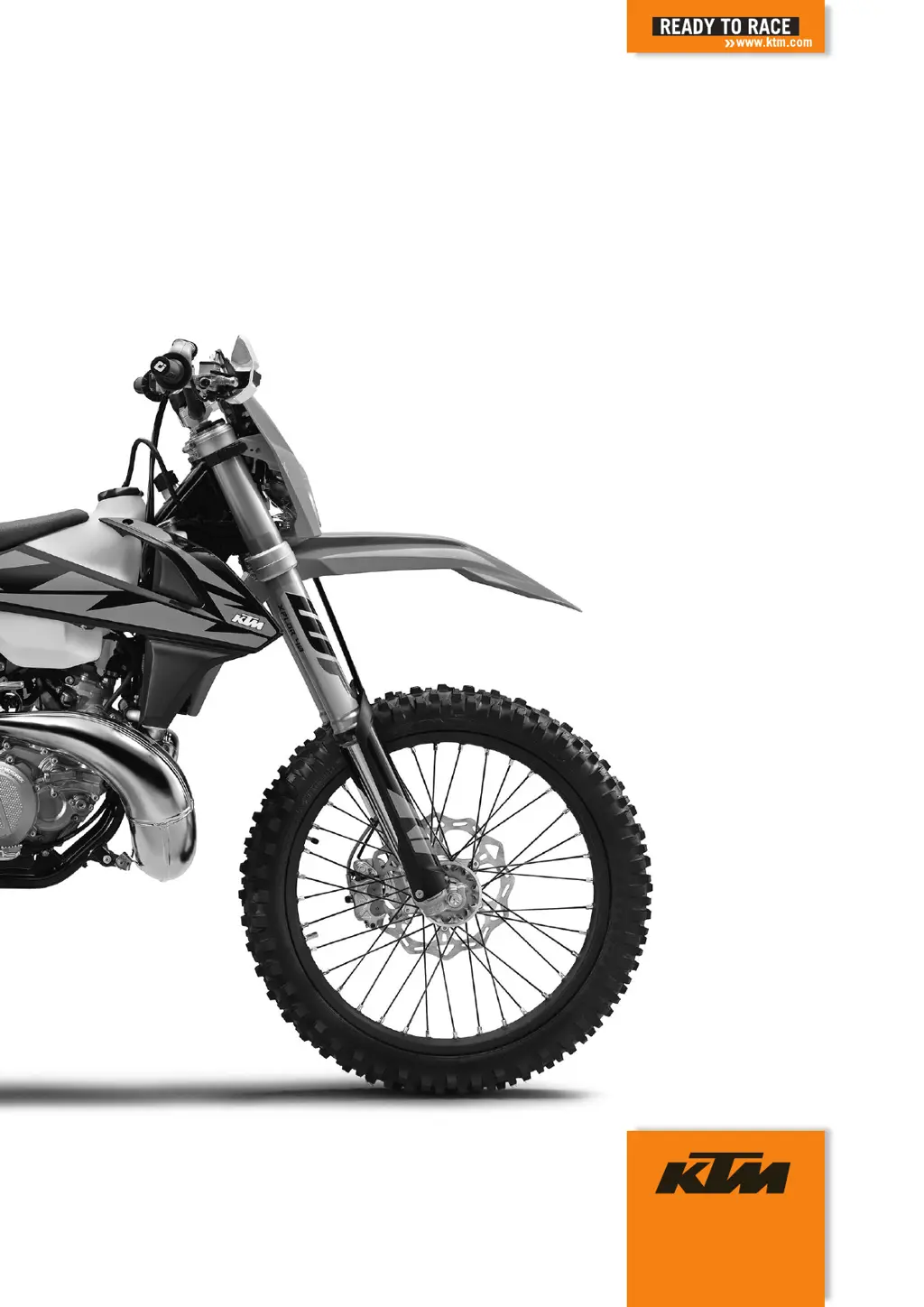
OWNER'S MANUAL 2018
250 EXC TPI
250 EXC Six Days TPI
250 XCW TPI
300 EXC TPI
300 EXC Six Days TPI
Art. no. 3213645en

Table of Contents

Questions and Answers

  • L
    Logan WilliamsAug 18, 2025
    What to do if my KTM 300 EXC TPI 2018 engine turns but does not start?
    • G
      gonzalezpatriciaAug 18, 2025
      If your KTM Motorcycle engine turns over but doesn't start, potential causes include an incorrectly set idle speed (adjust it), a disconnected fuel line (join it), or a fuel supply interruption (check the fuel tank breather). Also, the spark plug could be oily or wet (clean, dry, or replace it), the plug gap might be too wide (adjust to 1.3 mm), or there could be a fault in the ignition (check ignition coil, spark plug connector, and alternator stator winding). Other possible reasons are a defective fuel injection system (check cabling and connections, read the fault memory), a frayed wiring harness or defective kill switch (check wiring harness and electrical system), or a loose/oxidized connector or ignition coil (clean the connector and use contact spray).
  • A
    Andrew NewtonAug 20, 2025
    How to fix a KTM Motorcycle that won't crank?
    • R
      Ryan MorganAug 20, 2025
      If your KTM Motorcycle engine cannot be cranked using the electric starter, it might be due to an operating error (carry out the start procedure), a discharged battery (recharge the battery, check the charging voltage, closed current, and stator winding of the alternator), or a blown main fuse (change the main fuse). It could also be a faulty starter relay (check the starter relay) or a faulty starter motor (check the starter motor).
  • L
    Lori CraigAug 23, 2025
    Why is my KTM Motorcycle engine overheating?
    • M
      Michelle CervantesAug 23, 2025
      If your KTM Motorcycle engine overheats, there are several potential causes. Check for too little coolant in the cooling system (look for leakage and check the coolant level). Ensure there's enough air stream, and switch off the engine when stationary. Also, inspect the radiator fins for dirt and clean them if necessary.
  • K
    karenedwardsAug 26, 2025
    What causes KTM 300 EXC TPI 2018 Motorcycle engine to overheat?
    • K
      Kristen RiceAug 26, 2025
      If your KTM Motorcycle engine overheats, consider these possible causes: foam formation in the cooling system (drain and refill the coolant), a damaged cylinder head or cylinder head gasket (check them), a bent radiator hose (change it), or a defective thermostat (check the thermostat; guideline opening temperature: 70 °C (158 °F)).
  • W
    William OwensAug 28, 2025
    Why KTM Motorcycle engine does not speed up?
    • T
      Todd AlvaradoAug 28, 2025
      If your KTM Motorcycle engine does not speed up, it could be due to a defect in the fuel injection system (check the cabling for damage and the electrical plug-in connections for corrosion and damage; read out the fault memory using the KTM diagnostics tool), faulty ignition (check ignition coil, spark plug connector, and the stator winding of the alternator), or incorrectly stored ambient pressure (program ambient pressure).
  • D
    Denise SheltonAug 30, 2025
    What to do if KTM 300 EXC TPI 2018 engine dies during the trip?
    • M
      Melanie WhiteAug 30, 2025
      If your KTM Motorcycle engine dies during a trip, the possible reasons could be a lack of fuel (refuel), the engine taking in false air (check that the intake flange is firmly seated), a loose or oxidized connector or ignition coil (clean the connector and treat it with contact spray), or incorrectly stored ambient pressure (program ambient pressure).
  • N
    Nicole JohnsonSep 4, 2025
    Why KTM 300 EXC TPI 2018 Motorcycle engine has no idle?
    • S
      Stacie RodriguezSep 5, 2025
      If your KTM Motorcycle engine has no idle, the issue might stem from a defective spark plug (change it), faulty ignition (check ignition coil, spark plug connector, and the stator winding of the alternator), or an incorrectly set idle speed (adjust the idle speed).
  • E
    Emily FranklinSep 7, 2025
    What does it mean if the malfunction indicator lamp lights up on my KTM 300 EXC TPI 2018 Motorcycle?
    • K
      Kenneth PatelSep 7, 2025
      If the malfunction indicator lamp lights up or flashes on your KTM Motorcycle, it indicates a defect in the fuel injection system. Check the cabling for damage and the electrical plug-in connections for corrosion and damage. You may also need to read out the fault memory using the KTM diagnostics tool.
  • A
    Allison BennettSep 9, 2025
    Why is my KTM Motorcycle battery discharged?
    • C
      Chelsea Austin DVMSep 9, 2025
      If the battery of your KTM Motorcycle is discharged, it could be because the battery is not being charged by the alternator (check the charging voltage and the stator winding of the alternator) or due to an unwanted power consumer (check the open-circuit current).
  • G
    George HorneSep 12, 2025
    Why is my KTM 300 EXC TPI 2018 Motorcycle emitting white smoke?
    • D
      Dominique JonesSep 12, 2025
      If you see white smoke emission (steam in exhaust gas) from your KTM Motorcycle, it suggests a damaged cylinder head or cylinder head gasket. Check the cylinder head and cylinder head gasket.

Summary

SAFETY ADVICE

Intended Use Definition

Defines the specific purpose and operational scope of the vehicle.

General Safety Instructions

Outlines essential safety practices for operating the motorcycle.

Degrees of Risk and Symbols

Explains hazard symbols and their corresponding risk levels.

Safe Operation Guidelines

Provides critical advice for operating the vehicle safely and avoiding hazards.

Protective Clothing Requirements

Emphasizes the importance of wearing appropriate protective gear for rider safety.

IMPORTANT NOTES

Service Requirements

Stresses the importance of regular service for optimal operation and longevity.

CONTROLS

Map Switch (All Six Days Models)

Explains how the map switch alters engine characteristics between Performance and Soft modes.

Indicator Lamps Overview (All EXC Models)

Describes the meaning and function of various indicator lamps on the instrument panel.

Indicator Lamps Overview (250 XC-W TPI US)

Details the indicator lamps specific to the 250 XC-W TPI US model.

COMBINATION INSTRUMENT

Adjusting Instrument Functions

Explains how to navigate the setup menu and activate/deactivate various functions.

PREPARING FOR USE

Advice on First Use

Crucial safety warnings and recommendations for initial vehicle operation.

Engine Break-In Procedure

Guidelines for the engine running-in phase to ensure proper performance and durability.

RIDING INSTRUCTIONS

Pre-Ride Checks and Maintenance

Essential checks and maintenance steps to ensure the vehicle is safe for riding.

Starting the Vehicle

Instructions and safety precautions for starting the motorcycle's engine.

Braking Techniques

Important information and warnings related to effective and safe braking.

Refueling Instructions

Safety warnings and procedures for refueling the motorcycle's fuel tank.

Adding 2-Stroke Oil

Instructions for topping up the 2-stroke oil reservoir to ensure engine lubrication.

SERVICE SCHEDULE

Required Maintenance Work

Lists essential tasks to be performed at specific operating hour intervals.

Recommended Maintenance Work

Lists recommended tasks and their applicable intervals for optimal upkeep.

TUNING THE CHASSIS

Basic Chassis Setting with Riders Weight

Explains how to set up the suspension based on rider weight for optimal characteristics.

Shock Absorber Compression Damping

Details the two ranges (high-speed and low-speed) of compression damping for the shock absorber.

Adjusting Low-Speed Compression Damping

Step-by-step instructions for adjusting the low-speed compression damping of the shock absorber.

Adjusting High-Speed Compression Damping

Instructions for adjusting the high-speed compression damping of the shock absorber.

Adjusting Rebound Damping of Shock Absorber

Explains how to adjust the rebound damping setting on the rear shock absorber.

Checking Static Sag of Shock Absorber

Describes how to measure the static sag of the rear shock absorber.

Checking Riding Sag of Shock Absorber

Details the process for measuring the riding sag of the rear shock absorber.

Adjusting Spring Preload of Shock Absorber

Instructions for adjusting the spring preload on the rear shock absorber.

Adjusting Riding Sag

Guidance on selecting and mounting springs based on rider weight for proper sag.

Adjusting Fork Compression Damping

Instructions for adjusting the compression damping on the front fork legs.

Adjusting Fork Rebound Damping

Explains how to adjust the rebound damping on the front fork legs.

Adjusting Fork Spring Preload (Six Days Models)

Specific instructions for adjusting fork spring preload on Six Days models.

SERVICE WORK ON THE CHASSIS

Checking Steering Head Bearing Play

Guidance on checking for play in the steering head bearing to ensure safe handling.

Adjusting Steering Head Bearing Play

Steps for adjusting the steering head bearing to eliminate play and ensure proper steering.

Cleaning Air Filter and Air Filter Box

Guidance on cleaning the air filter element and its housing for optimal airflow.

Changing Glass Fiber Yarn Filling in Main Silencer

Instructions for replacing the internal packing material of the exhaust silencer.

Cleaning the Chain

Step-by-step instructions for cleaning the drive chain to ensure proper lubrication and longevity.

Checking the Chain Tension

How to measure and verify the correct tension of the drive chain.

Adjusting the Chain Tension

Procedures for adjusting the drive chain tension to the specified limits.

Checking Chain, Sprockets, and Guide

Inspecting the drive chain, sprockets, and chain guide for wear and damage.

Checking Hydraulic Clutch Fluid Level

Procedure for checking the fluid level in the hydraulic clutch system.

Changing Hydraulic Clutch Fluid

Step-by-step instructions for replacing the hydraulic fluid in the clutch system.

BRAKE SYSTEM

Checking Hand Brake Lever Free Travel

How to check for proper free play in the front brake lever.

Adjusting Hand Brake Lever Free Travel

Instructions for adjusting the free travel of the front brake lever.

Adjusting Hand Brake Lever Basic Position

How to adjust the hand brake lever's position for rider ergonomics.

Checking Brake Discs

Guidance on inspecting brake discs for wear, damage, and thickness.

Checking Front Brake Fluid Level

Procedure for checking the fluid level in the front brake reservoir.

Adding Front Brake Fluid

Instructions for topping up the front brake fluid reservoir.

Checking Front Brake Linings

How to inspect the front brake pads for wear and damage.

Changing Front Brake Linings

Step-by-step guide for replacing the front brake pads.

Checking Foot Brake Lever Free Travel

How to check for proper free play in the rear brake lever.

Adjusting Foot Brake Lever Basic Position

Instructions for adjusting the foot brake lever's position for rider ergonomics.

Checking Rear Brake Fluid Level

Procedure for checking the fluid level in the rear brake reservoir.

Adding Rear Brake Fluid

Instructions for topping up the rear brake fluid reservoir.

Checking Rear Brake Linings

How to inspect the rear brake pads for wear and damage.

Changing Rear Brake Linings

Step-by-step guide for replacing the rear brake pads.

WHEELS, TIRES

Removing the Front Wheel

Detailed steps for safely removing the front wheel from the motorcycle.

Installing the Front Wheel

Procedures for correctly installing the front wheel onto the motorcycle.

Removing the Rear Wheel

Detailed steps for safely removing the rear wheel from the motorcycle.

Installing the Rear Wheel

Procedures for correctly installing the rear wheel onto the motorcycle.

Checking Tire Condition

Guidance on inspecting tires for cuts, wear, and age to ensure safety.

Checking Tire Air Pressure

Instructions for checking and adjusting tire air pressure for optimal performance and safety.

ELECTRICAL SYSTEM

Recharging the Battery

Guidance on properly charging the motorcycle's battery to maintain its health.

Changing the Main Fuse

Instructions for locating and replacing the main fuse protecting the electrical system.

Changing Fuses of Individual Power Consumers

Procedures for identifying and replacing fuses for specific electrical components.

Checking the Headlight Setting

Procedure for checking and verifying the correct aim of the headlight beam.

Adjusting the Headlight Range

Instructions for adjusting the headlight beam's vertical range.

COOLING SYSTEM

Checking Antifreeze and Coolant Level

How to check the antifreeze concentration and the coolant level in the radiator.

Checking the Coolant Level

Procedure for verifying the coolant level in the radiator.

TUNING THE ENGINE

Checking Throttle Cable Play

How to measure and verify the correct play in the throttle cables for smooth operation.

Adjusting Throttle Cable Play

Instructions for adjusting the throttle cable play to the specified limits.

Setting Throttle Response Characteristic Map

How to change the engine's throttle response by swapping guide plates.

Adjusting Idle Speed

Procedures for setting the engine's idle speed for optimal running.

Changing Ignition Timing Map

How to switch between different ignition timing maps (Soft/Performance) for altered engine characteristics.

SERVICE WORK ON THE ENGINE

STORAGE

TECHNICAL DATA

Engine Tightening Torques

Lists specific torque values for various engine component fasteners.

Chassis Tightening Torques

Lists specific torque values for various chassis component fasteners.

SUBSTANCES

STANDARDS

LIST OF SYMBOLS

KTM 300 EXC TPI 2018 Specifications

General IconGeneral
Displacement293.2 cc
Bore x Stroke72 mm x 72 mm
Transmission6-speed
Seat Height960 mm
Weight (Dry)102 kg
Cooling SystemLiquid cooled
Front BrakeDisc brake
Rear BrakeDisc brake
StarterElectric starter
Front Brake Diameter260 mm
Rear Brake Diameter220 mm
Ground Clearance370 mm
Engine TypeSingle-cylinder, 2-stroke
Fuel Tank Capacity9 l
Front SuspensionWP XPlor 48
Rear SuspensionWP XPLOR PDS

Related product manuals