To Next Page

W
Whitney AriasSep 9, 2025
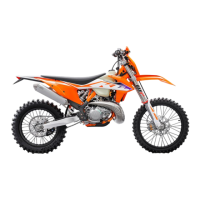
Why gear oil exits at the vent hose on KTM 300 EXC 2023?
- DdyuSep 9, 2025
If gear oil is exiting at the vent hose of your KTM Motorcycle, it's likely because too much gear oil was added. Check the gear oil level.

Why gear oil exits at the vent hose on KTM 300 EXC 2023?
If gear oil is exiting at the vent hose of your KTM Motorcycle, it's likely because too much gear oil was added. Check the gear oil level.
Why does my KTM 300 EXC 2023 engine have too little power?
If your KTM Motorcycle engine has too little power, start by checking the air and fuel filters for dirt; clean or replace them as needed. Make sure the fuel screen is not dirty (replace it if needed) and that the fuel supply isn't interrupted by checking the fuel tank breather. Inspect the exhaust system for leaks or deformation and consider replacing the glass fiber yarn filling in the main silencer. Also, a faulty ignition could be the cause, so check the ignition coil, spark plug connector and the alternator’s stator winding. Finally, check the diaphragm and reed valve housing for damage and ensure that the ambient pressure is correctly stored.
What to do if KTM 300 EXC 2023 Motorcycle engine dies during the trip?
If your KTM Motorcycle engine dies during a trip, consider these potential causes. First, check if you're simply out of fuel and refuel if necessary. Next, make sure the engine isn't taking in false air by ensuring the intake flange is firmly seated. Also, a loose or oxidized connector or ignition coil could be the issue; clean the connector and treat it with contact spray. Lastly, ensure the ambient pressure is correctly stored.
What causes a KTM 300 EXC 2023 engine to not speed up?
If your KTM Motorcycle engine does not speed up, there could be a malfunction in the electronic fuel injection. Check the wiring for damage and the electrical plug-in connectors for corrosion and damage. Faulty ignition could also be the cause, so check the ignition coil, spark plug connector and the alternator’s stator winding. Finally, ensure that the ambient pressure is correctly stored.
How to troubleshoot a KTM 300 EXC 2023 engine that does not speed up?
If your KTM Motorcycle engine does not speed up, the issue may stem from a faulty ignition system. Check the ignition coil's primary winding, the spark plug connector, and the alternator's stator winding. It's also possible that the ambient pressure is incorrectly stored. If so, you should program the ambient air pressure.
What to do if my KTM 300 EXC 2023 Motorcycle engine dies during the trip?
If your KTM Motorcycle engine dies during the trip, first check if you're out of fuel and refuel if necessary. The engine might be taking in false air, so ensure the intake flange is firmly seated. A loose or oxidized connector or ignition coil can also cause this issue; clean the connector and treat it with contact spray. Finally, the ambient pressure may be incorrectly stored, requiring you to program the ambient air pressure.
Why is gear oil coming out of the vent hose on my KTM Motorcycle?
If gear oil is exiting at the vent hose of your KTM Motorcycle, it's possible that too much gear oil was added. Check the gear oil level to ensure it is correct.
Why are the values deleted in my KTM Motorcycle combination instrument?
If the values in the combination instrument of your KTM Motorcycle are deleted (time, stop watch, lap times), the combination instrument battery is likely empty. Replace the combination instrument battery.
Why are values in combination instrument deleted on KTM 300 EXC 2023 Motorcycle?
If the values in the combination instrument (time, stop watch, lap times) are deleted on your KTM Motorcycle, the combination instrument battery is likely empty.
Why is the 12-V battery discharged on my KTM 300 EXC 2023?
If the 12-V battery is discharged on your KTM Motorcycle, it could be due to the alternator not charging it. Check the charging voltage and the stator winding of the alternator. Alternatively, there might be an unwanted electrical power consumer, so check the open-circuit current.
Defines the intended use of the vehicle for EXC and XC-W models.
Explains what constitutes misuse of the vehicle and its associated dangers.
Provides general instructions to follow for safe operation of the motorcycle.
Defines risk levels and associated symbols used throughout the manual.
Warns against tampering with the noise control system and exhaust components.
Provides critical safety advice for operating the vehicle safely.
Emphasizes the importance of wearing appropriate protective clothing for safety.
Stresses reading the manual carefully for safe operation and maintenance.
Explains the function and states of the stop button.
Explains the function and states of the stop button.
Explains the function of the emergency OFF switch.
Details the meaning of various indicator lights on the dashboard.
Details the meaning of indicator lights for XC-W models.
Describes the location and purpose of the steering lock.
Provides instructions on how to lock the motorcycle's steering.
Provides instructions on how to unlock the motorcycle's steering.
Provides essential advice for preparing the motorcycle for initial use.
Details the procedure and precautions for running in the engine.
Offers guidance for operating the vehicle in challenging conditions.
Provides specific preparation steps for riding on dry sand.
Details preparation steps for riding on wet sand.
Offers preparation advice for wet and muddy circuit riding.
Provides preparation steps for hot conditions or slow riding.
Gives preparation advice for riding in cold or snowy conditions.
Lists essential checks and maintenance before every ride.
Provides instructions and safety warnings for starting the engine.
Details the procedure for starting off from a standstill.
Explains gear shifting, riding techniques, and engine warnings.
Offers advice on proper braking techniques and potential issues.
Provides instructions for safely stopping and parking the motorcycle.
Details safety precautions and procedures for refueling the vehicle.
Explains how to add 2-stroke oil and warnings about engine failure.
Lists all required maintenance tasks at different intervals.
Explains how to adjust chassis settings based on rider weight.
Provides instructions for adjusting the low-speed compression damping.
Guides on adjusting the high-speed compression damping of the shock absorber.
Details how to adjust the rebound damping of the shock absorber.
Guides on checking the static sag of the rear shock absorber.
Provides instructions for adjusting the spring preload of the shock absorber.
Provides instructions for adjusting the spring preload of the front fork.
Provides instructions for safely raising the motorcycle on a lift stand.
Details the procedure for safely removing the motorcycle from a lift stand.
Explains how to check for play in the steering head bearing.
Provides instructions for adjusting the steering head bearing play.
Details the procedure for adjusting the chain tension.
Details how to adjust the free travel of the handbrake lever.
Provides instructions for adjusting the hand brake lever position.
Provides instructions for adding front brake fluid.
Details the procedure for changing the front brake linings.
Provides instructions for adjusting the foot brake lever position.
Provides instructions for adding rear brake fluid.
Details the procedure for changing the rear brake linings.
Provides instructions for safely removing the front wheel.
Details the procedure for installing the front wheel.
Guides on how to safely remove the rear wheel.
Provides instructions for installing the rear wheel.
Guides on checking and adjusting tire pressure.
Provides instructions for safely removing the 12-V battery.
Details the procedure for installing the 12-V battery.
Guides on how to properly charge the 12-V battery.
Explains how to replace the main fuse for electrical protection.
Explains how to check antifreeze and coolant levels.
Guides on how to perform a complete coolant change.
Provides instructions for adjusting the throttle cable play.
Guides on changing the throttle response using guide plates.
Details how to adjust the engine's idle speed.
Explains how to check the 2-stroke oil level in the tank.
Explains how to check the gear oil level.
Details the procedure for changing the gear oil.
Provides instructions for adding gear oil.
Provides detailed steps for storing the motorcycle for extended periods.
Outlines the necessary steps to prepare the motorcycle after storage.
Lists the specified tightening torques for engine components.
Lists the specified tightening torques for chassis components.
 General
| Displacement | 293.2 cc |
|---|---|
| Bore x Stroke | 72 mm x 72 mm |
| Starter | Electric starter |
| Transmission | 6-speed |
| Cooling | Liquid cooled |
| Front Suspension | WP XPLOR-USD, Ø 48 mm |
| Fuel Tank Capacity | 9 liters |
| Ground Clearance | 370 mm |
| Seat Height | 960 mm |
| Weight (without fuel) | 103.4 kg |
| Engine Type | 2-stroke |
| Rear Suspension | WP Xplor PDS |
| Front Brake | Disc brake |
| Rear Brake | 220 mm disc |
| Frame | Central double-cradle-type 25CrMo4 steel |