EasyManua.ls Logo

KTM 400 - User Manual

KTM 400
46 pages
Print Icon
To Next Page IconTo Next Page
Loading...
OWNERS HANDBOOK
MANUALE D’USO
MANUEL D’UTILISATION
MANUAL DE INSTRUCCIONES
2002
BEDIENUNGSANLEITUNG
Art.Nr. 3.210.17 06/2001
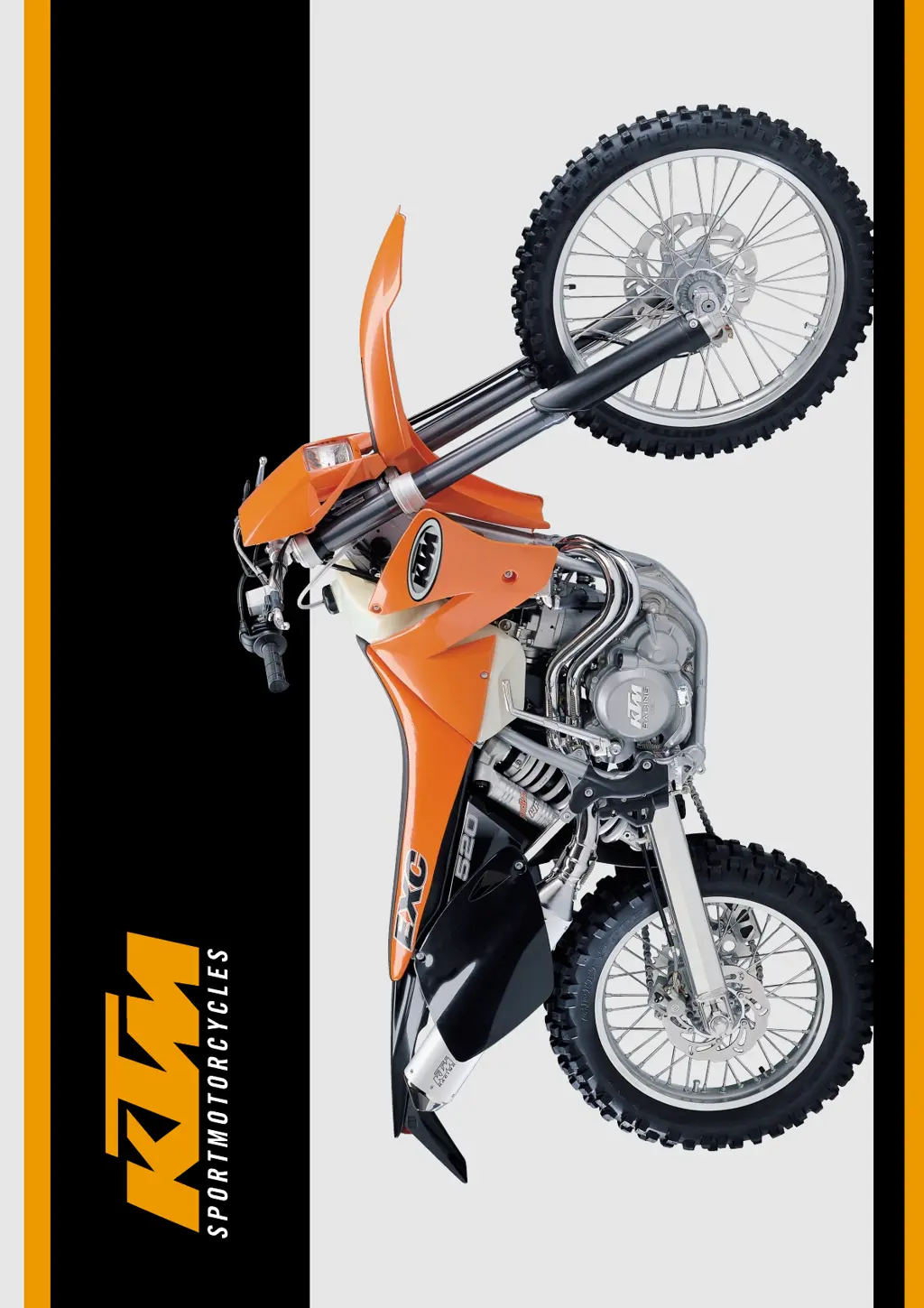
400/520 SX, MXC, EXC RACING

Table of Contents

Questions and Answers

  • D
    David HendricksNov 21, 2025
    Why KTM 400 engine will not start?
    • J
      Jennifer ArnoldNov 21, 2025
      Several factors may prevent your KTM Motorcycle engine from starting. It could be due to an operating error; ensure the ignition and emergency OFF switch are activated, the fuel tap is open, and the tank has fuel. Avoid using the choke. Alternatively, the fuel supply might be interrupted; in this case, close the fuel tap, check the fuel hose at the carburetor for fuel flow. If there's no fuel, inspect the tank ventilation and clean the fuel tap. Other potential causes include a sooty or wet spark plug (clean or replace it), an incorrect electrode gap (adjust to 0.6 mm), a faulty spark plug or connector (test for a strong spark), or issues with the connector from the generator to the ignition coil (clean and treat with contact spray). Finally, a short circuit in the wiring harness, ignition...
  • R
    Rebekah KimAug 25, 2025
    What to do if KTM Motorcycle engine gets too hot?
    • H
      holly99Aug 26, 2025
      If your KTM Motorcycle engine is overheating, there are several possible causes. First, check the cooling liquid level and refill if necessary, also inspect the cooling system for leaks. Ensure adequate airflow by riding at a faster pace. Clean the radiators with a water jet if they are dirty. If there's foam in the cooling system, replace the coolant with a brand-name antifreeze liquid. Inspect the cooling hoses for bends and either shorten or replace them. Lastly, the thermostat might be defective; remove and check it (it should open at 70°C/158°F), and replace if needed.
  • C
    Christopher OlsonAug 26, 2025
    What to do if KTM 400 Motorcycle engine will not reach full power?
    • A
      Alan OliverAug 27, 2025
      If your KTM Motorcycle engine isn't reaching full power, the fuel supply may be partially interrupted, or the carburetor may be dirty. Clean and check both the fuel system and carburetor. Also check the air filter and clean or replace if it is very dirty. Finally, check the exhaust for leaks or blockages, and replace the glass fiber yarn in the exhaust silencer if necessary.
  • L
    Laura JarvisAug 27, 2025
    Why KTM 400 Motorcycle has high oil consumption?
    • N
      natasha63Aug 27, 2025
      High oil consumption in your KTM Motorcycle may be due to a buckling gearing ventilation hose; replace it with a non-buckling hose. Check the engine oil level when the engine is warm and correct it if necessary. Also, the motor oil might be too thin; use a thicker engine oil.
  • J
    jacksonjesseAug 28, 2025
    What to do if my KTM Motorcycle engine cranks but doesn’t start?
    • M
      Matthew OlsonAug 28, 2025
      If your KTM Motorcycle engine cranks but doesn't start, consider these possibilities: Ensure the fuel tap is open, there's fuel in the tank, and the choke is activated. If the motorcycle has been out of operation for a while, drain the old fuel from the float chamber. If the engine is flooded, pull the hand decompression lever, fully rev up the engine, and actuate the kickstarter 5 to 10 times or actuate the E-starter 2 times for 5 seconds each. Check the spark plug; if it's sooty or wet, unscrew and dry it. Also, verify the spark plug electrode gap and adjust it to 0.6 mm if it's too large. If there is no spark, exchange the spark plug. Finally, check for water in the carburetor or blocked jets, and clean the carburetor if necessary.
  • J
    John OrtizSep 16, 2025
    Why my KTM 400 has high oil consumption?
    • C
      Carol PerezSep 16, 2025
      High oil consumption in your KTM Motorcycle could be due to several reasons. The hose of the engine ventilation might be bent, so dislocate or replace it with a non-buckling ventilation hose. Check the engine oil level; if it's too high, correct it. The motor oil might be too thin (viscosity), so use a thicker engine oil.
  • J
    jonathangraySep 14, 2025
    Why does my KTM Motorcycle engine get too hot?
    • M
      Michael ClarkSep 14, 2025
      Your KTM Motorcycle engine might be overheating due to several reasons. First, check the cooling liquid level and refill if it's insufficient, also inspect the cooling system for leaks. Ensure there's enough air stream by driving briskly (consider retrofitting an electric fan). Make sure the cooling system has been properly bled. Clean the radiators with a water jet if they are very dirty. Replace the cooling liquid if there's foam formation, and use antifreeze liquid with a brand name. Inspect the cooling hoses for bends and shorten or replace them if necessary. Finally, check the thermostat; if defective, dismount and check it (opening temperature 70°C, (158°F) or replace it.
  • S
    Sophia SmallSep 15, 2025
    What to do if my KTM 400 engine stops or splutters in carburettor?
    • J
      johnsondawnSep 15, 2025
      If your KTM Motorcycle engine stops or sputters in the carburetor, it could be due to insufficient fuel. Clean and check the fuel system and carburetor. Another cause might be the engine taking in air uncontrollably. Check the rubber sleeve and carburetor for a tight fit.
  • C
    Colin CantrellSep 6, 2025
    What causes all lamps to blow out on a KTM 400 Motorcycle?
    • T
      Thomas GatesSep 6, 2025
      If all the switched-on lamps in your KTM Motorcycle have blown out, it is possible that the capacitor or voltage regulator is faulty. Remove the right side cover and control the connections. Have a professional check the capacitor and voltage regulator.
  • J
    James MorrisSep 4, 2025
    What causes KTM 400 engine to stop or sputter in carburetor?
    • S
      Shannon BlairSep 4, 2025
      If your KTM Motorcycle engine stops or sputters in the carburetor, it may be due to insufficient fuel. To address this, clean and check the fuel system and carburetor. Also, ensure that the engine isn't taking in air uncontrollably by checking if the intake flange and carburetor are firmly set.

Summary

Important Safety and Operational Guidelines

Operation Instruments

Front Fork Suspension Adjustment

Compression and Rebound Damping Adjustment (Fork)

How to adjust the fork's compression and rebound damping.

Rear Shock Absorber and Steering Adjustment

Shock Absorber Damping Adjustment

Adjusting compression and rebound damping on shock absorbers.

Pre-Ride Checks and Initial Operation

Essential Pre-Ride Checks

A checklist of critical inspections before riding.

Initial Operation and Running-In Procedures

Guidance for first rides and engine break-in.

Engine Starting and Riding Techniques

Engine Starting Procedures (Cold, Warm, Flooded)

Steps for starting the engine in various states.

Starting Off and Shifting Gears

How to begin riding and change gears smoothly.

Braking and Stopping Procedures

Braking Techniques and Safety

Proper use of brakes and associated safety warnings.

Stopping and Parking Guidelines

Safe procedures for stopping the motorcycle and parking it.

Periodic Maintenance Schedule

Recommended Extra Order Maintenance

Key maintenance tasks recommended for professional service.

Rider Maintenance and Specialized Workshop Checks

Regular Rider Maintenance Checks

Essential checks riders should perform regularly.

Chassis and Engine Maintenance Procedures

Disc Brake System Information and Maintenance

Details on brake calipers, pads, discs, fluid, and safety.

Cooling System Checks and Bleeding

Checking coolant level and bleeding the cooling system.

Engine Oil Specifications and Changing

Selecting and changing engine oil and filters.

Troubleshooting Common Issues

Technical Data - Engine and Carburetor

Engine Specifications and Carburetor Settings

Detailed engine technical data and basic carburetor settings.

Technical Data - Chassis, Torques, and Clearances

Chassis Specifications and Tightening Torques

Chassis data, fork/shock adjustments, and torque specifications.

Assembly Clearances and Wear Limits

Specifications for assembly clearances and wear limits.

KTM 400 Specifications

General IconGeneral
Transmission6-speed
EngineSingle-cylinder, 4-stroke
StarterElectric
Cooling SystemLiquid-cooled
Front SuspensionWP USD
Rear SuspensionWP
Front BrakeSingle disc
Rear BrakeSingle disc

Related product manuals