EasyManua.ls Logo

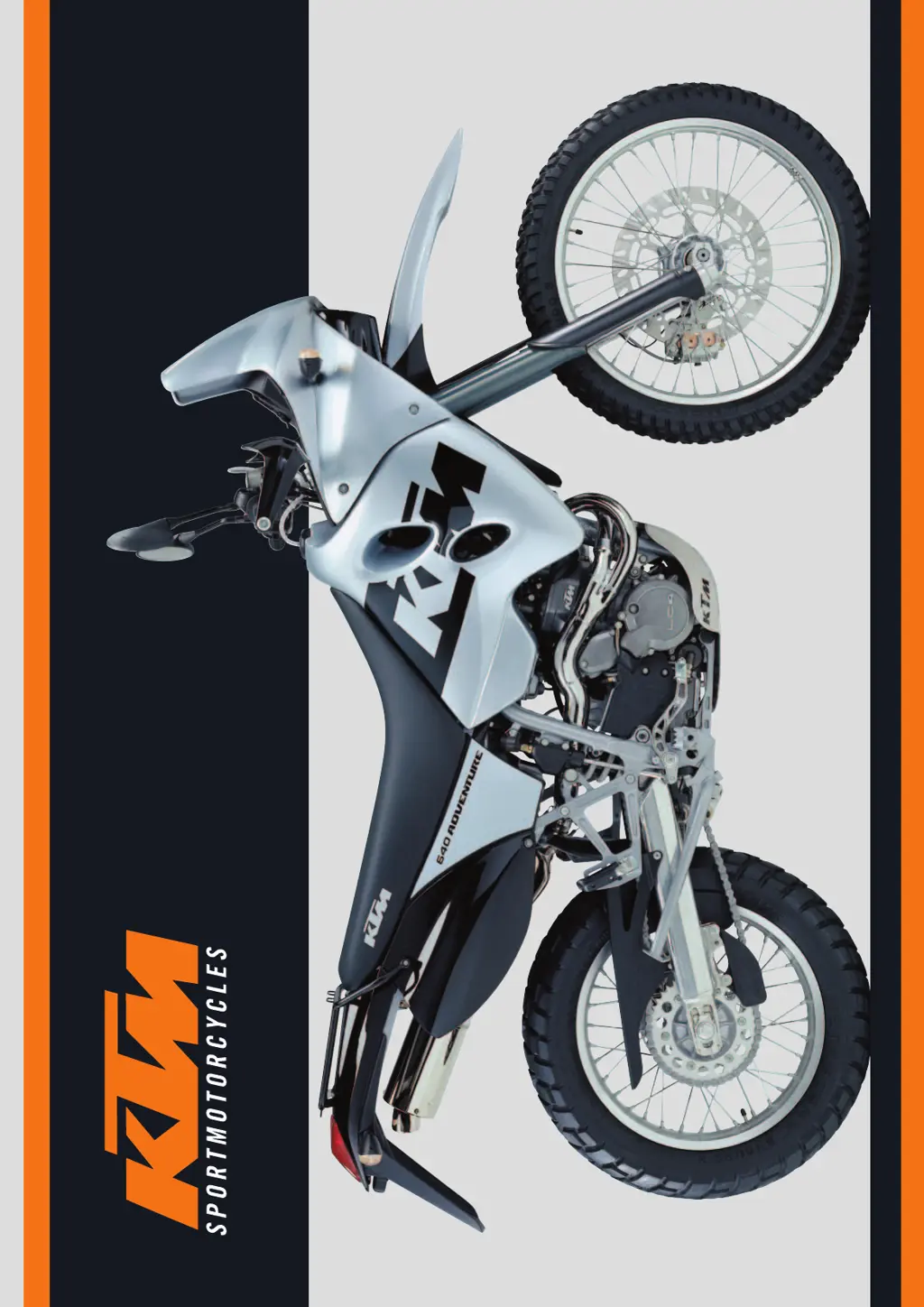
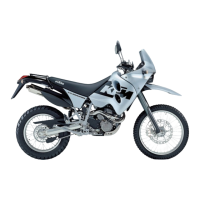
KTM 640 LC4 ADVENTURE 2003 - User Manual

KTM 640 LC4 ADVENTURE 2003
59 pages
Print Icon
To Next Page IconTo Next Page
Loading...
OWNER’S MANUAL
MANUALE D’USO
MANUEL D’UTILISATION
MANUAL DE INSTRUCCIONES
2003
BEDIENUNGSANLEITUNG
Art.Nr. 3.210.57 9/2002
640 LC4 ADVENTURE

Questions and Answers

  • M
    Mr. Jason SmithAug 22, 2025
    What to do if my KTM 640 LC4 ADVENTURE 2003 Motorcycle engine will not reach full power?
    • J
      josephjosephAug 22, 2025
      If your KTM Motorcycle engine will not reach full power, consider the following: * Fuel supply partially interrupted or carburetor dirty: Clean and check the fuel system and carburetor. Have the fuel pump checked. * Float leaks: Replace the float. * Defective membrane of slide: Replace the membrane. * Carburetor leaking: Check the vacuum hose and venting hose of the carburetor for correct position (no kinks). * Air filter very dirty: Clean or replace the air filter. * Valve clearance too small: Have the valve clearance adjusted. * Loss of compression: Check the setting of the hand decompression cable.
  • B
    Bradley StewartAug 25, 2025
    Why KTM 640 LC4 ADVENTURE 2003 Motorcycle electric system not operational?
    • D
      David MonroeAug 25, 2025
      If the electric system of your KTM Motorcycle is not operational, it may be due to a blown main fuse. Remove the seat and replace the main fuse. If the fuse blows again, contact a KTM dealer. It could also be due to a discharged battery. Recharge the battery and investigate the causes for discharging.
  • J
    Jessica GardnerAug 26, 2025
    How to fix high oil consumption in my KTM 640 LC4 ADVENTURE 2003 Motorcycle?
    • M
      Mr. Ryan ManningAug 26, 2025
      To address high oil consumption in your KTM Motorcycle: * Check the gear ventilation hose for buckling and readjust or replace it. * Ensure the engine oil level is not too high when the engine is warm; correct if necessary. * Use a thicker engine oil with appropriate viscosity.
  • D
    david04Aug 28, 2025
    What to do if my KTM Motorcycle engine doesn't crank?
    • D
      dustindominguezAug 28, 2025
      If your KTM Motorcycle engine doesn’t crank, it could be due to: * Operating error: Turn on the ignition, switch the gear to neutral, and switch the emergency OFF switch on. * Discharged battery: Recharge the battery and investigate the causes for discharging. * Defective ignition lock or emergency OFF switch: Check the ignition lock and emergency OFF switch.
  • E
    Elaine DuncanAug 30, 2025
    What causes KTM Motorcycle engine to fail to idle?
    • T
      Toni KingAug 30, 2025
      The KTM Motorcycle engine may fail to idle because of: * Clogged idling jet: Disassemble the carburetor and clean the jets. * Incorrect adjustment of adjusting screws on the carburetor: Have the carburetor adjusted. * Defective spark plug: Replace the spark plug. * Defective ignition system: Have the ignition system checked.
  • E
    Edward CarpenterSep 1, 2025
    What to do if KTM 640 LC4 ADVENTURE 2003 Motorcycle headlight and parking light fail?
    • M
      Matthew LarsonSep 1, 2025
      If the headlight and parking light fail on your KTM Motorcycle, the fuse may be blown. Replace fuse (5).
  • U
    umoyerSep 3, 2025
    What to do if KTM 640 LC4 ADVENTURE 2003 flasher lights, brake light, fan and horn fail?
    • M
      Maria JonesSep 3, 2025
      If the flasher lights, brake light, fan, and horn fail on your KTM Motorcycle, the fuse may be blown. Replace fuse (4).
  • J
    Joshua MillsSep 5, 2025
    Why does my KTM 640 LC4 ADVENTURE 2003 engine overheat?
    • L
      Lisa LivingstonSep 5, 2025
      Your KTM Motorcycle engine may overheat due to several reasons: * Insufficient cooling liquid: Refill the cooling liquid, and check the cooling system for leaks. * Dirty radiator fins: Clean the radiator with a water jet. * Foam in the cooling system: Replace the cooling liquid, using antifreeze. * Bent radiator hose: Shorten or replace the cooling hose. * Defective thermostat: Remove and check the thermostat (opening temperature 70°C (158°F)) or replace it. * Blown fan fuse: Replace the fuse and check if the fan operates properly. * Defective thermoswitch or fan: Check if the fan operates properly by starting the engine and bypassing the connections to the thermoswitch.
  • M
    Matthew JohnsonSep 7, 2025
    Why KTM 640 LC4 ADVENTURE 2003 Motorcycle engine does not rev high?
    • M
      Mary BlankenshipSep 7, 2025
      The KTM Motorcycle engine may not rev high due to: * Carburetor fuel level too high: This can be because the float needle is dirty or worn out, or the float leaks. Dismount the carburetor and check if it's worn out. Replace the float needle or the float. * Cold starting system permanently activated: Adjust the choke cable. * Defective membrane of slide: Replace the membrane. * Carburetor leaking: Check the vacuum hose and venting hose of carburetor for correct position (no kinks). * Loose carburetor jets: Tighten the jets. * Electronic ignition timing faulty: Have the ignition system checked.
  • A
    alexishawkinsSep 9, 2025
    What to do if all switched on lamps blown out on KTM Motorcycle?
    • J
      Joshua FloresSep 9, 2025
      If all switched-on lamps have blown out on your KTM Motorcycle, the voltage regulator may be faulty. Remove the seat and check the connections. Have the voltage regulator checked.

Summary

Introduction

Owners Guide to Operation and Maintenance

Details on motorcycle operation, maintenance, and safety advice for owners.

Limited Warranty and Guarantee Information

Warranty Terms and Conditions

Explains warranty coverage, limitations, and conditions for the motorcycle.

Operation Instruments

Serial Number Locations

Identifies the locations for chassis and engine serial numbers.

Control Levers and Ignition

Details on clutch, decompression, brake, choke levers, and ignition lock.

Multi-functional Digital Speedometer

Overview of the digital speedometer, its display modes, and indicator lamps.

Speedometer Settings and Functions

Instructions for setting display units, clock, and trip meters on the speedometer.

Tachometer and Indicator Lamps

Information on the tachometer and various indicator lamps on the dashboard.

Switches, Fuel Control, and Starting

Details on combination switch, fuel taps, filler cap, and starting controls.

Gear Shift, Kickstarter, and Brake Pedal

Explains the operation of the shift lever, kickstarter, and foot brake pedal.

Chassis and Suspension

Fork Damping Adjustments

Guide to adjusting compression and rebound damping on the front fork.

Shock Absorber Damping Adjustments

Instructions for adjusting compression and rebound damping on the rear shock absorber.

Baggage Carrier

Information on the load capacity and use of the baggage carrier.

Driving Instructions and Safety

General Starting Tips and Warnings

Essential tips and safety warnings before operating the motorcycle.

Pre-Ride Vehicle Checks

Checklist of vital components to inspect before each ride for safety.

Engine Starting Procedures

Detailed steps for starting the engine when cold, warm, or flooded.

Kickstarter and Riding Techniques

Instructions for kickstarter use, shifting, riding, and braking.

Stopping, Parking, and Refueling

Guidance on safely stopping, parking, and refueling the motorcycle.

Periodic Maintenance

Engine Maintenance Intervals

Scheduled maintenance tasks for the engine based on mileage.

Chassis and Wheel Maintenance

Maintenance checks for chassis components and wheels at specified intervals.

Brake System Maintenance

Maintenance and checks for the brake system at regular intervals.

Recommended Maintenance Procedures

Key maintenance tasks recommended for optimal performance and longevity.

Chassis and Engine Maintenance Work

Seat Removal and Installation

Step-by-step guide for removing and reinstalling the motorcycle seat.

Steering Head Bearing and Front Fork

Maintenance for steering head bearing, front fork bleeding, and dust sleeves.

Shock Absorber and Linkage Lubrication

Guidance on shock absorber preload, rubber ring checks, and linkage lubrication.

Chain Tension and Maintenance

Steps for checking and adjusting chain tension, and chain maintenance.

Disc Brake System Checks

General info on disc brakes, fluid levels, and pad inspection.

Brake Adjustments and Fluid Refill

Adjusting front brake lever, refilling fluid, and checking pads.

Rear Brake Checks and Adjustments

Checking rear brake fluid level, pads, and adjusting brake pedal position.

Wheel Removal and Installation

Procedure for removing and mounting front and rear wheels.

Tire and Spoke Tension Checks

Checking spoke tension and tire pressure for safe operation.

Battery and Charging Procedures

Steps for removing, installing, and charging the motorcycle battery.

Fuses and Lighting System Maintenance

Location of fuses and procedures for replacing headlight bulbs.

Cooling System and Air Filter

Checks for cooling liquid level and cleaning the air filter.

Engine Controls and Oil Level Checks

Adjusting throttle, clutch, choke, and checking engine oil level.

Engine Oil and Filter Service

Information on engine oil, oil circuit, and oil filter replacement.

Trouble Shooting

Engine Starting and Running Issues

Common engine problems like not cranking, not starting, or poor idle.

Engine Performance and Electrical Problems

Troubleshooting engine issues, electrical faults, and power loss.

Overheating and Oil Consumption Issues

Resolving problems with engine overheating, high oil consumption, and electrical faults.

Care and Storage

Motorcycle Cleaning Procedures

Guidelines for cleaning the motorcycle's plastic surfaces and engine.

Winterization and Storage Preparation

Steps for preparing the motorcycle for winter storage and re-initiation.

Technical Specifications

Engine Specifications and Settings

Detailed engine specifications, including carburetor settings and gear ratios.

Engine Tightening Torques

Specifications for tightening torques of various engine components.

Chassis Specifications and Adjustments

Specifications for chassis, suspension, brakes, and tire pressures.

Chassis Tightening Torques

Specifications for tightening torques of various chassis components.

Consumer Information for USA

Safety Defect Reporting

Instructions on how to report vehicle safety defects to NHTSA.

Noise Emissions and Tampering Warnings

Information on noise emission warranty and prohibitions on tampering.

Wiring Diagram

Component Identification Legend

Legend detailing electrical components and their wire color codes.

KTM 640 LC4 ADVENTURE 2003 Specifications

General IconGeneral
Year2003
ManufacturerKTM
Model640 LC4 ADVENTURE
CategoryMotorcycle
Engine TypeSingle cylinder, 4-stroke
Displacement625 cc
Compression Ratio11.5:1
StarterElectric
Transmission5-speed
Front Tire90/90-21
Rear Tire140/80-18
Dry Weight158 kg
Bore x Stroke101 x 78 mm
Power50 hp
Torque55 Nm
Cooling systemLiquid
Fuel systemCarburetor
IgnitionElectronic
FrameSteel trellis frame
Rear SuspensionWP monoshock
Front BrakeSingle 300 mm disc
Rear BrakeDisc brake

Related product manuals