20-18071 Rev A
Airway Introduction
Airway Interventions
The airway is anatomically modelled as far as the bronchia and
can be manipulated by a learner:
• Head tilt/Chin lift
• Jaw thrust with articulated jaw
• Cricoid pressure and manipulation
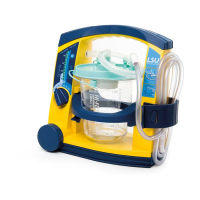
• Simulated suctioning (oral and nasopharyngeal)
Notes
• If the tongue fallback feature is enabled, head tilt is required
to open the airways for mask ventilations.
• For advance airway training ASL 5000 is recommended.
The following information is automatically registered in the
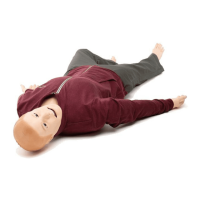
SimMan 3G PLUS simulation session:
• Detection of proper head position
• Jaw Thrust
• Pneumothorax decompression
• Ventilations
• Stomach distension
Nasal Cannulation
Nasal cannulation is possible with standard equipment.
Warning
Do not supply oxygen.
Artificial Respiration of SimMan 3G PLUS
Artificial respiration of SimMan 3G PLUS can be achieved by
the following methods:
• Bag-mask ventilation
• Orotracheal intubation
• Nasotracheal intubation
• Transtracheal intubation
Refer to Recommended Sizes of Clinical Equipment for more
SimMan 3G PLUS compatible devices.
Notes
• Do not spray lubricant directly into the airway.
• Use of a malleable stylet is recommended; ensure it does not
extend beyond the ET tube.
• Exhaled CO
2
can be detected with a CO
2
detection device
attached to an ET tube.
Airway Complications
The following airway complications can be controlled by the
instructor in LLEAP:
• Tongue edema
• Pharyngeal swelling
• Laryngospasm
• Decreased cervical range of motion
• Trismus
• Can’t intubate/Can ventilate
• Can’t intubate/Can’t ventilate
Surgical Airway
It is possible to simulate an emergency airway through
the cricothyroid membrane in SimMan 3G PLUS. Refer to
Replacing Cricothyroid Tape and Neck Skin.
Notes
• In LLEAP the airway and breathing status for the current
simulator is shown in a window. Settings for lung resistance,
compliance, and other parameters can be made. Refer to
LLEAP Help Files for further information.
• Refer to LLEAP Help Files for complete breathing and airway
blockage functionality and operating information.
• Incorrect positioning will pass air through oesophagus, causing
distention of the abdomen.
Cautions
• Do not put biological or other materials in the simulator’s
airways.
• Only use Manikin Airway Lubricant. Use of silicone or any
other lubricant not approved by Laerdal may cause damage
to the airways.
• Refer to the Important Product Information booklet for
further cautions related to the Patient Simulator airway.









 To Next Page