19
OPERATION
USING YOUR TOOL
To maintain a well-cared-for lawn it should be dethatched every 4 to 6 weeks.
Scarifying with the blade cylinder is a more intensive treatment than dethatching and should only be
carried out once a year. The best time is in spring after the lawn has been mown for the rst time.
How to use your scarier
■ By scarifying you remove the hardened surface, grass felt, and at-growing weeds and the crusted
over grassroots are loosened up. The lawn will start to breathe again and assimilate nourishing
substances such as oxygen and water. This also prevents bacteria from growing in the lawn felt
when the grass is dormant.
■ Cut the grass to a height of about 1.57 inch (40 mm) before scarifying. The lawn must be dry when
using the tool. The best time for scarifying is any time during the vegetative season, from end of
April through to September. Scarify it at least once a year. We recommend using a fertilizer straight
after airing if you want a healthy lawn.
How to use your dethatcher
■ By dethatching you remove the dead matter, moss, and weed that disgures a lawn. The build-up
of dead grass provides a mat of absorbent bers which prevents water from getting through to the
ground.
■ Do not force your dethacther through grass that is longer than 2.95 inch (75 mm). The lawn must be
dry when using the tool. It’s recommended that your dethacther be used at the beginning and the
end of each grass cutting season to give your lawn a thorough raking. Your dethacther should also
be used after each mowing to remove any grass clippings that may be left by your tool.
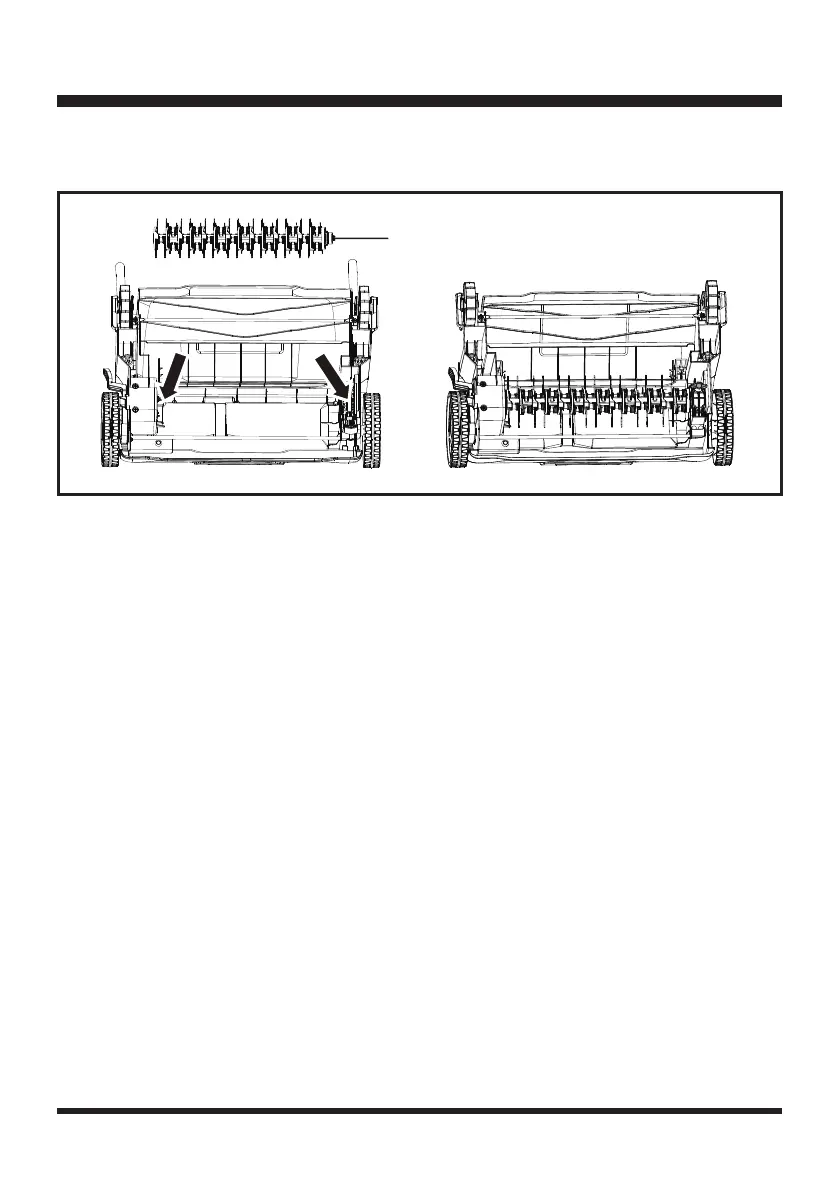
Dethatcher
Cylinder
Fig. 14
■ Install the new cylinder by reversing the sequence (Fig.14). Ensure that the attened side of the
bearing shell is rst inserted in the bearing.




 To Next Page