EasyManua.ls Logo

LEO APm37 - User Manual

LEO APm37
14 pages
Print Icon
To Next Page IconTo Next Page
Loading...
Acquaer Ltd. H-4900, Fehérgyarmat, Szatmári út 11.
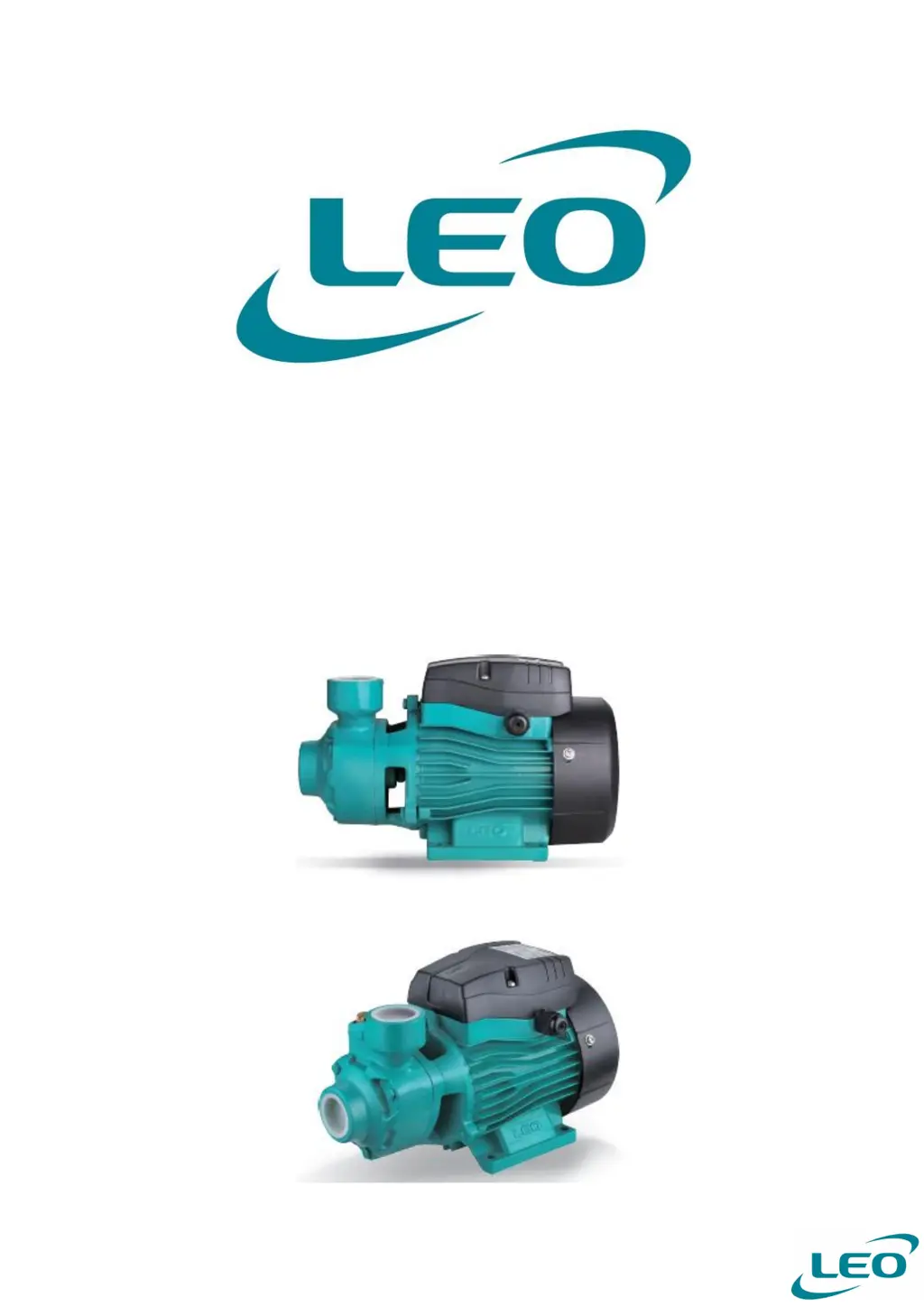
PERIPHERIAL PUMP
Instruction Manual
APm37 / APm75

Questions and Answers

Summary

Introduction and Applications

General Safety and Usage Guidelines

Read safety precautions, understand hazards, and ensure safe usage by authorized persons only.

Pump Applications

Suitable for household water supply, HVAC, garden watering, and aquaculture systems.

Automatic Pump Functionality Remark

Details on transforming the pump into an automatic water pump using external components.

Model and Technical Specifications

Model Description

Explanation of the 'APm' model nomenclature and product style.

General Technical Data

Key performance metrics like max flow, head, suction, insulation class, and temperature limits.

Model Comparison

Comparison of technical specifications for APm37 and APm75 models.

Safety Precautions and Standards

Implementation Standards

Lists applicable IEC/EN standards and directives for electrical appliance safety.

Pre-Operation Safety Measures

Ensure grounding, use leakage protection, avoid wet plugs and damp areas for safe operation.

Operational Safety Warnings

Do not touch during operation; avoid washing or swimming near the working area.

Water Immersion and Splash Prevention

Avoid splashing pressurized water onto the pump and prevent it from being submerged.

Operational and Storage Guidelines

Ventilation and Temperature Control

Keep pump ventilated. Protect from freezing and high ambient temperatures causing condensation.

Dry Running and Hot Liquid Handling

Never operate without water. Handle hot liquids with care; empty before maintenance.

Long-Term Storage Procedures

Empty pump, clean, and coat with oil for storage. Ensure power is off and valves are closed.

Liquid Type and Power Supply

Do not transfer forbidden liquids. Ensure power supply matches the nameplate voltage.

Product Structure

Component Identification

Diagram and list identifying key components of the peripheral pump assembly.

Pipeline Installation

Installation Personnel and Standards

Installation by qualified personnel following local regulations and recognized standards.

Pipeline Setup and Frost Protection

Proper pipeline installation and frost protection measures are essential.

Inlet Pipe Configuration

Short inlet pipe with minimal turns, installed in a ventilated, dry environment.

Valves and Check Valve Installation

Install valves on inlet/outlet pipes; a check valve is required for the inlet.

Installation Precautions and Diagrams

Inlet Pipeline Precautions

Guidelines for inlet pipe material, foot valve placement, sealing, diameter, and filtration.

Outlet Pipeline Precautions

Recommendations for outlet pipe diameter to minimize voltage drop, improve flow rate, and reduce noise.

Electrical Connection and Motor Rotation

Electrical Connection Safety

Wiring the junction box only when power is off. Ensure grounding and leakage protection.

Voltage and Cable Specifications

Ensure working voltage matches supply. Use heavier gauge cables for long distances and rubber extension for outdoor use.

Motor Rotation Check

Verify correct motor rotation (clockwise) for normal operation; swap cables if incorrect.

Automatic Device (Pressure Switch)

Pressure Switch Operation

Adjusting pressure switch settings for cut-off and opening pressure.

Troubleshooting Auto Function

Addressing issues like the pump running after tap closure or frequent starting/stopping.

Start-up and Maintenance

Pre-Start Procedures

Fill pump chamber with water before starting. Do not touch pump until power is off for 5 minutes.

Start-up and Operation

Check rotation, fill chamber, close valve, start pump, adjust flow rate as needed.

Maintenance and Troubleshooting Notes

Address no water discharge, frost damage, long-term storage, and high ambient temperature effects.

Troubleshooting

Motor Cannot Be Started

Diagnosing causes like power connection, fuse, capacitor, jammed shaft, or impeller.

Motor Operating, No Water Discharge

Troubleshooting issues like incorrect rotation, low water level, or damaged impeller.

Insufficient Pressure

Identifying causes for low pressure such as long inlet pipes or blocked filters.

Advanced Troubleshooting

Persistent Insufficient Pressure

Addressing issues with inlet pipe configuration, bends, diameter, or blockages.

Intermittent Operation or Winding Faults

Diagnosing intermittent motor operation or stator winding issues from lightning or overload.

Guarantee and Contact Information

Guarantee Terms and Conditions

Details on 24-month entitlement, pre-conditions, and voiding conditions for the guarantee.

Packaging Material Disposal

Instructions for disposing of used packaging materials into appropriate waste collectors.

Contact for Parts and Service

Contact details for inquiries about parts, questions, or service instructions.

CE Conformity Declaration

Certification of CE conformity with technical data and operating instructions.

LEO APm37 Specifications

General IconGeneral
BrandLEO
ModelAPm37
CategoryWater Pump
LanguageEnglish

Related product manuals