Safety
Leuze electronic GmbH + Co. KG RSL 420 9
2 Safety
Before using the safety sensor, a risk assessment must be performed according to valid standards (e.g.
ENISO12100, ENISO13849-1, IEC61508, ENIEC62061). The result of the risk assessment determines
the required safety level of the safety sensor (see chapter 15.1 "Safety-relevant technical data"). For
mounting, operating and testing, this document as well as all applicable national and international stan-
dards, regulations, rules and directives must be observed. Relevant and supplied documents must be ob-
served, printed out and handed to affected persons.
Ä Before working with the safety sensor, completely read and observe the documents applicable to your
task.
In particular, the current version of the following national and international legal regulations apply for com-
missioning, technical tests and handling of safety sensors:
• Machinery Directive
• Low Voltage Directive
• Electromagnetic Compatibility Directive
• Use of Work Equipment Directive
• Directive on the restriction of the use of certain hazardous substances in electrical and electronic equip-
ment
• OSHA
• Safety regulations
• Accident-prevention regulations and safety rules
• Ordinance on Industrial Safety and Health and employment protection act
• Product Safety Law (ProdSG)
NOTICE
For safety-related information you may also contact local authorities (e.g., industrial inspec-
torate, employer's liability insurance association, labor inspectorate, occupational safety and
health authority).
2.1 Intended use
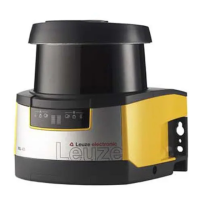
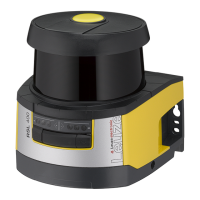
The safety sensor protects persons or body parts at points of operation, danger zones or access points of
machines and systems.
WARNING
A running machine may result in serious injury!
Ä Make certain that the safety sensor is correctly connected and that the protective function of
the protective device is ensured.
Ä Make certain that, during all conversions, maintenance work and inspections, the system is
securely shut down and protected against being restarted.
• The safety sensor may only be used after it has been selected in accordance with the respectively ap-
plicable instructions and relevant standards, rules and regulations regarding labor protection and safety
at work, and after it has been installed on the machine, connected, commissioned, and checked by a
competent person (see chapter 2.3 "Competent persons").
• When selecting the safety sensor it must be ensured that its safety-related capability meets or exceeds
the required Performance Level PL
r
ascertained in the risk assessment (see chapter 15.1 "Safety-rele-
vant technical data").
• The safety sensor may only be used in North America in applications that satisfy the requirements
specified by NFPA79.
• With the “access guarding” function, the safety sensor detects persons only when they enter the danger
zone but cannot tell whether there are any persons inside the danger zone. For this reason, a start/
restart interlock in the safety chain is essential in this case.
• The construction of the safety sensor must not be altered. When manipulating the safety sensor, the
protective function is no longer guaranteed. Manipulating the safety sensor also voids all warranty
claims against the manufacturer of the safety sensor.


 To Next Page
 Loading...