
 To Next Page

S
Susan LeeSep 12, 2025
Why are there lines on my LG Plasma TV screen?
- RramirezdavidSep 12, 2025
If you see lines or streaks on the images of your LG Plasma TV, check the antenna or try aiming it in a better direction.

Why are there lines on my LG Plasma TV screen?
If you see lines or streaks on the images of your LG Plasma TV, check the antenna or try aiming it in a better direction.
What to do if my LG 60PN5300 Plasma TV has no image and no sound?
If your LG Plasma TV has no image and no sound, first check if the TV is turned on. Then, make sure the power cord is securely connected to a working wall outlet. You can test the outlet by plugging in another device.
Why does my LG Plasma TV turn off by itself?
If your LG Plasma TV suddenly turns off, check the power control settings to ensure the power supply isn't interrupted. Also, verify if the Auto sleep feature is enabled in the Time settings. If there's no signal while the TV is on, it will automatically turn off after 15 minutes of inactivity.
Why do black spots appear on my LG 60PN5300 Plasma TV screen?
Several pixels in red, green, white, or black may appear on the screen that can attribute to the characteristics of the panel. This is normal.
Why is the reception poor on some channels on my LG 60PN5300?
If the reception on some channels is poor on your LG Plasma TV, try tuning to other channels as there may be a broadcast issue. The station signal might be weak, so try adjusting the antenna direction. Also, check for any local interference from electrical appliances or power tools.
How to troubleshoot no sound on LG 60PN5300 Plasma TV?
If there's no sound from your LG Plasma TV while images are displaying, first press the VOL + or - button. Check if the sound is muted by pressing the MUTE button. Try switching to other channels to rule out a broadcast issue. Ensure the audio cables are properly connected and verify that the TV Speaker feature is activated in the menu.
What are afterimages (ghosts) on LG Plasma TV?
If you see afterimages (ghosts) on your LG Plasma TV when it turns off, use a screen saver to prevent pixel damage.
Why are there black spots on my LG 60PN5300 screen?
If you notice black spots on your LG Plasma TV screen, it could be due to a few pixels in red, green, white, or black, which is normal and attributes to the characteristics of the panel.
Why is my LG 60PN5300 showing black and white or poor color?
If your LG Plasma TV displays an image in black and white or the color quality is poor, adjust the color setting in the menu. Keep a sufficient distance between the TV and other electronic products. Try switching to other channels to rule out a broadcast issue.
Why is there no sound on my LG 60PN5300 Plasma TV but the image is fine?
If you see images but hear no sound on your LG Plasma TV, try the following: 1. Press the VOL + or - button to increase the volume. 2. Check if the sound is muted by pressing the MUTE button. 3. Try other channels to rule out a broadcast issue. 4. Make sure the audio cables are securely connected. 5. Verify that the TV Speaker feature is activated in the menu.
Information regarding software and media licenses used by the TV.
Crucial precautions for safe operation, installation, and maintenance of the TV.
Steps for unpacking, setting up, and connecting the TV to its stand.
Identifies and describes the TV's physical buttons, ports, and remote sensor.
Guidelines for safely handling and transporting the television to prevent damage.
Instructions for attaching the stand to the TV set.
Guides for placing the TV on a table or mounting on a wall.
Methods for organizing and managing TV cables for a neat setup.
Explanation of remote control buttons and their functions for TV operation.
Guide to turning on the TV and basic viewing operations.
Process for turning on the TV for the first time and basic settings.
Instructions on storing, tuning, and editing TV channels.
How to add and select frequently watched channels.
How to view details about the current TV program.
Adjusting image size and aspect ratio for optimal viewing.
Selecting video modes and managing external device inputs.
Accessing and customizing frequently used settings.
Features for enjoying multimedia content via USB.
How to connect USB devices like flash drives and hard drives.
Navigating and viewing photos and music files from USB.
Options for displaying images, including slideshows and backgrounds.
Playing music files, with options for photo playback.
Guide to adjusting various TV settings for optimal performance.
How to access and navigate through the TV's main settings menus.
Adjusting image quality, brightness, contrast, color, and more.
Customizing sound modes, volume, clarity, and speaker output.
Managing TV channels, including auto-tuning and editing.
Setting the clock, on/off timers, and sleep timer.
Configuring language, input labels, captions, and demo modes.
Features for blocking channels, movies, and programs by rating.
How to connect various external devices to the TV.
Instructions for connecting to TV broadcast signals.
General guide to connecting various external devices to the TV.
Connecting devices using HDMI or DVI for digital video and audio.
Connecting devices using component and composite cables.
Connecting external audio systems via digital optical cable.
How to connect USB storage devices for multimedia playback.
Controlling connected HDMI-CEC devices with the TV remote.
Procedures for cleaning and caring for the TV.
Guidelines for cleaning the TV screen, frame, and cabinet.
How to avoid permanent screen image retention.
Instructions for maintaining the power cord.
Solutions for common problems encountered with the TV.
Solutions for common problems like remote control and connectivity.
Solutions for sound-related problems like no audio or distorted sound.
Resolving issues with image quality, color, and display anomalies.
Technical details and dimensions of the TV models.
Hexadecimal codes for remote control functions.
Information on open source licenses used in the product.
Compliance statements and notices for various regions and standards.
Statement regarding compliance with FCC rules for digital devices.
Requirements for digital apparatus under Canadian regulations.
Information on compliance with European directives and norms.
Compliance with guidelines for low radiation emissions.
Information on products meeting TCO'99 environmental and ergonomic standards.
 General
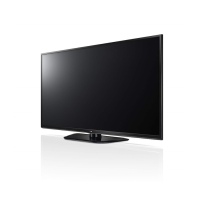
| Screen Size | 60 inches |
|---|---|
| Display Type | Plasma |
| Resolution | 1920 x 1080 |
| Refresh Rate | 600Hz |
| HDMI Ports | 3 |
| USB Ports | 1 |
| Smart TV | No |
| 3D Capable | No |
| Inputs | HDMI, Component, Composite, RF |