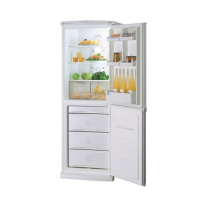
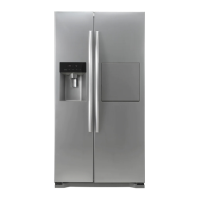
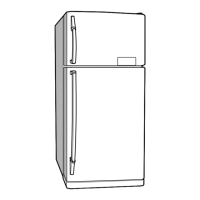
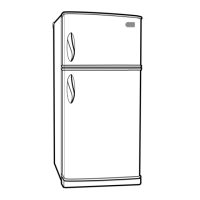
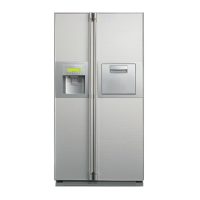
This document is an owner's manual for an LG Refrigerator Freezer, identified by P/No.: MFL65900202. It provides comprehensive information on installation, operation, maintenance, and troubleshooting for the appliance.
Function Description
The LG Refrigerator Freezer is designed to store fresh and frozen foods, maintaining their freshness and flavor. It features separate compartments for refrigeration and freezing, each with independent temperature controls. The appliance aims to provide efficient cooling and preservation of food items for household use.
Important Technical Specifications
While specific technical specifications like dimensions, energy rating, or capacity are not detailed in the provided pages, the manual highlights several operational and safety aspects that imply certain technical characteristics:
- Refrigerant: The appliance uses R-134a as a refrigerant, which is a fluorinated greenhouse gas. The Global Warming Potential (GWP) for 100% HFC-134a is 1300 kg CO2-eq. This information is crucial for environmental considerations and proper disposal.
- Power Supply: It requires a dedicated electrical circuit to prevent overloading, which could lead to low voltage, malfunction, equipment damage, and poor cooling capacity. The power cord plug must be securely connected and not extended or modified. Proper grounding (earthing) is essential to reduce the risk of electric shock.
- Temperature Control: The refrigerator compartment has a temperature control knob, and the freezer compartment has a temperature control dial. The default setting for the refrigerator is 'MID', and for the freezer, it's '2' or '3'. Adjusting these controls allows users to set colder or warmer temperatures as needed, with specific recommendations for different weather conditions or food storage loads.
- Defrosting: The appliance features automatic defrosting. The defrosted water flows to an evaporating tray at the lower back and evaporates automatically.
- Deodorizer (Optional): Some models may include a deodorizer that uses a catalyst to eliminate unpleasant food odors in the fresh food compartment.
- Vitamin Kit (Optional): Certain models may feature a Vitamin Kit containing an anti-oxidant substance to prevent oxidation and keep fruits and vegetables fresh for longer.
Usage Features
The manual outlines various features for convenient and effective use of the refrigerator freezer:
- Starting: After installation, the refrigerator should be allowed 2-3 hours to stabilize at normal operating temperatures before loading with food. A 5-minute delay is recommended before restarting if operation is interrupted.
- Temperature Control:
- Refrigerator Compartment: The control knob adjusts temperatures from MIN (warmer) to MAX (colder).
- Freezer Compartment: The control dial ranges from 1 (freezer min) to 7 (freezer max). Setting it to '7' makes the freezer colder but the refrigerator warmer. In cold weather, settings '6'~'7' are recommended for a colder freezer. In hot weather or with heavy loads, settings '2'~'3' for the refrigerator compartment are suggested to direct more cold air.
- Ice Making:
- General Type: Fill ice trays with water, place them on the ice cube box in the freezer, and twist the tray ends to remove cubes.
- Twisting Ice Serve Type: Fill ice trays, insert them into position, and turn a knob to drop ice cubes into the ice cube box. This system can be removed to enlarge the freezer compartment by first removing trays and the ice cube box, then pulling the frame out.
- Fresh Zone: This area is designed to keep fresh meat fresher by minimizing the influence of warmer air when the door is opened.
- Food Storage Suggestions:
- Store fresh food in the refrigerator compartment.
- Avoid storing foods that spoil easily at low temperatures (e.g., bananas, pineapples, melons).
- Allow hot food to cool before storing to prevent spoilage and higher energy consumption.
- Cover food with vinyl wrap or store in lidded containers to retain moisture, taste, and nutrients.
- Do not block air vents to ensure even temperature distribution.
- Minimize door openings to prevent warm air entry and temperature rise.
- Avoid storing food near the temperature control dial for easy adjustment.
- Freezer Compartment: Do not store bottles (they may break when frozen). Do not refreeze thawed food. Store frozen food like ice cream on the freezer shelf, not in the door rack, for long-term storage.
- Refrigerator Compartment: Avoid placing moist food deep inside shelves to prevent freezing. Clean and wipe vegetables, fruits, and packed food before refrigeration. Store fresh eggs upright in their rack.
Maintenance Features
The manual provides clear instructions for cleaning and general maintenance:
- Cleaning:
- General: The refrigerator should be kept clean to prevent odors. Spilled food should be wiped immediately. Avoid metallic scouring pads, abrasive cleaners, or strong alkaline solutions.
- Exterior: Clean with a lukewarm solution of mild soap or detergent, then wipe with a clean, damp cloth and dry.
- Interior: Regular cleaning is recommended. For No Frost models, leave both doors open during cleaning. Disconnect power, remove all shelves and trays. Wash all compartments with a baking soda solution, then rinse and dry.
- Interior Parts: Wash shelves, door racks, storage trays, and magnetic door seals with a baking soda solution or mild detergent and warm water, then rinse and dry.
- Safety Precaution: Always remove the power cord from the wall outlet before cleaning near electrical parts (lamps, switches, controls). Wipe up excess moisture to prevent water from entering electrical parts and causing shock. Do not use flammable or toxic cleaning liquids.
- Lamp Replacement:
- Unplug the power cord.
- Remove refrigerator shelves.
- Insert a slotted driver into the lamp cover's under hole and pull it forwards to remove.
- Turn the lamp counterclockwise.
- Assemble in reverse order. The replacement bulb must match the original specification.
- Deodorizer Maintenance (Optional): Do not prick the deodorizer with sharp objects to avoid damaging the catalyst. For strong-smelling foods, wrap them or store them in lidded containers to prevent odor transfer.
- Vitamin Kit Maintenance (Optional): The anti-oxidant substance in the kit should not be eaten. Frequent door opening and closing can reduce its lifetime.
- Vacation Time: For average length vacations, leave the refrigerator running. For extended periods, remove all food, disconnect power, clean the interior thoroughly, and leave doors open to prevent odor.
- Power Failure: Most power failures are short and won't affect temperatures significantly. Minimize door openings. For longer outages, place dry ice on frozen packages (with adequate ventilation and avoiding vapors).
- Moving: Empty and clean the refrigerator with a baking soda solution. Secure all loose items (racks, bins, ice trays). Do not move a loaded refrigerator.
- Anti-Condensation Pipe: The outer cabinet wall may feel warm, especially after installation, due to the anti-condensation pipe circulating hot refrigerant to prevent sweating. This is normal.
Important Warnings
The manual emphasizes several critical safety warnings:
- Electrical Safety:
- Use a dedicated outlet.
- Do not pull out the cord or touch the plug with wet hands.
- Remove water/dust from the power plug and ensure secure connection.
- Do not damage, bend, or press the power cord with heavy objects.
- Do not extend or modify the power plug length.
- Do not use damaged power cords or loose outlets.
- Unplug when cleaning, handling, or replacing the interior lamp.
- Ensure proper grounding.
- If strange smell or smoke is detected, disconnect power immediately and contact service.
- Do not allow unauthorized persons to disassemble, repair, or alter the refrigerator.
- Wait 5 minutes or longer before reconnecting the plug after disconnection.
- Pull out the power plug by grasping the plug, not the cord.
- Installation Location:
- Avoid wet places or areas where water/rain splashes to prevent insulation deterioration and electric leakage.
- Avoid heat sources, direct sunlight, or moisture.
- Maintain sufficient space (at least 2 inches/5 cm from the rear wall) for air circulation.
- Ensure the unit is level to prevent vibrations; adjust leveling screws as needed.
- Do not install below 5°C.
- Install on a solid and level floor to prevent falling.
- Usage Precautions:
- Do not place heavy or dangerous objects (e.g., liquid containers) on top of the refrigerator.
- Do not cling to the door, shelves, or home bar.
- Do not use or store inflammable materials (ether, benzene, alcohol, medicine, LP gas, spray, cosmetics) near or in the refrigerator.
- Do not place a lit candle inside to deodorize.
- Do not store medicine or academic materials requiring strict temperature control.
- Do not use combustible spray near the refrigerator.
- Avoid heating devices.
- Do not place flower vases, cups, cosmetics, medicine, or water containers on the refrigerator.
- Do not spray water inside or outside, or clean with benzene/thinner.
- Do not use for non-domestic purposes (e.g., storing medicine, testing materials, on ships).
- Do not insert hands or metal sticks into cool air exits, covers, bottom, or heatproof grill (exhaust hole) at the backside.
- Do not touch food or containers in the freezer with wet hands to prevent frostbite.
- Do not put bottles in the freezer (they may break).
- Do not insert hands into the bottom of the refrigerator (iron plate may cause injury).
- Carry the refrigerator using the handle bars at the bottom front and top rear to prevent injury.
- Be careful when opening/closing the door to avoid catching feet/hands or injuring children.
- Do not put any living animal in the refrigerator.
- Disposal:
- When disposing of the refrigerator, remove packing materials from the door to prevent children from getting locked inside.
- Contact the local down-block office for disposal of large waste.
- The appliance contains reusable/recyclable materials and refrigerant. Send materials to a waste collection center. Dispose of flammable insulation blowing gases appropriately.
- This appliance is not intended for use by persons with reduced physical, sensory, or mental capabilities, or lack of experience/knowledge, unless supervised or instructed. Children should be supervised not to play with the appliance.

 Need help?
 General

 To Next Page