
 Need help?
Do you have a question about the Liberty Pumps 260 and is the answer not in the manual?
Details essential safety warnings and precautions for preventing electrical shock, fire, and injury.
Details pump capabilities, recommended water depth, and performance data based on pumping height.
Instructions for connecting hoses, setting the pump, and connecting to a GFCI outlet for operation.
Provides a matrix to diagnose and resolve common pump problems like not running or low water removal.
Outlines the terms, conditions, and exclusions of the limited warranty for Liberty Pumps products.
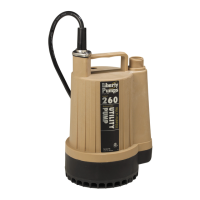
This document serves as the user manual for the Liberty Pumps Model 260 Submersible Utility Pump, a product designed and manufactured by Liberty Pumps, Inc., a family and employee-owned company. The manual provides essential information for the safe and effective operation, maintenance, and troubleshooting of the pump, ensuring years of trouble-free service when instructions are followed carefully.
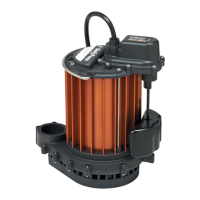
The Liberty Pumps Model 260 is a submersible utility pump designed for a variety of pumping requirements. Its primary function is to efficiently move clean or dirty water from one location to another. This pump is particularly suited for applications such as draining stock tanks, window wells, flat roofs, and cisterns. When placed on a flat surface, the pump is capable of pumping water down to within 1/8 inch of the pumping surface, making it effective for nearly complete water removal. The pump is designed to operate continuously, whether partly or fully submerged, and is equipped with a thermal overload protection feature that will automatically shut off the motor if it overheats, preventing damage. The pump requires at least 2 inches of water to prime and can be used with various hose sizes, including 1/2-inch and 3/4-inch barb fittings, which are included with the pump, in addition to a discharge thread adapter for garden hoses.
The Model 260 is designed for straightforward and safe operation. Users are instructed to attach the appropriate discharge fitting (garden hose adapter or barb fittings) to the pump, place the pump on a hard surface in the water, and then plug the power cord into a properly grounded GFCI electrical outlet of a 15 Amp minimum branch circuit. The pump is intended for use with water only and is not suitable for pumping flammable or explosive fluids, salt water, brine, chemicals, grease, hydrocarbons, or potable water/food products. The maximum water temperature for operation is 120°F (49°C). Users are explicitly warned against using extension cords, as they can overload the product and supply wires, leading to overheating and fire hazards. The manual emphasizes the importance of proper grounding and warns against handling or unplugging the pump with wet hands or while standing in water to prevent fatal electrical shock. It also advises against lifting or carrying the pump by its power cord to avoid damage and exposure to live wires. To ensure optimal performance, the pump should not be installed on clay, dirt, mud, or sand surfaces, and the area to be pumped should be clean of grass, heavy mud, sand, or pea gravel, as these can clog the pump and reduce its efficiency. Securing the discharge line before starting the pump is crucial to prevent it from whipping under pressure, which could cause serious injury or death.
Maintaining the Liberty Pumps Model 260 is crucial for its longevity and performance. The pump is designed to effectively pass small particles suspended in water; however, debris such as grass, heavy mud, sand, or pea gravel can clog the pump and reduce its performance. Such clogs can often be cleared by back-flushing with a garden hose through the discharge. The manual strongly advises users to always disconnect the pump from its power source before attempting any service to prevent fatal electrical shock. Disassembly of the pump, other than at Liberty Pumps, Inc. or its authorized service centers, automatically voids the warranty. Therefore, for issues beyond simple cleaning, consulting the factory or an authorized service center is recommended. Regular checks for clogged inlet screens or jammed impellers are important, and instructions are provided for cleaning these components. The manual also includes a comprehensive troubleshooting matrix to help users identify and resolve common operating problems, such as the pump not running or humming, running but removing very little water, or tripping circuit breakers/blowing fuses. These troubleshooting steps cover issues like tripped circuit breakers/GFCI, blown fuses, power interruptions, loose plug connections, thermal overload, excessive lift height, blocked discharge lines, clogged anti-airlock holes, and inadequate wiring. For more complex electrical issues or defective motor/switch problems, users are advised to consult an electrician or the factory. The manual also stresses the importance of keeping the pump from running dry and preventing it from freezing to avoid damage.
 General
| Model | 260 |
|---|---|
| Type | Submersible Sump Pump |
| Horsepower | 1/3 HP |
| Voltage | 115V |
| Maximum Flow Rate | 35 GPM |
| Construction Material | Thermoplastic |
| Cord Length | 10 ft |
| Switch Type | Vertical float switch |
| Motor Housing Material | Thermoplastic |
| Impeller Material | Thermoplastic |
| Phase | Single Phase |
| Discharge Size | 1-1/2" |




 To Next Page
