INSTALLATION
WH25
LINDAB SAFE
12/50
INSTALLATION
The sizes shown are in mm.
Intended use
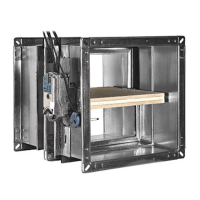
The MP3 re dampers are “Devices for use in heating, ven-
tilation and air conditioning (HVAC) systems at re bound-
aries to mantain compartmentation and protect means of
escape in case of re” according to the 3.1 paragraph of EN
15650:2010 standard.
It is compulsory to install the re damper according to the
instructions indicated in the technical data sheet and man-
ual to maintain the declared performances and, in particu-
lar, the re classes.
The double test (with the mechanism inside and outside
the re area) demonstrated that there is no preferred direc-
tion for the position of the damper, both in relation to air
ow and the side with the higher probability of exposure
to re, as indicated in standard EN1366-2:2015 (paragraph
6.2).
Use permitted in any civil and industrial building.
Use permitted in saline atmosphere, for example:
• maritime and port enviroments;
• sh markets;
• slaughterhouses;
• cheese makers.
Not allowed uses
• Use with installations dierent to those described in the
technical data sheet and manual;
• use as smoke control damper;
• use as shut o damper;
• use in external environments without adequate protec-
tion from atmospheric conditions;
• use in explosive environments;
• use on board of ships;
• use in cooker extraction hoods;
• use in pneumatic conveying systems of dust or corn;
• use in ventilation systems within locations subject to
chemical contamination;
• use in non inspectable enviroments.
• Installation in suspended ceilings.
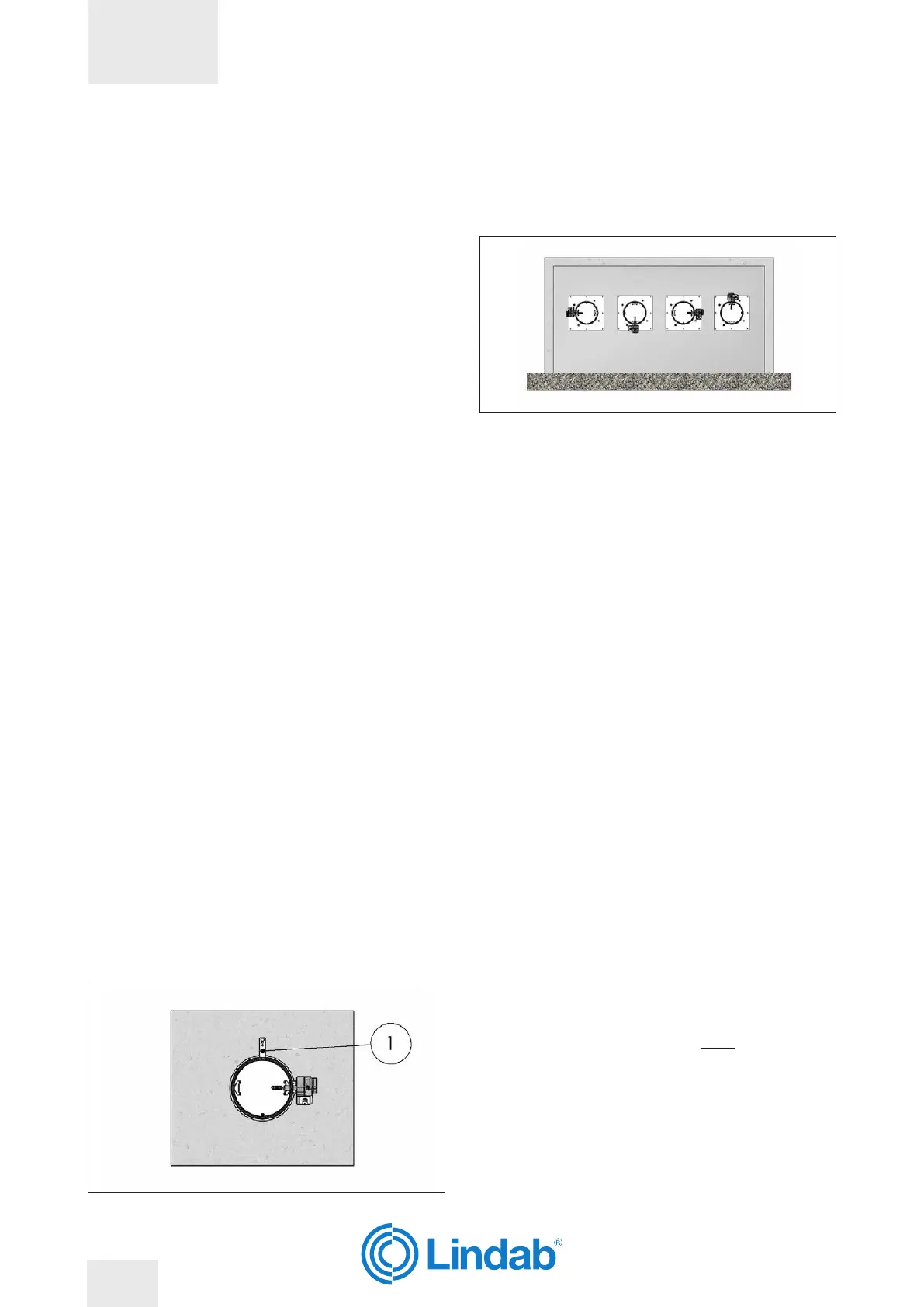
Positioning brackets before xing
1. Positioning brackets
Blade rotation axis positioning
The re damper can be installed with the blade axis posi-
tioned vertically or horizontally or tilted at any angle.
Installation of exible connectors in order
to balance out the ventilation ducts
expansion
CAUTION: Refer anyway to law and national standardiza-
tion�
Flexible connectors compensate any duct thermal expan-
sion and wall bending in case of re.
Flexible connectors are used to limit re damper stresses
due to external forces in case of re and to preserve re
resistance class.
In general it is always appropriate the use of exible con-
nectors for the followings installations:
– light walls;
– Plasterboard and rock wool or Fire Batt (Weichschott)
sealing;
– Applique xing system.
Flexible connector must be normal ammability and in
case of re the grounding bonding should disconnet to
guarantee the complete separation between re damper
and connected air duct.
When exible connectors made of conductive material
(e.g. aluminum) are used, no additional grounding bond-
ing is required.
Despite exible connector installation, the re damper
must be installed in the construction support so that its
weight does not aect damper’s installation position both
during normal operation and in case of re.
It is recommended not to compress exible connectors in
the installation phase.
Flexible connector must be at least 100mm long and in
order that possible duct thermal expansions are balanced.
Take care that the exible connector does not interfer with
opening / closing movement of the blade.
Refer to the section Technical data p.11 for blade expo-
sition values.
WH25
LINDAB SAFE
12/50


 To Next Page
 Loading...