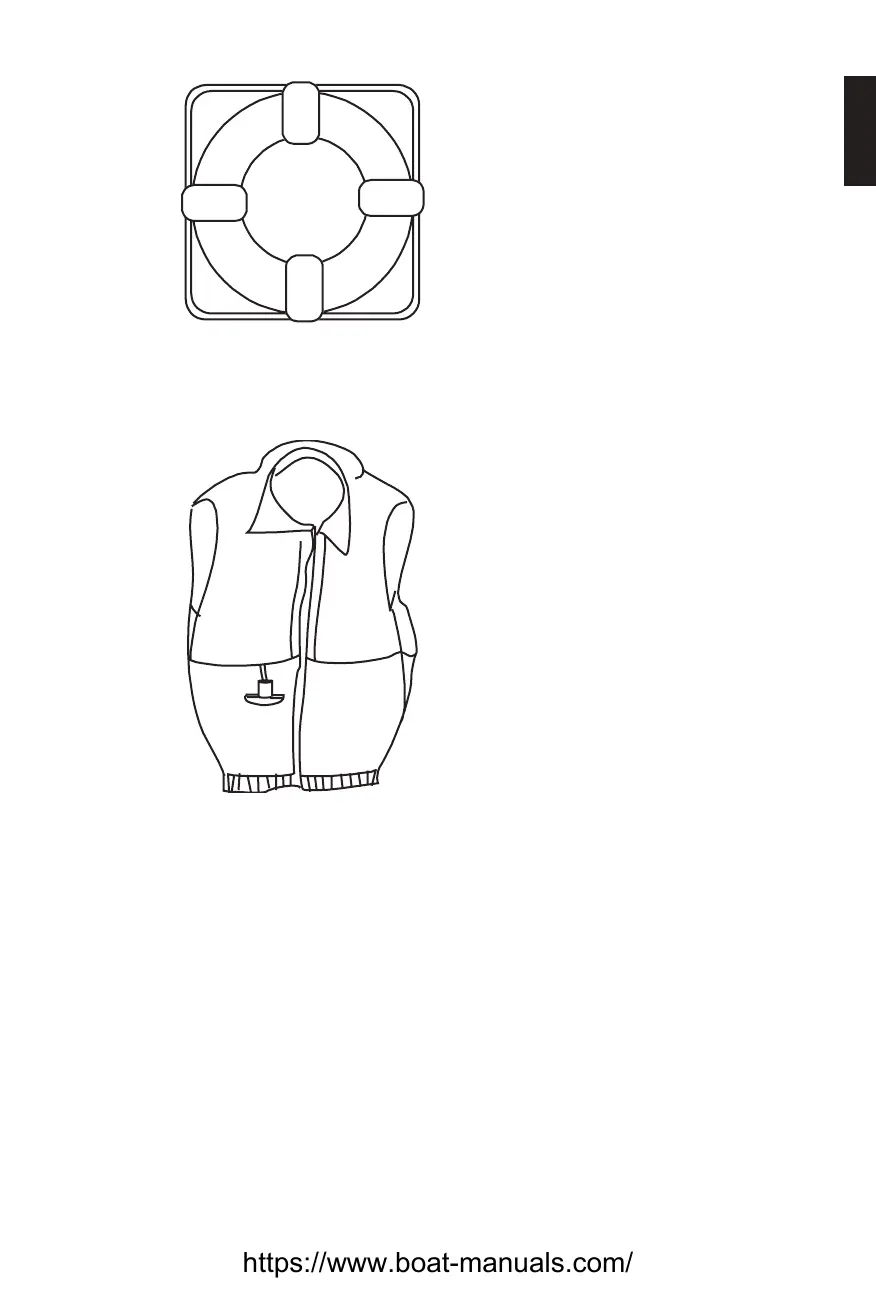
PFD Type IV, Throwable (Figure 2-4) is
required in addition to the PFDs previously dis-
cussed. The most common Type IV PFD is a
buoyant cushion or ring buoy. It is designed to
be thrown to a person in the water, grasped and
held by the user until he or she is rescued. A
Type IV PFD should always be in serviceable
condition and immediately available for use.
Grasping this PFD may be difficult if the res-
cue is delayed or if the user is overcome by
hypothermia (loss of body heat).
PFD Type V, Wearable (Figure 2-5) must be
worn. When inflated, it provides buoyancy
equivalent to Type I, II or III PFDs. When it
is deflated, however, it may not support some
people.
The purpose of a PFD is to help save your life. If you want it to support you when you
are in the water, it needs to fit, float, and be in good condition.
• Try the PFD on and adjust it until it fits comfortably in and out of the water.
Mark your PFD if you are the only wearer.
• To make sure the PFD works, wear it in the water. This will show you how it
works and give you confidence when you use it.
• Teach children how to put a PFD on and allow them to try it in the water. That
way, they know what the PFD is for and how it works. They will feel more
comfortable with it if they suddenly find themselves in the water.
• If the PFD is wet, allow it to dry thoroughly before storing it. Do not dry it in
front of a radiator or heater. Store it in a well-ventilated area.
Lund-02.indd 5 7/9/10 1:46 PM
https://www.boat-manuals.com/


 To Next Page