Need help?
Do you have a question about the Luxul XWO-BAP1 and is the answer not in the manual?
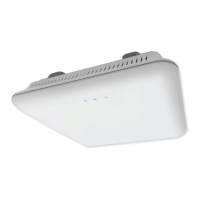
The Luxul XWO-BAP1/XWO-BKT1 is a wireless bridge device designed to extend network connectivity wirelessly between two locations. It facilitates the creation of a robust and secure wireless link, making it suitable for scenarios where running Ethernet cables is impractical or undesirable. The device can operate as either a Root Access Point (AP) or a Remote Access Point, forming a bridge to connect distant network segments.
The primary function of the Luxul XWO-BAP1/XWO-BKT1 is to establish a wireless bridge. This means it creates a point-to-point or point-to-multipoint wireless connection that acts like a virtual Ethernet cable, allowing devices on one network segment to communicate with devices on another, physically separate segment. The XWO-BKT1 model comes preconfigured for a wireless bridge on the 5 GHz frequency band, offering a ready-to-use solution for immediate deployment. The XWO-BAP1, on the other hand, requires manual configuration to set up the bridge.
The device supports operation in Wireless Distribution System (WDS) mode, which is essential for creating wireless bridges. In WDS mode, the access points communicate with each other wirelessly to extend the network. It can operate on both the 2.4 GHz and 5 GHz frequency bands, providing flexibility to choose the band that best suits the environment and desired performance characteristics. The 5 GHz band generally offers higher throughput and less interference, making it ideal for high-bandwidth bridge applications, while the 2.4 GHz band provides broader coverage.
Security is a key aspect of its functionality. The device supports WPA2-Personal security mode with AES cipher type, ensuring that the wireless link is encrypted and protected from unauthorized access. Users are required to set a strong passphrase for the SSID to secure the connection. The device also includes a mechanism to change the default administrator password, which is a crucial security measure to prevent unauthorized configuration changes.
Network management is facilitated through a web-based interface, accessible via a standard web browser. This interface allows users to configure all aspects of the device, including its operating mode, network name (SSID), security settings, channel selection, and IP address. The device can be configured with a static IP address or can obtain an IP address dynamically from a DHCP server, offering flexibility in network integration.
Setting up the Luxul XWO-BAP1/XWO-BKT1 involves a step-by-step configuration process. Initially, one device is designated as the Root Access Point, typically connected to the main network, and the other as the Remote Access Point. The configuration begins by powering on only the Root AP and accessing its web interface using its default IP address (192.168.0.10). It's important to ensure the computer used for configuration is on the same subnet.
During the Root AP configuration, users select the desired frequency band (2.4 GHz or 5 GHz) for the bridge. They then change the operating mode to WDS Mode, define a Network Name (SSID) for the bridge, set the security mode to WPA2-Personal, and enter a passphrase. Channel selection is also part of this process, allowing users to choose a clear channel to minimize interference. A temporary, false MAC address is entered for the Remote AP during the initial Root AP setup to allow the configuration to be saved, with the intention of updating it later with the actual MAC address of the Remote AP.
After configuring the Root AP, the Remote Access Point is powered on and configured. Similar to the Root AP, its web interface is accessed via the default IP address. The Remote AP must be configured to match the Root AP's settings for frequency, SSID, security mode, passphrase, and channel. A crucial step for the Remote AP is to use the "Site Survey" or "Scan" feature to discover the Root AP's MAC address and establish the wireless link. This feature simplifies the process of identifying and connecting to the Root AP.
To enhance network security and prevent unintended access, the device allows users to disable or secure the SSID on the frequency band not chosen for the bridge. If a frequency band is not being used for the bridge, it can be completely turned off by changing the wireless setting from "On" to "Off" in the advanced settings. Alternatively, if the unused frequency band is intended for client access, it can be secured by configuring it in Access Mode with its own SSID, WPA2-Personal security, and a unique passphrase.
IP address management is another important usage feature. Both the Root and Remote APs need to have unique IP addresses within the network to ensure proper communication and management. Users can assign static IP addresses, subnet masks, default gateways, and DNS servers. Alternatively, the DHCP Client setting can be enabled to allow the access points to automatically obtain IP addresses from a DHCP server on the network. This flexibility allows for seamless integration into various network environments.
The final step in the configuration process involves returning to the Root AP's web interface. Here, the previously entered false MAC address for the Remote AP is replaced with the actual MAC address obtained during the Remote AP's configuration. This completes the establishment of the secure wireless bridge.
The web-based management interface serves as the primary tool for ongoing maintenance and monitoring. Users can log in to either the Root or Remote AP to check the status of the wireless link, review network settings, and make any necessary adjustments.
Security maintenance is facilitated by the requirement to change the default administrator password upon initial login. This is a critical step to protect the device from unauthorized access and configuration changes. Regular review and updates of the passphrase for the wireless bridge are also recommended as part of a robust security posture.
The ability to select different channels for the wireless bridge allows for maintenance in terms of interference management. If the wireless link experiences performance issues due to interference from other wireless networks, administrators can log in and change the operating channel to a less congested one, thereby improving link stability and throughput.
Firmware updates, although not explicitly detailed in the provided text, are a standard maintenance feature for such devices. These updates typically provide bug fixes, performance enhancements, and security improvements, ensuring the device operates optimally and remains secure against emerging threats.
The option to disable unused wireless bands or secure them for client access contributes to network hygiene and security. By actively managing these settings, administrators can reduce potential attack surfaces and optimize wireless performance by eliminating unnecessary broadcasts.
In summary, the Luxul XWO-BAP1/XWO-BKT1 offers a comprehensive set of features for establishing and maintaining secure and reliable wireless bridges, with a strong emphasis on flexible configuration and robust security protocols.
 General
| Model | XWO-BAP1 |
|---|---|
| Frequency Bands | 2.4 GHz, 5 GHz |
| Antenna Type | Internal |
| Antenna Gain (2.4 GHz) | 3 dBi |
| Antenna Gain (5 GHz) | 5 dBi |
| Mounting | Ceiling or wall mount |
| Wireless Standards | IEEE 802.11a/b/g/n/ac |
| Ports | 1 x Gigabit Ethernet (RJ-45) |
| Power over Ethernet (PoE) | 802.3af/802.3at |
| Operating Temperature | 0°C to 40°C (32°F to 104°F) |
| Storage Temperature | -20 to 70 °C |
| Weight | 0.3 kg (0.66 lbs) |
| Operating Humidity | 10% to 90% (non-condensing) |

 To Next Page