Tuning
Guitars have different headstock shapes, but the basic method to tune your instrument’s strings is the same.
For easy tuning, see the section on your LyxPro Digital Mini Clip-On Instrument Tuner.
For manual tuning, you can use a tuning fork, electronic tuner, pitch pipe, or online tuner or app. Tune from a pitch below
the correct pitch up to the correct pitch instead of down from a higher pitch. This eliminates slacking of strings and
reduces the chance of strings going out of tune due to slippage as you play.
If you use an A-440 tuning fork or pitch pipe, start by tuning the second thickest string and move to the thinner one
by one. After tuning the five strings, go back to the thickest string and tune the string. The following table shows
standard tuning.
Changing Strings
Replace one string at a time.
Unwind the old string at the tuning machine.
Remove the old string through the hole on the back of your guitar.
Insert a new string through the corresponding hole.
Run the string over the neck and the nut.
Feed the string through the hole in the tuning machine.
Bend the string around the post and wind the string using the tuning peg.
Truss Rod Adjustment
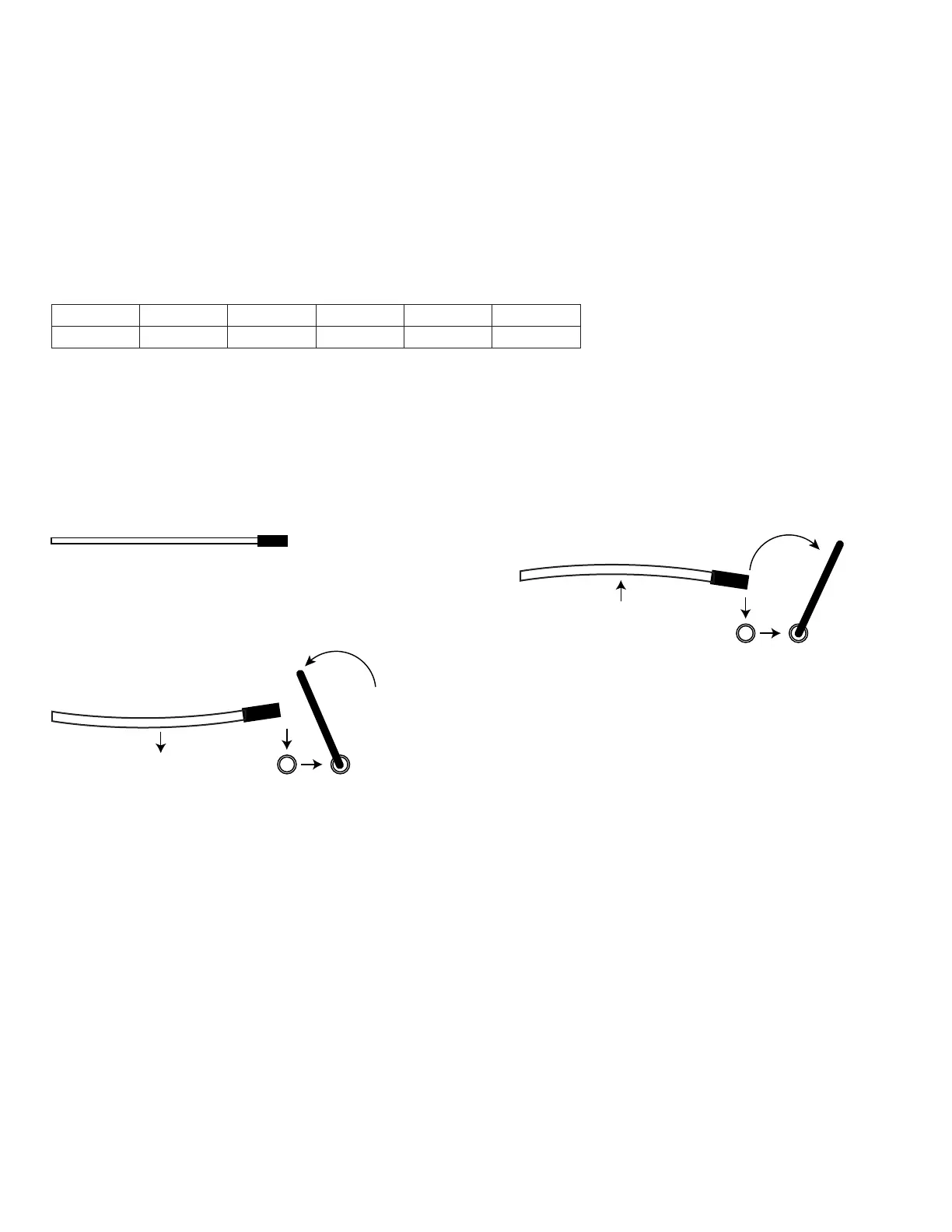
Environmental conditions like temperature and humidity, as well as string tension, can cause bowing of the guitar neck.
If your instrument has an adjustable truss rod, you can try to adjust it to keep the neck as straight as possible.
4
6th (Top)
5th 4th 3rd 2nd
E
A D G B E
Guitar
1
st
Truss rod in “flat” position Tightening the truss rod clockwise
causes the neck to curve upward.
Tightening the truss rod
counterclockwise causes the
neck to curve downward.
Truss Rod Adjustment
Truss Rod Adjustment


 To Next Page