Need help?
Do you have a question about the Magnum XLS .52A and is the answer not in the manual?
Guidance on selecting the correct propeller size.
Advice on choosing the right glow plug.
Adjusting for full throttle air/fuel mixture.
Steps for starting the engine using an electric starter.
Adjusting the high-speed needle for optimal air/fuel ratio.
Suggested fuel blend and optimal fuel tank size/type.
Initial setup and step-by-step guide for starting the engine.
Common problems and solutions for engine starting and fuel draw.
Troubleshooting vibration, transition, overheating, and stopping problems.
List of engine parts with order and reference numbers.
Specific measurements for engine installation and compatibility.
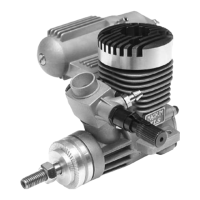
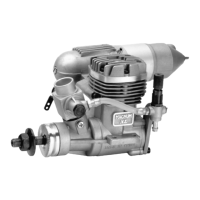
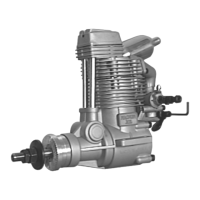
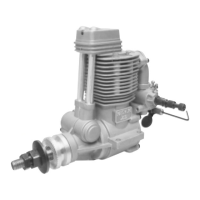
The Magnum XLS .52A Aircraft Engine is a single-cylinder, two-stroke engine designed for model aircraft, emphasizing dependable performance and reliability. Its primary function is to provide power for model airplanes, ensuring a satisfying and enjoyable experience for users who adhere to proper and safe operating procedures.
The engine operates on a two-stroke cycle, utilizing ABC (Aluminum piston, Chrome-plated Brass sleeve) technology. This design choice contributes to the engine's long life, high power output, and ease of break-in. Fuel and airflow are precisely metered by a dual needle valve carburetor, with an optional rear-mounted needle valve available for enhanced safety and convenience, positioning the adjustment further from the spinning propeller. The crankshaft is supported by dual ball bearings, and the connecting rod by dual bushings, contributing to the engine's smooth operation and durability. A high-flow quiet muffler is integrated to optimize power output while managing noise. The engine is designed by expert engineers and built by master craftsmen using high-quality materials and CNC machinery, ensuring a product of high caliber, long life, and dependability.
The engine can be mounted in various orientations on the aircraft's firewall, though inverted mounting may necessitate adjustments to the carburetor and fuel tank position. For mounting, high-quality 6-32 or 4mm steel socket-cap screws are recommended, securing the engine to either a glass-filled nylon, machined aluminum, or integrated hardwood beam mount. The aircraft's firewall should be at least 1/4" thick, made of aircraft-grade 5-ply plywood, and reinforced to withstand the engine's torque and weight.
Fuel tank selection is crucial; ideally, the stopper should be level with or slightly below the high-speed needle valve to prevent fuel siphoning and flooding, especially with inverted engine mounts or during aerobatic flight. A 10oz. to 12oz. fuel tank is recommended, providing approximately 15 minutes of run time at full throttle. Larger tanks are not advised as they can lead to excessive leaning during flight.
Carburetor installation involves sliding its base into the crankcase, ensuring it's perpendicular to the engine's front. The carburetor is secured with two socket-cap screws, and an o-ring seals the joint. The idle stop screw, which holds the throttle barrel, can be adjusted to allow complete closure of the throttle barrel, enabling idle speed control via the transmitter's throttle trim lever. The throttle arm angle can also be adjusted for optimal linkage. An extension wire can be inserted into the high-speed needle valve for easier adjustments if needed.
Propeller installation requires careful attention to balance to prevent excessive vibration, which can stress and wear the engine and airframe. The propeller hub hole should be enlarged to fit the crankshaft, and the propeller nut tightened firmly with an adjustable wrench or 4-way wrench. If a spinner is used, it must not rub against the propeller to avoid damage. Propeller size recommendations vary based on the aircraft's weight, drag, model type, and flying style, with an ideal ground RPM range of 10,000-15,000.
Glow plug selection is important; a long-reach, hot heat-range glow plug designed for high-performance two-stroke engines is recommended for optimal performance, easy starting, and good transition. Fuel containing 10%-20% nitro and 18%-20% castor oil/synthetic oil blend lubricant is advised for both break-in and normal running. It is crucial to use a castor oil/synthetic oil blend for the first gallon of fuel during break-in, avoiding all-synthetic oils during this period.
Starting the engine can be done with an electric starter or by hand. For safety, an electric starter is recommended, especially for new engines. If starting by hand, a chicken stick or heavy leather glove should always be used. Priming the engine by covering the muffler tip and pulling the propeller through compression is necessary for hand starting, but not for electric starting, as it can lead to hydro-lock.
The high-speed needle valve controls the air/fuel mixture at full throttle. For the very first start, it should be turned in completely, then backed out 2-1/2 turns. The low-speed needle valve is factory preset for initial starting and break-in and should not be adjusted until the engine is broken in.
The break-in procedure is critical for the engine's longevity and performance. It involves running the engine through a series of rich mixture settings over approximately 45 minutes of actual run time. This process allows the engine parts, particularly the ABC cylinder sleeve and piston, to properly fit and achieve the correct clearances, preventing premature wear. During break-in, the engine should be mounted in the aircraft it will be used in, with the cowl removed if applicable, to test the muffler, fuel tank, and throttle linkage.
Optimizing mixture settings involves carefully leaning the high-speed needle valve to peak RPM, then richening it slightly (200-300 rpm drop) to compensate for leaning tendencies in the air. The engine should always show a noticeable white smoke trail from the exhaust; absence of smoke indicates a too-lean condition requiring immediate landing and mixture reset. The low-speed needle valve is adjusted after break-in to ensure smooth transition from idle to full throttle.
Basic engine maintenance includes avoiding dusty conditions, using an air filter if necessary, purging fuel from the engine at the end of each flying day by disconnecting the fuel line and allowing it to run dry, and injecting high-quality after-run oil through the carburetor and glow plug hole. Rotating the crankshaft several times after oil injection distributes the oil throughout the engine, preventing rust formation. Regular inspection of the spinner, propeller, and propeller nut for nicks, cracks, or loosening is also essential.
 General
| Type | 2-stroke |
|---|---|
| Bore | 0.866 in (22mm) |
| Carburetor | Two needle valve |
| Displacement | 0.52 cu in (8.5 cc) |
| RPM Range | 2, 000 |
| Lubrication | Synthetic oil |
| Glow Plug | Standard |
| Propeller Size | 12x6 |

 To Next Page