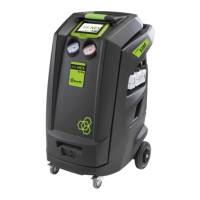
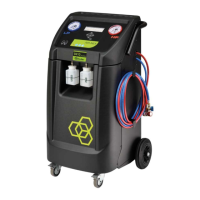
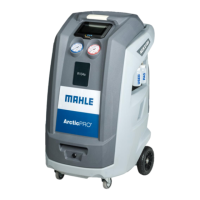
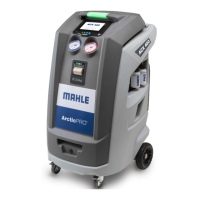
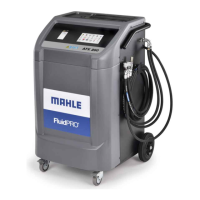
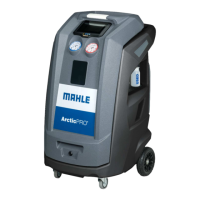
This document provides a quick start guide for the MAHLE AIR-NEX 9320 and 9420, which are devices designed for automotive air conditioning service. These devices appear to be professional-grade AC service stations, likely used in workshops for maintaining and recharging vehicle air conditioning systems.
Function Description
The MAHLE AIR-NEX 9320 and 9420 are comprehensive AC service stations that automate many aspects of vehicle air conditioning maintenance. Their primary function is to facilitate the recovery, recycling, and recharging of refrigerant in automotive AC systems. The quick start guide outlines a typical operational sequence, which includes checking essential levels, selecting vehicle parameters, connecting to the vehicle, initiating the process, and generating a report.
The core functions include:
- Refrigerant Recovery: Extracting refrigerant from the vehicle's AC system.
- Refrigerant Recycling/Purification: Processing the recovered refrigerant to remove contaminants like moisture and oil, making it suitable for reuse.
- Vacuuming: Evacuating the AC system to remove air and moisture, ensuring proper system operation.
- Leak Testing: Potentially performing vacuum decay tests to identify leaks in the system (though not explicitly detailed in the quick start guide, this is a standard feature for such devices).
- Refrigerant Recharging: Precisely refilling the vehicle's AC system with the correct amount of refrigerant.
- Oil Injection: Injecting new compressor oil into the AC system.
- UV Dye Injection: Potentially injecting UV dye to help detect future leaks (not explicitly shown but common).
The device features an interactive display, likely a touchscreen, allowing users to navigate menus and select vehicle-specific parameters. The visual cues in the guide suggest a user-friendly interface with clear prompts for each step of the process.
Usage Features
The quick start guide highlights several key usage features that streamline the AC service process:
- Guided Operation: The device guides the user through the entire service process, starting from checking levels to printing a report. This step-by-step approach minimizes errors and ensures thorough service.
- Vehicle Database: The ability to "Choose maker and car model" indicates the presence of an integrated database containing specific refrigerant and oil capacities for a wide range of vehicles. This feature ensures accurate recharging according to manufacturer specifications.
- Automated Process: After connecting the hoses and pressing "start," the device appears to handle the core recovery, vacuum, and recharge operations automatically, allowing the technician to perform other tasks while the machine works. The "Wait till end of process" step reinforces this automation.
- Digital Display: The illustrations show a digital display, likely a color touchscreen, which provides real-time information and allows for easy interaction.
- Hose Management: The device includes dedicated ports and possibly integrated storage for hoses, ensuring a tidy workspace and easy connection to the vehicle.
- Report Generation: The "Print report" feature allows for documentation of the service performed, which is valuable for record-keeping, customer invoicing, and compliance. This report likely includes details such as recovered refrigerant amount, recharged amount, vacuum time, and any errors encountered.
- Portability: The presence of wheels suggests that the device is designed to be easily moved around a workshop, allowing technicians to bring it directly to the vehicle.
Maintenance Features
The quick start guide emphasizes several important maintenance aspects to ensure the longevity and accurate operation of the AIR-NEX units:
- Regular Oil Level Checks (Pump Oil): The guide explicitly states to "Periodically check pump oil level" with a visual indicator showing MAX and MIN levels. This is crucial for the vacuum pump's performance and lifespan, as low oil levels can lead to pump damage and inefficient vacuuming.
- Regular Software Version Checks: Users are advised to "Periodically check software version." Keeping the software updated is vital for accessing the latest vehicle database information, new features, and bug fixes, ensuring the device remains compatible with newer vehicle models and performs optimally.
- Gas Weight Availability Check: Before starting a service, the device prompts the user to "Check gas weight available." This ensures that there is sufficient refrigerant in the internal tank to complete the service, preventing interruptions and ensuring accurate recharging.
- Pre-Cycle Gas Analysis: A critical safety and operational recommendation is to "Before every cycle, we recommend analyzing the type of gas inside the vehicle." This is paramount for preventing cross-contamination of refrigerants (e.g., R134a with R1234yf), which can damage the AC service station and the vehicle's AC system, and is also a regulatory requirement in many regions. This implies the device either has an integrated gas analyzer or requires an external one.
Important Technical Specifications (Inferred)
While specific technical specifications like refrigerant type (R134a, R1234yf, or both), tank capacity, vacuum pump speed, or compressor capacity are not explicitly stated in this quick start guide, we can infer some general characteristics common to professional AC service stations:
- Refrigerant Compatibility: Given the "gas analysis" recommendation, it's highly probable that there are different versions of the AIR-NEX 9320/9420 for R134a and R1234yf, or possibly a universal version capable of handling both with appropriate precautions.
- Internal Refrigerant Tank: The "Check gas weight available" step confirms the presence of an internal tank for storing recovered and fresh refrigerant.
- Vacuum Pump: Essential for evacuating the AC system, requiring periodic oil checks.
- Compressor: Used for refrigerant recovery and recycling.
- Integrated Scale: For precise measurement of refrigerant weight during recovery and recharging.
- Power Supply: Standard workshop electrical supply.
- Hose Connections: Standard automotive AC service ports.
Safety Features
The guide highlights the importance of safety:
- Personal Protective Equipment (PPE): Users are explicitly instructed to "Wear Personal Protective Equipment," specifically showing icons for safety glasses and gloves. This is crucial when handling refrigerants and working with pressurized systems.
In summary, the MAHLE AIR-NEX 9320 and 9420 are advanced, user-friendly AC service stations designed for efficient and accurate automotive air conditioning maintenance, emphasizing guided operation, automated processes, and critical maintenance checks to ensure reliable performance and safety.

 Need help?
 General

 To Next Page