AUTOMATIC LOAD SWITCHING
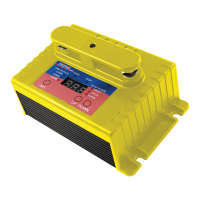
The MPVSR can be programmed to perform automatic load switching,
by using the control terminals for sensing a desired voltage range. This
is particularly useful in remote or unmanned situation where equipment
needs to be operated, but also protected from over-voltage and under-
voltage damage scenarios. For example, a ashing light on a remote
tower needs to be activated at night, but it is powered by a lithium battery
bank that is very expensive. Wiring the light switch in series with the
control terminals (positive or negative) and setting the upper and lower
voltage limits to the desired range means that the light can be switched on
and off as needed, but only if the battery voltage is within the safe range
set by the user.
Setting Guide: (note, this setup requires the MPVSR bet programmed
‘normally open’)
UPPER LIMIT IN VOLTS: This is the setting where the voltage would be
re-connected to the light to allow it to operate as required again. In this
example it would be the safe voltage level for the batteries to operate
again.
LOWER LIMIT IN VOLTS: This is the voltage level at which the light
would be disconnected from the power source so as not to over-discharge
the battery bank. This setting would be determined by the battery
manufacturers guidelines.
UPPER DELAY IN SECS: This is the delay setting for re-connecting the
load to the power source. Delaying the re-connection allows the voltage at
the power source to stabilise before the load is connected again.
LOWER DELAY IN SECS: This is the delay, in seconds, before the power
is disconnected from the light after the voltage reaches the LOWER LIMIT
IN VOLTS. A delay here can be useful to prevent VSR chatter due to
transient voltages and slight dips in power levels.


 To Next Page