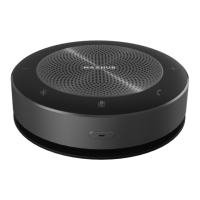
This document is a user manual for the MAXHUB Speakerphone, providing essential information for its safe and effective operation. It covers important safety warnings, product appearance, various connection modes, instructions for use, troubleshooting tips, FCC compliance, and key specifications.
The MAXHUB Speakerphone is a versatile audio device designed for conferences and communication, supporting multi-device connections and offering a range of features for enhanced user experience.
Safety Warnings and Precautions
The manual emphasizes several critical safety precautions to ensure user safety and prevent damage to the device. Users are warned about potential electric shock or fire hazards, as the device is not waterproof and should be kept dry. In case of water immersion, immediate shutdown and contact with customer service are advised. The device and its accessories should never be placed near open flames or other heat sources, including direct sunlight. It is also recommended to turn off and unplug the device during lightning storms.
To prevent short circuits or fire, users must ensure that the power supply voltage matches the voltage printed on the product before connecting it to an electrical outlet. Connecting to an outlet with a different voltage is strictly prohibited.
Regarding injury or damage to the speaker, users are advised not to place the device or any objects on power cords or other electronic devices. If the product is transported at temperatures below 5°C, it should be unpacked and allowed to reach room temperature before connecting to a power outlet. The product may contain sharp objects, so careful handling is necessary to avoid injury or damage to the device's appearance or internal parts.
To prevent overheating, the device should never be installed in an enclosed space. A minimum of 4 inches of space around the product is required for adequate ventilation.
The manual also addresses children's health, noting that the device and accessories may contain small parts and should be kept out of reach of children.
Care for the Product and Environment
For product care, users are instructed to clean the device only with a microfiber cleaning cloth.
Environmentally, the MAXHUB Speakerphone is made with recyclable high-performance materials and components. Users are urged not to dispose of the product with other household wastes and to follow local regulations for sorting electronic, electrical products, and batteries. Proper disposal helps prevent negative environmental and health impacts.
Maintenance & Servicing
For all repair services, users should contact professional service personnel. It is crucial not to insert any sharp objects into the device or drop/hit it to avoid damage. The device has a built-in lithium battery, which requires regular charging to maintain its functionality over time.
Statement
The manual includes an intellectual property rights statement, indicating that the hardware design and software are patent-protected. Unauthorized reproduction of the product or its instructions will incur legal liabilities. The manual serves as a reference, and the actual product's functions may vary. The company reserves the right to improve and change the product's appearance and design without prior notice.
Product Appearance
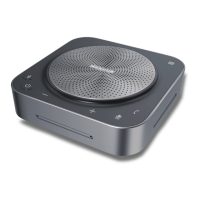
The MAXHUB Speakerphone features an 8-array microphone and a USB Type-C port. Its control panel includes a Bluetooth button, power button, NFC tag, answer/hang up button, turn on/off microphone button, volume up button, and volume down button.
Connection Modes
The speakerphone supports multi-device connections, including USB, dual Bluetooth, and multi-channel data fusion, allowing simultaneous access for multiple parties in conferences.
Method 1: USB Cable Connection
Users can connect the speakerphone to a computer or Interactive Intelligent Panel (Windows or Mac) via a USB cable.
Method 2: Bluetooth Connection
To connect via Bluetooth, press and hold the Bluetooth button for 2 seconds until the Bluetooth indicator flashes, signaling the device is in pairing mode. Then, enable Bluetooth on a mobile phone or other device and select the speakerphone from the Bluetooth device list. For Interactive Intelligent Panels, connecting via a USB Dongle is recommended for stable Bluetooth connection.
Method 3: USB Dongle Connection
(Supports Win7/8/10, MacOS)
- Insert the USB Dongle into the USB port of the computer. If connecting to an Interactive Intelligent Panel, use the front USB port for optimal performance. The USB Dongle will automatically connect to the device, as it is bound to unique equipment.
- To re-bind a new speakerphone with the USB Dongle, ensure the devices are within 3 meters. While the speakerphone is in a Bluetooth disconnected state, long-press the Bluetooth button for 9 seconds to enter binding mode (the white light flashes). After unplugging and re-inserting the USB Dongle, it will re-bind successfully within 30 seconds.
After connecting, the speakerphone must be set as the default playback and recording device in the computer/Interactive Intelligent Panel sound settings.
Dual-Device Wireless Cascade
The speakerphone supports a dual-device wireless cascade. For detailed instructions on cascading, users should refer to the Bluetooth status/settings section.
NFC Quick Connect
The device supports NFC for quick connection with compatible Android phones:
- Enable NFC in the mobile phone's system settings.
- Align the phone's NFC sensing area with the speakerphone's NFC tag.
- Touch for at least 2 seconds. If there's no response, try again.
Note: NFC function is not recommended after wireless cascading and is only available on some Android phones.
Instructions
Turn On/Off the Device: Press and hold the power button for 2 seconds.
Answer/Hang Up Calls: (Only available via Bluetooth connection to mobile phone or PC running Microsoft Teams)
- To answer an incoming call, press the "C" key.
- To hang up a call, press the "C" key while in a calling state.
Turn On/Off Microphone: Short press the microphone mute button. Red indicates the microphone is off, while white indicates it is on.
Volume Adjustment: Press the "+" and "-" buttons to increase or decrease the volume.
Equipment Charging:
- Use the original USB data cable and power adapter.
- The power indicator flashes during charging and remains on when fully charged.
Checking Battery Capacity: In the power-on state, short press the power button to view the current battery level. A fully lit light ring indicates a full battery. If the battery is low, the power indicator flashes red, and a low-battery tone plays.
Bluetooth Function
The device supports dual Bluetooth:
- Bluetooth 1: Open hotspot for connecting mobile phones, PCs, Pads, and other Bluetooth host devices.
- Bluetooth 2: Hidden hotspot, exclusively for Dongle connection.
Bluetooth 1 Control:
- If Bluetooth 1 is not connected, long-press the Bluetooth button to turn it on/off. It will automatically turn off if not connected within 2 minutes of being turned on.
- If Bluetooth 1 is connected, long-press the Bluetooth button to disconnect the current Bluetooth connection.
Upgrade Maintenance
Users can visit https://www.maxhub.com/downloadcenter to download audio and video product management software for upgrade maintenance and configuration management.
Bluetooth Status/Setting
The manual provides a table detailing various Bluetooth statuses, corresponding operations, and their descriptions:
- Dongle not connected: Long press Bluetooth button for 9s to enter re-pairing mode. Pairing is indicated by a flashing white light, and successful pairing by a solid blue light on the Dongle.
- Bluetooth 1 not connected: Long press Bluetooth button for 2s to turn off Bluetooth 1. The white light remains on.
- Wireless cascade not paired: Double-click the Bluetooth button on both devices. Pairing is indicated by a quickly flashing blue light. Successful pairing allows two-way linkage of volume and microphone.
- Wireless Cascade Paired: Double-click the Bluetooth button to cancel the wireless cascade connection.
- Bluetooth 1 is connected: Long press the Bluetooth button for 2s to disconnect Bluetooth 1.
- Bluetooth 1 is connected: Click the Bluetooth button to play/pause music.
Common Faults and Troubleshooting
A troubleshooting table lists common faults, possible causes, and solutions:
- Unable to turn on: Low or no electricity. Solution: Connect the adapter to charge.
- Quick start and automatic shutdown: Insufficient battery capacity. Solution: Connect the adapter to charge.
- No sound: Incorrect connection or volume turned off. Solution: Select correct sound source input; adjust device.
- Unable to work with USB: Mistake in using USB cable. Solution: Use original USB cable for calls.
- Invalid key: Key accidentally touched. Solution: Long press and hold power button for 8 seconds to reset system.
- Unable to charge: Charging device fault or battery full. Solution: Replace with a functional charging device.
FCC Compliance
The device complies with Part 15 of the FCC Rules, having been tested and found to meet Class B digital device limits. It is designed to provide reasonable protection against harmful interference in residential installations. Users are advised that the device generates and radiates radio frequency energy, which may cause harmful interference if not installed and used according to instructions. If interference occurs, users are encouraged to reorient or relocate the receiving antenna, or increase the separation between the equipment and receiver. Any unauthorized changes or modifications could void the user's authority to operate the equipment.
The device also complies with FCC rules regarding interference: (1) it may not cause harmful interference, and (2) it must accept any received interference, including that which may cause undesired operation.
Radiation Exposure Statement
The device has been evaluated for general RF exposure requirements and can be used in portable exposure conditions without restriction.


 To Next Page
 General