Loading Tips
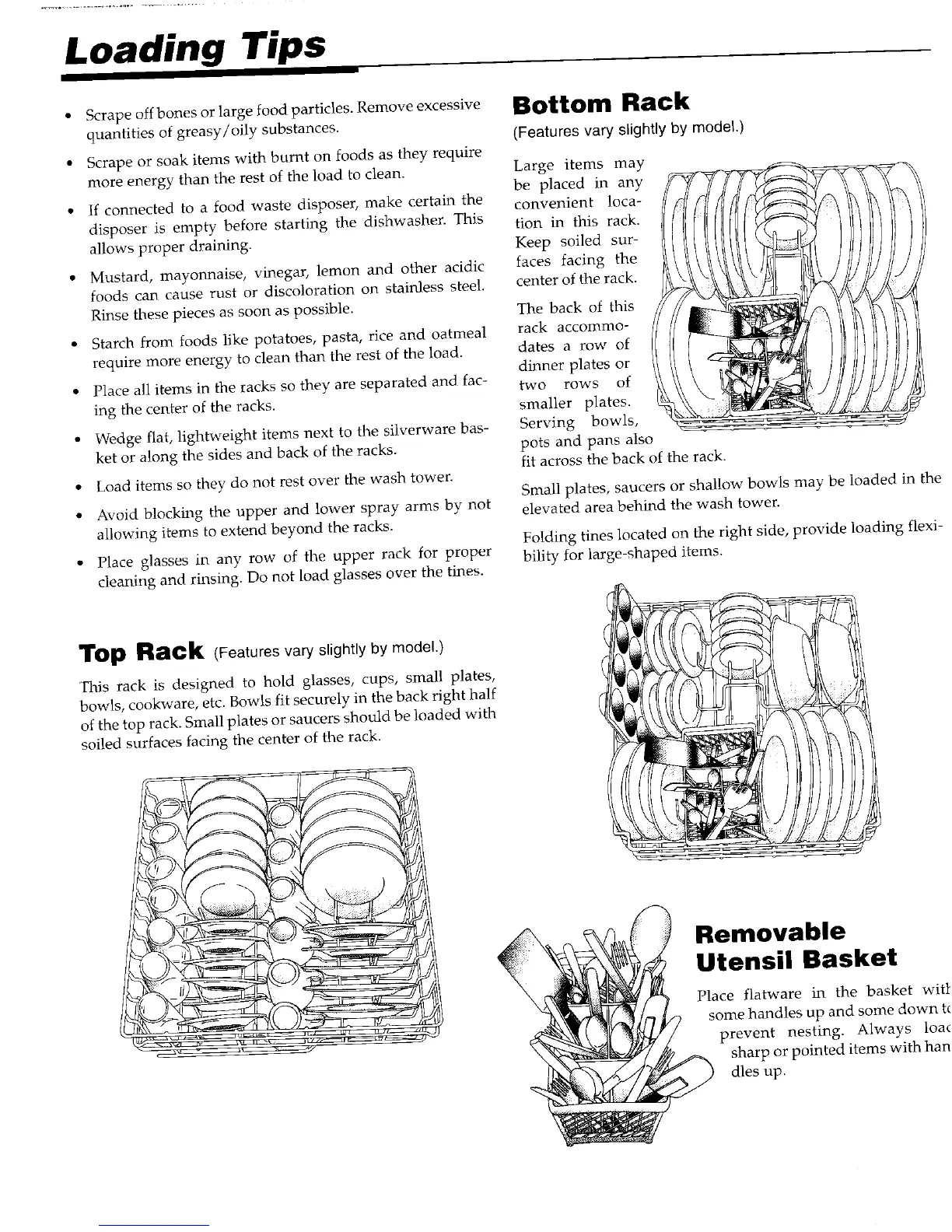
• Scrapeoffbonesorlarge food particles. Remove excessive Bottom Rack
quantities of greasy/oily substances. (Features vary s_ightly by model.)
• Scrape or soak items with burnt on foods as they require
more energy than the rest of the load to clean. Large items may
be placed in any
• If connected to a food waste disposer, make certain the convenient loca-
disposer is empty before starting the dishwasher. This tion in this rack.
allows proper draining. Keep soiled sur-
• Mustard, mayonnaise, vinegar, lemon and other acidic faces facing the
foods can cause rust or discoloration on stainless steel, center of the rack.
Rinse these pieces as soon as possible. The back of this
• Starch from foods like potatoes, pasta, rice and oatmeal rack accommo-
require more energy to clean than the rest of the load. dates a row of
dinner plates or
• Place allitems in the racks so they are separated and fac- two rows of
ing the center of the racks, smaller plates.
• Wedge flat, lightweight items next to the silverware bas- Serving bowls,
ket or along the sides and back of the racks, pots and pans also
fit across the back of the rack.
• Load items so they do not rest over the wash tower.
Small plates, saucers or shallow bowls may be loaded in the
• Avoid blocking the upper and lower spray arms by not elevated area behind the wash tower.
allowing items to extend beyond the racks.
Folding tines located on the right side, provide loading flexi-
• Place glasses in any row of the upper rack for proper bility for large-shaped items.
cleaning and rinsing. Do not load glasses over the tines.
Top Rack (Features vary slightly by model.)
This rack is designed to hold glasses, cups, small plates,
bowls, cookware, etc. Bowls fit securely in the back right half
of the top rack. Small plates or saucers should be loaded with
soiled surfaces facing the center of the rack.
Removable
Utensil Basket
Place flatware in the basket wi
some handles up and some down
prevent nesting. Always lo;
sharp or pointed items with ha
dles up.



 To Next Page